


How to correctly fill in the customs declaration when sending art objects?
 Art DomApril 11, 2023
A common question for artists, gallerists, and collectors – how to ship and transport artworks abroad? When crossing customs checkpoints, you must fill out a customs declaration listing the items, their quantity, and their value.
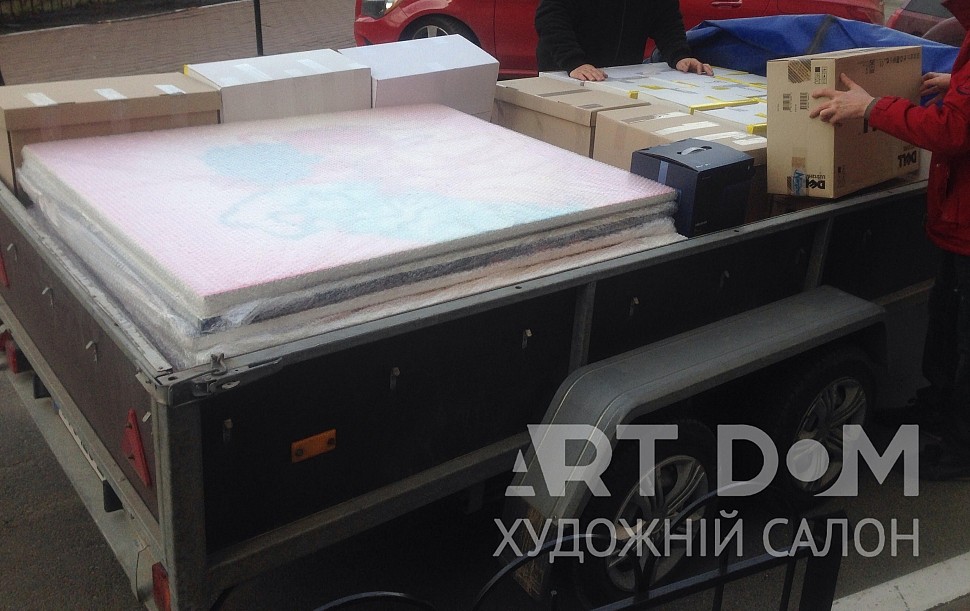
Crossing the border with artworks in person (by car)
When filling out the customs declaration, it's important to provide only accurate information. List the items you're carrying, their value, and quantity in a way that can be documented later. At this stage you go through the "customs clearance" procedure. Upon arrival in the destination country, you'll need to visit a customs point and complete "import clearance." If your items are subject to customs duties, you'll be issued an invoice, and after payment you can freely use your artworks.
Every case is individual, so to handle your situation properly, we recommend consulting with a customs broker. Call us, and we'll help you go through the artwork shipping process +380632478102, write to us on Telegram or Viber.
Which declaration form you actually need
Many people think "customs declaration" is one universal document. In fact, different shipping methods require different forms, and choosing the wrong one is a frequent cause of delays.
- Ukrposhta (EMS, parcel, small packet) – form CN23, filled out by the sender.
- DHL, FedEx, UPS – Commercial Invoice + AWB, filled out by the courier and sender.
- Meest Express – CN23 + internal Meest form, filled out by the sender.
- Ground freight, truck – form MD-2, filled out by a customs broker.
- In person on a flight – oral declaration (red corridor), by the passenger.
Important note: Nova Poshta does not ship paintings or bronze items abroad – keep this in mind when choosing a carrier. The most universal and affordable option for artists is Ukrposhta EMS, which requires the CN23 form.
Shipping artworks by mail
The most common shipment types used by our clients are the categories "Gift" and "Other" (sale, sending personal belongings).
Choosing the "Gift" option simplifies the recipient's process of receiving the parcel. In this case, you must NOT include sale documents (invoice, fiscal receipt, etc.), since it's a gift. Delivery may take 10–15 days, but customs procedures can extend this by 5–30 days. If the gift value doesn't exceed $50, most countries exempt it from customs duties.
When choosing "Other," you must specify in the customs declaration that this is "shipment of personal belongings of the recipient" or "shipment of a sold item to the buyer." In the latter case, you'll need to attach supporting documents – invoice, fiscal receipt, sale agreement. This allows you to declare the value of the parcel and confirm the sale and tax payment.
How to ship a parcel abroad quickly and affordably?
A popular way to ship artworks (paintings, sculptures) from Ukraine abroad is Ukrposhta's express EMS service. Delivery times to the USA are 12–20 days, to the United Kingdom – 10–20 days, to European countries (France, Germany, Spain, Belgium, Italy, Austria, etc.) – 14–22 days.
Good news from Ukrposhta – there's a 70% discount on shipments to Poland and 60% to Germany. For other countries, Ukrposhta tariffs remain affordable.
CN23 form: field-by-field breakdown
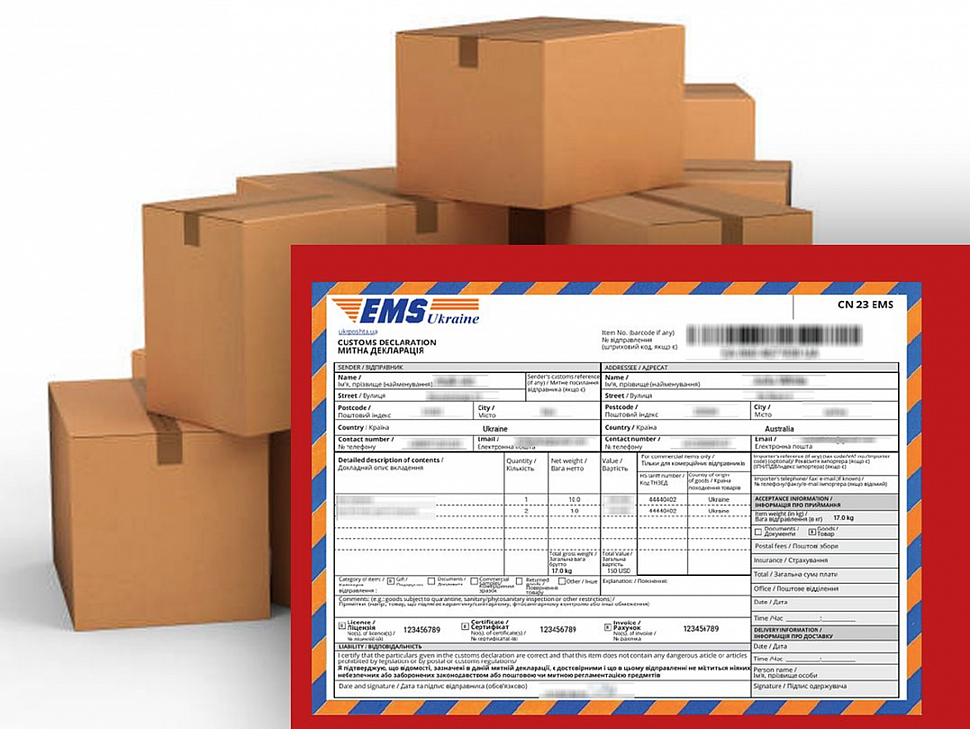
The CN23 form is a white A6/A5 slip you get at a Ukrposhta branch or fill out online when arranging EMS. Let's go through each field and what to write in it.
1. From / Sender. Full name in Latin script (as in your passport), postal address, phone with international code. If the parcel is returned – the post office contacts you directly.
2. To / Addressee. Email and phone are required: the courier uses them for notifications. Without them, parcels often get stuck on the "last mile."
3. Category of item. For sales, always choose "Other" with "sale of artwork." "Gift" only applies if you're truly gifting it and NOT including an invoice in the box.
4. Detailed description. The most important field. Template: technique + medium + title + artist + year + size + status. Example of a correct description: "Original oil painting on canvas, 'Sunset over Dnipro', artist I. Kovalenko, 2024, 50×70 cm, not antique, contemporary art."
5. Quantity. How many separate items. For 2 paintings – write 2 on one line or split into 2 rows.
6. Net weight. Weight without packaging in kilograms. Round to 0.1 kg. A 50×70 framed painting usually weighs 1.5–3 kg.
7. Value. USD for USA and Canada, EUR for EU, GBP for UK. Must match the invoice and the export permit – this is critical.
8. HS Tariff Number. Mandatory since April 18, 2024. Without it, Ukrposhta returns the parcel to sender. Code table below.
9. Signature & Date. Without a signature, the declaration is invalid. Sign by hand, in blue or black ink. Date in YYYY-MM-DD format.
HS tariff codes for artworks
Since April 18, 2024, Ukrposhta requires specifying the goods code according to the UKT ZED classifier (the Ukrainian version of the international HS code). For artworks these are codes in group 97. Without the code, the parcel is returned to sender – we covered this in detail in a dedicated article on HS codes.
- 9701 10 00 00 – oil, acrylic, tempera painting, watercolour, gouache, contemporary icon (after 1950).
- 9702 00 00 00 – prints: drawing, pastel, charcoal, lithograph, etching, engraving.
- 9703 00 00 00 – sculpture of any material.
- 4911 91 00 00 – art photography.
- 4911 10 90 00 – artist's or exhibition catalogue.
- 3213 / 9603 – art supplies (paints, brushes).
Important: antiques (made before 1950) and cultural valuables have their own codes and procedures. These items cannot be exported at all without a permit from the Ministry of Culture – not even temporarily.
How to fill out the customs declaration correctly?
Correctly specified sender details allow postal services to return the parcel if the addressee doesn't receive it. For example, if the recipient is in the hospital or the post office can't reach them for a month, your contact details will help resolve the issue.
Correct recipient details, including phone number and email, will help the postal service not lose the parcel and notify the recipient on time of its arrival. This allows the recipient to be home and receive the parcel directly from the courier.
The most important part of the customs declaration is the description of the contents. Customs representatives pay special attention to this section. Provide parcel details in English – the artist's first and last name, the name of the artwork, its dimensions, and the declared value in hryvnia and dollars (for Europe – in euros). Always mark the appropriate category: "Gift," "Documents," or "Other."
Good description vs bad description
In the "Detailed description" field, a vague description is the most common reason for delays. Customs can't tell what's in the box – and requests additional documents.
Don't do this: "Painting." Too general – customs will ask: artist? year? original? antique? – the parcel is held up.
Do this: "Original oil painting on canvas, 'Sunset', artist I. Kovalenko, 2024, 50×70 cm, not antique." Technique, medium, title, artist, year, size, and status – all specified. No questions.
Don't do this: "Картина маслом, 50×70." Cyrillic in an international declaration = parcel returned. Latin characters and English only.
Do this: "Oil painting on canvas, 'Spring', 50×70 cm, by V. Petrenko, 2023, contemporary art." English, Latin script, specific details – accepted by all international carriers.
Top 7 mistakes when filling out the declaration
Since 2016, ArtDom gallery has shipped more than 2,000 parcels with artworks. These mistakes are the most common – and almost always happen when people fill out declarations on their own, without a specialist's help.
- Undervaluing "to avoid duties." The most expensive mistake. When customs checks – fine, confiscation, sender blacklisted. And critically: if the parcel is damaged, insurance pays exactly the declared amount. List $50 for a $1,000 painting – you get $50.
- Filling out in Cyrillic. International declarations only accept Latin script and English. Foreign customs officers simply can't read Russian or Ukrainian – the parcel is returned to sender.
- "Gift" category with an invoice in the box. If there's an invoice or fiscal receipt in the parcel but the declaration says "Gift" – that's a contradiction. Customs treats this as concealing a commercial transaction. The parcel is held up and the sender gets a notice.
- Vague "Painting" or "Art" description. Customs requests additional documents for clarification – the parcel hangs for 1–3 weeks. Always include artist, year, technique, and dimensions.
- Missing HS tariff code. Since April 18, 2024, this field is mandatory. Without the code, Ukrposhta either refuses to accept the declaration or accepts it and the parcel hangs at customs.
- Declaration value ≠ invoice value. Customs cross-checks the numbers. If the declaration says $500 and the invoice says $800 – the parcel is held for review. All documents must show the same amount.
- Marking a contemporary painting as "Antique." "Antique" means items over 100 years old (in most countries) or pre-1950 (Ukraine). Marking a contemporary painting as antique triggers a Ministry of Culture permit requirement – and the parcel is stuck for at least a month.
Country-specific notes
Each country has its own duty-free threshold and quirks. The values below are current for 2026, but always check the customs website of the destination country.
- USA. The $800 duty-free threshold (de minimis) was abolished on 29.08.2025: every parcel must be declared, and “gift” or “for personal use” marks do not exempt it from duty. If the recipient is a business or gallery, list their EIN.
- Germany. Threshold: €150. VAT 7% for original art (reduced rate). Requires precise artist and creation-year details.
- France. Threshold: €150. VAT 5.5% for original art. Customs prefers thorough descriptions – artist, biography, exhibition history.
- United Kingdom. Threshold: £135. Post-Brexit – separate procedure. Business recipients need an EORI number. VAT 5% for original art.
- Poland. Threshold: €150. Ukrposhta discount up to 70% on shipping. The easiest route for artists from Ukraine.
- Canada. Threshold: CAD 20 (for gifts – CAD 60). Strict description requirements. A certificate of authenticity or expert appraisal must be included.
What documents you need: full list
To prepare the customs declaration and ship or export artworks abroad, you may need:
- Passport or other ID – to verify your identity when crossing the border or shipping by mail.
- Artwork documents (if available) – invoice, sale or gift agreement, expert opinion on value or authenticity.
- Invoice in English – mandatory for all commercial shipments. You can create one in our free invoice generator.
- Customs declaration – requirements may vary depending on the shipping method, but in any case the declaration must accurately state the quantity and value of the items.
- Export permit from a state expert – confirms that the artwork is not part of cultural heritage prohibited for export.
- Insurance policy (optional) – if you want to insure the artwork against loss or damage in transit.
In some cases, an official permit for customs clearance of artworks may be required (especially if the items are of cultural value). The exact list of documents should be checked with the customs or postal services of your country and the destination country.
The declaration doesn't stand alone. The document chain
The main thing to understand: the declaration is the final link in a chain of documents, and all of them must be consistent with each other. The value figure in one document must exactly match all the others:
- Export permit from the Ministry of Culture or a state expert.
- Invoice – the sale document in English.
- Customs declaration CN23 or MD-2 – the one this article is about.
- Insurance policy – for the duration of transit.
- Shipment to the buyer or to an exhibition.
If the numbers diverge at any step – customs holds the parcel. That's why it's most convenient to prepare all documents in one place so the values automatically match. For invoices, we built a free generator – it produces a document in the required format with all mandatory fields.
Related articles on our site:
- What documents you need to ship paintings abroad
- HS codes for international shipments
- How to create an invoice for artwork
- Getting an export permit for paintings
Preparing artworks for international shipping
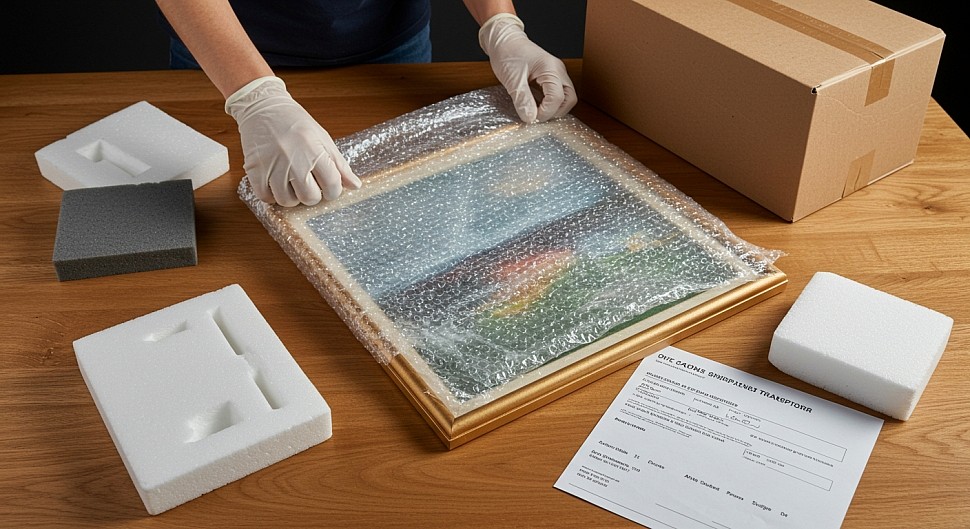
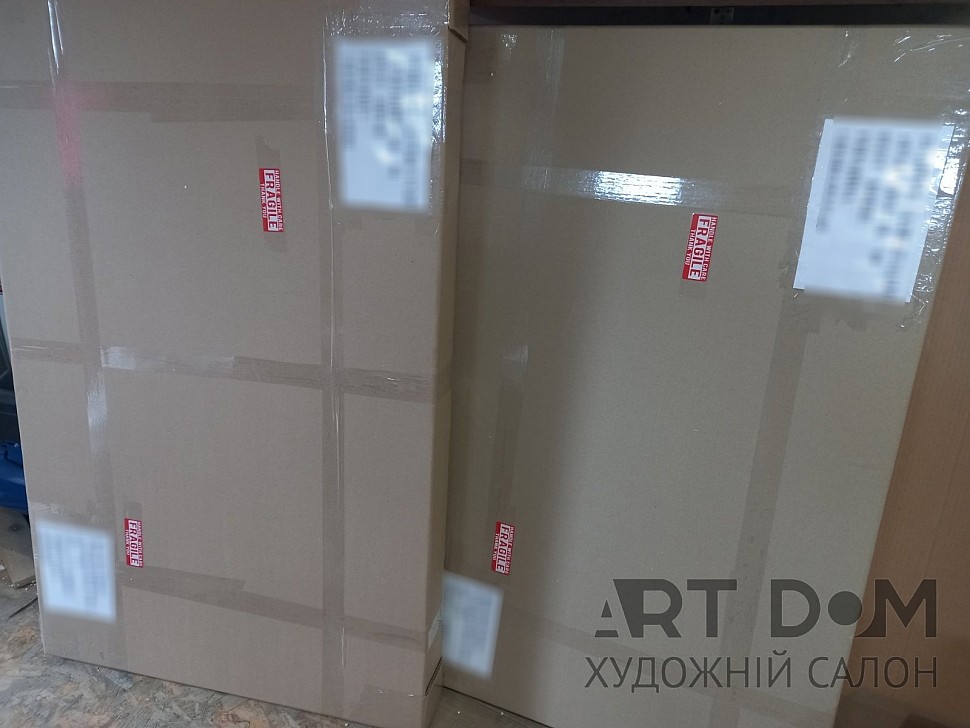
To avoid damage in transit, carefully pack the painting or sculpture. Use:
- Tissue paper or bubble wrap to protect the surface;
- A rigid cardboard box or wooden crate with protective corners;
- When shipping multiple items – pad them with soft material to prevent friction.
We also recommend including a packing list in the parcel to simplify identification of the items by customs.
How to avoid delays when crossing the border with artworks
The main rule – don't try to "hide" the artwork or undervalue it. All information must be as truthful as possible. If you're unsure about the correct preparation of the declaration for artworks, it's better to consult a customs broker or gallery specialists.
- Study the legislation of the country where the artwork is being shipped regarding the import of art.
- Prepare documents in advance (permits, certificates, invoice) that may be needed.
- Pay any customs duties or taxes if the item is subject to them.
- Track the shipment to promptly resolve any questions from customs.
Proper documentation and transparency in declaring are the key to successful and quick customs clearance.
Frequently asked questions
Can I take a painting across the border without filling out a declaration?
What's the difference between CN23 and MD-2?
What HS code applies to my painting?
What shipping methods are available for artworks abroad?
- Personal transport of artworks by car or air (with mandatory customs declaration).
- Postal services, including express delivery (EMS, DHL, etc.).
- Specialized transport companies working with valuable and oversized artworks.
What happens if I undervalue the declaration?
Do I need to pay customs duties when shipping paintings?
Can I ship a painting as a "Gift" if it's actually a sale?
How do I fill out a declaration for a temporary export to an exhibition?
How to fill out the customs declaration correctly?
How to deliver a painting abroad quickly?
What should I do if my parcel with a painting is held at customs?
Contact the ArtDom gallery specialists – we provide free consultations and help with:
- Filling out the customs declaration.
- Creating an invoice (or use our free invoice generator).
- Shipping and transporting artworks.
- Obtaining an export permit for artworks.
Call us at +380632478102