



How can you avoid buying a fake painting? Request a free appraisal
 Art DomJuly 27, 2026
Painting copies have existed for as long as the originals themselves. Copying is even considered a peculiar sign of success: after all, bad paintings wouldn't be copied. According to historical research, as far back as the Renaissance, from the 14th to the 17th centuries, artists used the camera obscura—the ancestor of the photographic camera. This device allowed an image to be projected onto a surface, much like a projector—leaving the artist to simply reproduce it with paints.
Since then, the number of ways to create a copy of a painting has only increased. Let's explore how to distinguish an original painting from a fake, the differences between a replica, a copy, and an artist's repetition, and why it's worth establishing authorship before purchasing—especially since a preliminary consultation at ArtDom is available for free.
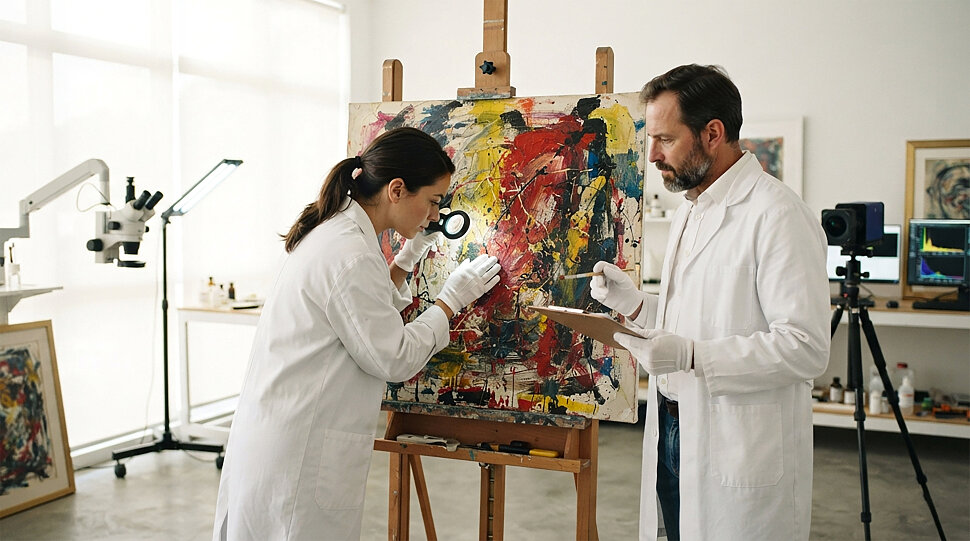
What types of painting copies exist on the art market?
Imitators. Professional artists and admirers of a great master who masterfully replicate the style of a painting and the artist's brushwork. Often this is their way of earning a living—and in itself, it is not a deception unless the artwork is passed off as an authentic original.
Pupils, students. Studying the history of painting and the creative legacy of great masters is a mandatory part of education. In the past, before cameras existed, students painted copies of artworks directly in museums. Later, color illustration printing emerged, and by the Soviet era, students could copy paintings from color postcards and printed illustrations. This is considered an academic copy and is a standard part of the educational process.
Unscrupulous copyists. This is where direct art forgery begins. Such copyists create an absolute replica: they use the exact same materials—the same canvas in terms of fabric and grain, the same paints and pigments, and they replicate the stylistic features—the character of the brushstrokes, the artist's technique, and the texture. The final step is a forged signature of the painting's author on the front and back of the canvas.
Find out about your painting—whether it is a copy or an original. Request a preliminary free verbal consultation at the ArtDom gallery.
How experts establish the authorship of a painting
To determine whether you are looking at an original or a fake, several facts must be established and verified:
— the period the artwork was created;
— the character of the brushwork and stylistics;
— the materials and techniques used;
— the manner in which the signature or monogram is applied.
Complex situations require the involvement of top-tier experts and specialized equipment to establish all the facts. Every expert values their reputation, which is why they thoroughly examine the painting, establishing and verifying all facts before issuing an assessment. The result of the examination is a formal conclusion regarding the compliance or non-compliance of all facts with the claimed author.
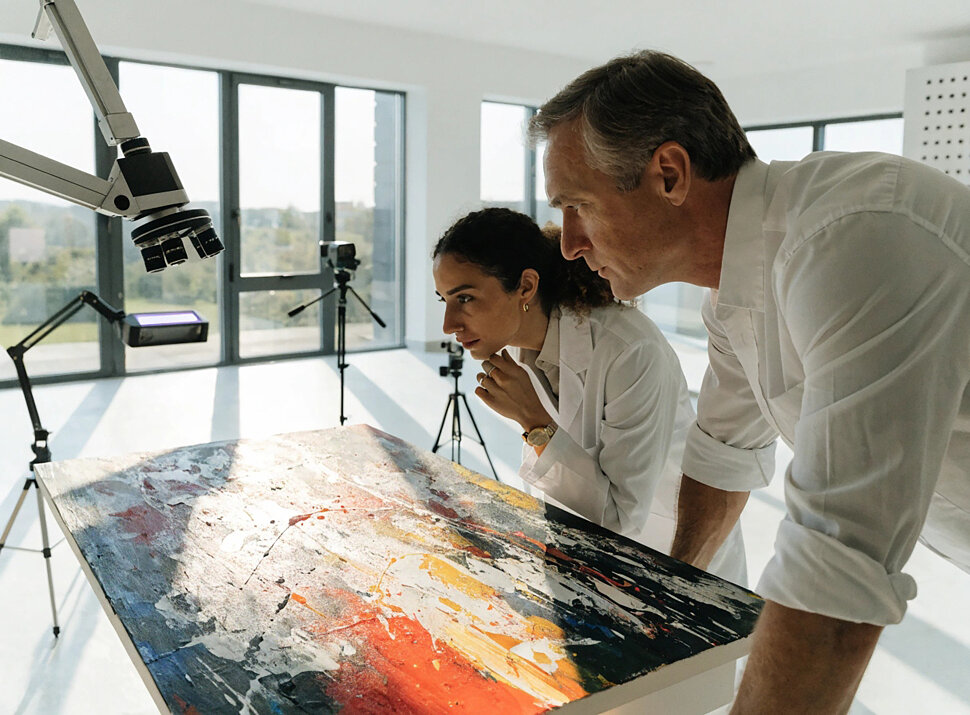
Why confirm the authorship of a painting before buying
Identifying the artist and confirming the painting's authorship saves money, time, and nerves. It helps to:
— avoid buying a fake painting disguised as an original;
— build a high-quality collection;
— protect your investments in art;
— maintain the desire to continue supporting art, rather than becoming disappointed after an unsuccessful purchase.
Free examination at ArtDom
ArtDom experts provide free preliminary consultation services on determining the author of a painting: they help identify the artist and establish authorship, as well as determine what you are looking at—an original (authentic piece), an artist's repetition, an academic copy, a replica, or an outright forgery.
If you have a painting whose author needs to be established, if you want to find out the author of a painting from a photograph, or if you need to identify an artist by their signature—ArtDom specialists will help you assess the situation and advise whether a more in-depth examination of the artwork is required.
Request a consultation with ArtDom experts on the attribution (authorship examination) of a painting