

Why a Painting You Created Yourself May Be Inspected at the Border
 Art DomOctober 12, 2026
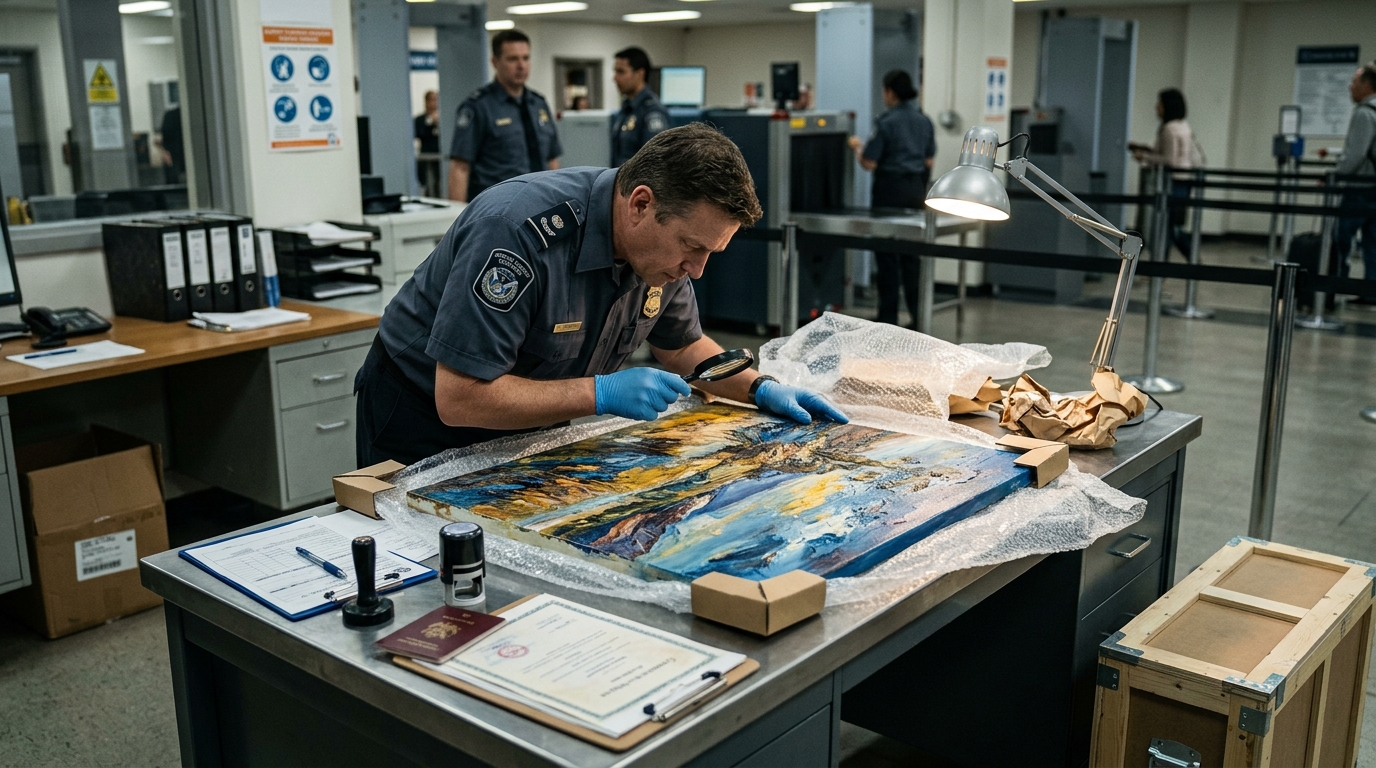
Imagine this situation: you have painted a picture, carefully packaged it, and decided to send it to relatives or a buyer abroad. It might seem that there should be no difficulties because you created the artwork yourself. However, customs officers may request additional documents or proof of the painting's origin. The reason is that exporting paintings from Ukraine is regulated by specific rules, and customs officials cannot always determine an artwork's age, authorship, or cultural significance simply by examining it.
Why Even a Painting You Created Yourself May Be Inspected at the Border
Why Being the Artist Does Not Exempt You from Customs Inspections
Many artists believe they can transport their own works without restrictions. However, creating a painting yourself does not automatically exempt it from customs inspections.
When crossing an international border, customs officers have the right to inspect the contents of luggage or international shipments, as well as the documents accompanying transported items.
This applies to both antique artworks and contemporary paintings.
How Customs Officers Determine Whether a Painting Has Cultural Value
It is not always possible to determine a painting's age and origin from its appearance. A contemporary artwork may be created using traditional techniques, while a painting from several decades ago may look almost new.
For this reason, an official examination of cultural property may be required to confirm an artwork's status.
During the examination, specialists consider the materials, estimated age, authorship, and other characteristics of the painting.
Why the Price of a Painting Is Not the Main Criterion
Even an inexpensive painting may raise additional questions if its origin is unclear.
At the same time, a high selling price for a contemporary painting does not automatically mean that it is classified as cultural property.
For customs clearance, the artwork's category, characteristics, and applicable legal requirements are just as important as its price.
How Contemporary Original Paintings Differ from Cultural Property
Which Works of Art May Be Classified as Cultural Property
Cultural property may include paintings, graphic artworks, sculptures, and other objects of historical, artistic, or cultural significance.
However, special rules apply to certain categories of contemporary artworks.
For example, Ukrainian legislation provides a list of items that generally do not require an export permit. These include certain works of contemporary art, as well as paintings and other artistic objects created after 1950.
However, if an official examination determines that a particular artwork qualifies as cultural property, its export must follow the applicable procedure.
Why a Newly Created Painting Does Not Always Require an Export Permit
If an artist has recently completed a painting, it may fall into a category of objects that can be exported without a special certificate.
However, in practice, it may still be necessary to provide documentary confirmation of the artwork's age and status.
Therefore, an export permit for a painting from Ukraine and an expert opinion are not the same thing. The former is required for exporting cultural property in cases specified by law, while the latter helps establish the artwork's status.
Can a Contemporary Painting Have Cultural Significance?
Yes. The fact that a painting was created recently does not automatically exclude its cultural importance.
For example, an artwork may be associated with significant historical events, possess exceptional artistic value, or have been created by a well-known artist.
That is why disputed cases are assessed individually, taking into account the characteristics of the particular artwork.
Why Customs Officers May Question a Painting's Origin
The Absence of an Artist's Signature and Creation Date
Not all artists sign their works. Some place their signatures on the back of the canvas, while others do not indicate the date of creation at all.
However, when a painting is transported internationally, the absence of this information may make identification more difficult.
It is advisable to prepare an artwork description in advance, specifying the artist's name, title, dimensions, materials, and year of creation.
When a Painting Looks Older Than It Really Is
Contemporary artists often use artificially aged surfaces, muted colors, and traditional painting techniques.
As a result, a recently completed painting may resemble an artwork from the 19th or 20th century.
If customs officers have doubts about its age, they may request supporting documents.
An Unknown Artist and Missing Documentation
When an artist sends a painting personally, they can usually provide information about its creation.
However, if the artwork is being transported by a relative, buyer, or representative of a transportation company, establishing its origin may be more complicated.
In such situations, purchase documents, certificates issued by the artist, photographs of the creative process, and other supporting materials can be useful. However, they do not replace an official examination when one is required.
Center for packaging valuable and fragile items in Ukraine

What Documents May Be Required to Export Your Own Painting
When an Expert Opinion Is Required
If it is necessary to determine whether an artwork qualifies as cultural property, an official state examination may be conducted.
This procedure usually requires an application, photographs, and the artwork itself.
Following the examination, an expert opinion is issued and may be used during customs clearance.
How an Expert Opinion Differs from an Export Permit
If an examination confirms that an object is not cultural property, the expert opinion can be presented to customs authorities or attached to an international postal shipment.
If the artwork is recognized as cultural property, a special export certificate may be required.
Therefore, an expert opinion on paintings, art, and fine art helps establish the status of an artwork but does not always replace an official export permit.
Can Artists Confirm the Origin of Their Paintings Themselves?
An artist can prepare an original artwork description, a certificate of authenticity, photographs taken in the studio, or sales documentation.
These materials help establish the painting's origin and confirm its connection to the artist.
However, if an official determination of cultural significance is required, the artist's own statement may not be sufficient.
How a Painting Is Inspected When Crossing the Border
What Customs Officers May Ask to See
During an inspection, customs officers may examine the artwork and ask about its origin, value, and purpose of transportation.
They may also request documents confirming the painting's characteristics.
If the artwork is being sent to a buyer, the usual requirements for declaring goods and international shipments must also be considered.
Why Carrying a Painting Personally Differs from Sending It by Post
A painting can be transported personally or sent through an international postal service or transportation company.
When carrying the artwork personally, the owner can answer customs officers' questions directly. When sending it by post, the main information must be included in the accompanying documents.
However, the chosen transportation method does not eliminate the legal requirements governing the export of paintings from Ukraine.
What Happens If the Documentation Is Insufficient?
If customs officers cannot establish the necessary information about an artwork, customs clearance may be delayed until additional documents are provided.
Therefore, it is better to clarify the requirements for a particular painting in advance rather than trying to resolve the issue at the border.
Can You Send Your Own Painting Abroad Without an Export Permit?
When a Special Export Certificate May Not Be Required
Certain categories of contemporary paintings may be exported without a special certificate.
However, this does not mean that they are exempt from all customs inspections.
It is important to consider the artwork's age, status, and the availability of documents confirming its characteristics.
Why You Should Not Rely Only on the Year of Creation
Although certain exceptions apply to artworks created after 1950, the date of creation is not the only criterion.
If a particular painting is officially recognized as cultural property, the requirements governing the export of such objects apply.
Therefore, in uncertain situations, it is advisable to seek professional guidance before transportation.
Do the Same Rules Apply to Icons and Sculptures?
Customs requirements apply not only to paintings on canvas.
The export of religious icons may require particularly careful examination of the object's age and cultural significance. This also applies to religious artworks created by contemporary artists.
Similarly, the export of sculptures depends on the materials, date of creation, and legal status of the artwork.
The applicable requirements must be determined separately for each object.
How to Send a Painting Abroad from Ukraine Without Unnecessary Difficulties
Why Preparation Should Begin with Checking the Documents
If you are looking for information about how to send a painting abroad from Ukraine, the first step is to determine which documents may be required.
It is advisable to prepare photographs, dimensions, information about the artist, and the year of creation in advance.
If there are doubts about the artwork's cultural significance, it is better to resolve any examination requirements before packaging it and handing it over to a carrier.
How to Prepare a Painting Properly for Transportation
Packaging should be selected according to the artwork's dimensions, painting technique, and condition.
For small paintings, a sturdy cardboard box with protective materials may be sufficient. Large and fragile artworks sometimes require reinforced fiberboard crates or other rigid protective structures.
It is important to protect the corners, prevent pressure on the paint layer, and secure the painting firmly inside the packaging.
What to Consider When Sending a Painting to a Buyer Abroad
If an artist sells a painting to an international buyer, the delivery arrangements, price, and documentation should be agreed upon in advance.
In addition to Ukrainian customs requirements, it is important to check the regulations governing the import of artworks into the destination country.
It is also advisable to keep documents confirming the sale and transfer of the artwork to the buyer.
When to Contact Fine Art Logistics Specialists
Professional assistance is particularly useful when a painting is large, has an unusual shape, or is especially valuable.
Specialists can help with packaging, organizing transportation, and preparing the necessary documents.
This reduces the likelihood of damage and helps avoid common mistakes during international transportation.
Common Mistakes Artists Make When Shipping Their Own Paintings
Sending a Painting Without Checking the Requirements First
One common mistake is assuming that being the creator of an artwork automatically eliminates the need for documentation.
However, customs requirements apply to the transportation of artworks regardless of who created them.
Failing to Keep Records of the Painting's Creation
Photographs of the creative process, certificates issued by the artist, and sales documents help confirm a painting's origin.
If these materials are unavailable, additional questions may arise during customs clearance.
Choosing Packaging Without Considering the Painting's Characteristics
Even a contemporary painting can be damaged during improper transportation.
Artworks with heavily textured surfaces, unstable paint layers, or unconventional supports are particularly sensitive.
As a result, saving money on packaging can sometimes lead to much higher restoration costs.
Why It Is Better to Prepare Your Own Painting for Customs Inspection in Advance
International transportation of original paintings does not necessarily involve complicated documentation. Many contemporary artworks may be exported without a special certificate if they fall within an applicable exemption.
However, this does not eliminate the need to confirm the painting's characteristics when required and comply with customs regulations.
If you are planning to export paintings from Ukraine, check the requirements in advance, prepare information confirming authorship, and arrange secure packaging. This approach is especially useful for artists who regularly send works to international buyers, galleries, and exhibition organizers.

Frequently Asked Questions (FAQ)
Can Customs Officers Inspect a Painting That I Created Myself?
Yes. Even if you personally created the artwork, customs officers may inspect its origin, age, and status. Exporting paintings from Ukraine is subject to customs regulations, so being the artist does not automatically exempt the painting from inspection.
Do I Need an Export Permit for a Contemporary Painting from Ukraine?
Not always. An export permit for a painting from Ukraine is required in cases specified by cultural property legislation. Many contemporary original artworks do not require a special certificate, although an expert opinion may be necessary if questions arise about their status.
How Can I Send a Painting Abroad from Ukraine If I Am the Artist?
If you want to know how to send a painting abroad from Ukraine, prepare photographs of the artwork, its dimensions, creation date, and information about the artist. Then clarify the documentation requirements, select appropriate packaging, and agree on transportation arrangements.
Can I Export a Painting Without the Artist's Signature?
Yes. The absence of a signature does not automatically prohibit transportation. However, it may make establishing the painting's origin more difficult. If necessary, authorship can be supported by additional materials or professional examination.
Is an Expert Opinion Required to Export My Own Painting?
The export of paintings does not always require an expert opinion. However, if official confirmation is needed that an artwork is not classified as cultural property, a state examination may be required. Its results can be used during customs clearance.
What Do Experts Examine Before a Painting Is Exported?
Specialists study the materials, painting technique, estimated age, authorship, and cultural significance of the artwork. An expert opinion on paintings, art, and fine art helps establish the object's status and determine which documents may be required to cross the border.
Can a Contemporary Religious Icon Be Sent Abroad Without a Permit?
The export of religious icons depends on the artwork's age, origin, and cultural significance. A contemporary icon does not necessarily require a special certificate, but an expert examination may be needed if its status is uncertain.
What Documents Are Required to Export a Sculpture from Ukraine?
The export of sculptures is subject to the requirements applicable to the relevant category of artworks. Depending on the object's characteristics, an expert opinion, a cultural property export certificate, and standard customs documents may be required.
Is Sending a Painting by Post Different from Carrying It Across the Border Personally?
Yes. The procedures for transporting the artwork and presenting documentation may differ. When carrying a painting personally, the owner presents the artwork and documents directly to customs officers. When sending it by post, the required information and documents accompany the shipment. However, cultural property export requirements still apply.
Can Customs Authorities Hold a Painting If the Documents Are Missing?
Yes. If questions arise about an artwork's origin or status, customs clearance may be suspended until the circumstances are clarified and the necessary documents are provided. Therefore, it is recommended to check the requirements for the particular painting before shipping.
What Artists Should Remember Before Shipping Their Paintings Internationally
Being the creator of a painting does not guarantee that it will pass through customs without questions. Customs authorities have the right to inspect artworks, and in some cases, official documents are required to confirm their status.
At the same time, contemporary original artworks do not always require a special export permit. Everything depends on the category of the artwork and the applicable regulations.
Therefore, before shipping, it is best to determine the documentation requirements, prepare a detailed description of the painting, and choose an appropriate transportation method. This will help avoid delays and ensure the safe delivery of the artwork outside Ukraine.
Call us: +380632478102.
Reliable packaging and international delivery of valuable items