



Estimated cost of art objects for delivery abroad
 Art DomMarch 2, 2025
What is the appraised value of a painting? It's the price that will be stated in the export permit, in the customs declaration, and the amount for which the painting or sculpture will be insured against loss, damage, and other risks during international shipping.
Appraising artworks before export plays a decisive role in the international trade of cultural valuables. The carefully determined value affects not only successful customs clearance, but also the calculation of insurance coverage and the formation of an effective logistics strategy. Each step – from expertise to documentation – influences the final result of transportation. In this article, we'll cover how the appraisal of artworks for export is done, what factors affect the cost of art export, how the export price of paintings, sculptures, and other objects is formed, and why it depends not only on artistic value but also on economic and legal factors. We'll also share advice on organizing safe and reliable transportation of artworks abroad to help you preserve both the material and cultural value of your works.
Where the appraised value is stated: three key documents
The main thing to understand: the appraised value is not an abstract number. It's one and the same amount that appears simultaneously in three documents when shipping an artwork internationally:
- Export permit (expert opinion from the Ministry of Culture) – the appraised value is recorded on the official document form.
- Customs declaration (CN23 or MD-2) – it's this number that customs uses to calculate duties and fees.
- Insurance policy – the amount within which the insurance company will compensate for loss or damage.
To these is usually added the invoice – a commercial document in English placed in the parcel for the customs of the destination country. The figure in the invoice must also match the previous three.
Main rule: the figure in all documents must be identical – down to the cent. If the export permit states $500, the declaration $800, and the invoice $300 – customs will hold the parcel for clarification, and the insurance company will refuse payment in case of damage.
The role of artwork appraisal in international shipping

For paintings, sculptures, icons and other objects, determining the appraised value is a key stage when shipping abroad. Without official price confirmation, delivery can become complicated, as customs authorities require expert conclusions before allowing artwork to pass to another country. This is also important for insurance: companies need to know the exact amount to correctly calculate insurance payments. In case of damage or loss, it is the existing appraisal that determines the compensation amount for the owner.
In addition, appraisal ensures the protection of cultural heritage. If artworks have historical or special artistic value, the state may impose additional conditions for their export. Thanks to competent price justification, both market value and the origin of the work can be confirmed. Official confirmation of value helps to smoothly settle financial issues between all participants in the logistics process. Professional appraisers and experts play an important role in protecting the interests of owners, since their conclusion becomes the basis for all subsequent actions, including customs and insurance.
Factors affecting the appraised value of artworks

Forming the final appraisal of artworks is a multifaceted process. First of all, the authorship and reputation of the artist are taken into account. Works by well-known masters with a confirmed exhibition history and high demand in the market can cost significantly more than works by little-known authors. The next criterion is "provenance" – the history of ownership and documentary confirmation of origin. Having a detailed base (invoices, catalogues, photo reports from exhibitions) can noticeably increase the value of art export.
An important role is also played by the technical condition and authenticity of the work. Paintings on fragile canvas, antique icons requiring restoration may have a lower price or, conversely, a higher one if it's a unique work with great historical significance. The general economic situation and fashionable trends in the art market also play a role. If demand for a certain genre or period increases, the export price of paintings and sculptures in the corresponding style can rise multiple times. The last but no less important factor is the regulatory requirements of the country from or to which the artwork is exported. Long processing, additional permits, and licenses can affect both time and financial costs.
Who determines the appraised value
Depending on the situation, the appraised value can be determined by different specialists:
- The artist themselves – for their own works, especially if they have already sold works in this price category. The artist relies on their experience, the size of the work, technique, and reputation.
- State expert of the Ministry of Culture – appraises the work when processing the export permit. The expert compares the work with auction prices of other works by the same artist or similar contemporaries.
- Gallery or art dealer – determines value based on analysis of similar works on the market, the artist's exhibition history, demand.
- Independent certified appraiser – a professional with a state license, issues an official appraisal report. This option is needed for expensive or antique works, for court, for submitting documents to a bank.
- Auction house – sets an estimate (preliminary appraisal) before the bidding. After the auction, the sale price becomes the new approximate value for works by this artist.
If the work is contemporary and the author is alive – most often the price is suggested by the artist themselves or their gallery. If the work is antique or belongs to the heritage of a famous master – an expertise from an independent appraiser or auction house is needed.
How to calculate the appraised value yourself
For contemporary works, the artist can determine the value themselves. Here's a working formula used by many contemporary artists:
Basic calculation by area: (height cm × width cm) × coefficient per cm² / 100.
- Beginner artist: 1–3 euros per cm².
- Artist with 5+ years of experience and regular exhibitions: 4–8 euros per cm².
- Experienced artist with international exhibition history: 10–20 euros per cm².
- Renowned artist with sales at auctions: from 30 euros per cm² and above.
Example: a 60×80 cm painting by an artist with average experience – (60 × 80) × 5 / 100 = 240 euros. This is the base appraisal, to which adjustments need to be added.
Adjustment coefficients:
- +15–30% – if the work is in oil technique (more valued than acrylic);
- +10–20% – if the work was exhibited at a group or solo show;
- +20–50% – if the work was mentioned in catalogues, press, monographs;
- +30–100% – if the work has provenance (history of owners) or a certificate of authenticity;
- −10–30% – if the work is smaller than A3 format or of a sketch nature.
For sculptures the formula is different – here the material (bronze, marble, ceramics), weight, production technology (casting, forging, modelling) and complexity are taken into account.
Methods and tools for appraising paintings, sculptures, icons, and other objects

Modern appraisal of artworks is based on a combination of traditional and the latest methods. One of the most widespread is comparative analysis, when an expert compares the work with similar pieces already sold at auctions or presented in art galleries. This allows determining approximate price ranges. Another significant stage is the conclusions of specialized experts who can establish the authenticity of the work by analyzing its technical features, materials, and execution style.
If necessary, laboratory studies are involved, such as X-ray fluorescence analysis or pigment study, which allows clarifying the age and origin of paints. In our time, digital solutions are gaining popularity, for example blockchain registries. They record the history of sale and the results of expertise, which complicates document forgery and increases buyer trust. If you plan to export, it's important to conduct expertise in advance to confirm the legitimacy of export and resolve potential bureaucratic issues with customs and insurance companies.
Duty-free thresholds by destination country
The duty-free threshold is the amount up to which the recipient doesn't pay customs duties and VAT. If the appraised value is below the threshold, the parcel passes without additional payments from the recipient. The values below are current for 2026.
- USA. The $800 duty-free threshold (de minimis) was abolished on 29.08.2025: every parcel must be declared, and “gift” or “for personal use” marks do not exempt it from duty.
- Germany. Duty-free threshold: €150. Above – VAT 7% (reduced rate for original art).
- France. Duty-free threshold: €150. Above – VAT 5.5% (the lowest reduced rate for art in the EU).
- United Kingdom. Duty-free threshold: £135. Post-Brexit – separate procedure. Business recipients need an EORI number. VAT 5% for original art.
- Canada. Duty-free threshold: CAD 20 (for gifts – CAD 60). One of the strictest – almost any work is subject to duty.
- Poland. Duty-free threshold: €150. Additional bonus – Ukrposhta provides a discount of up to 70% on delivery, making Poland the most convenient route for artists from Ukraine.
- Australia. Duty-free threshold: AUD 1000. High, like in the USA.
These figures are important to consider when determining the appraised value. Sometimes it makes sense to arrange shipment as "temporary export for exhibition" – then customs duties do not apply, but a guarantee letter for return of the work will be required.
Top 5 mistakes when determining the appraised value
Since 2016, ArtDom gallery has shipped more than 2,000 parcels to 70 countries worldwide. Here are the mistakes that are most common:
- Stating different amounts in different documents. The most frequent and expensive mistake. All documents – permit, declaration, invoice, insurance – must contain the same amount. A difference of even $10 gives customs grounds to hold the parcel for clarification.
- Undervaluing "so the recipient doesn't pay duty". If the work is damaged – the insurance company will pay only the declared amount. Painting worth $1000, stated $50 – you get $50. This is the most expensive mistake in the long run.
- Overvaluing "for prestige". A price of $5000 for the work of a beginner artist without exhibition history is a signal to customs and insurance about possible fraud. State the real market figure.
- Appraisal "by eye" without market analysis. The artist looks at their work and says – "I think it costs $500". And the real market price of works by this artist is $200. The recipient pays extra VAT, the artist loses in sales. Analyze your previous sales and works by colleagues of similar level.
- Ignoring currency exchange rates. Stated the value in hryvnia in the permit, in dollars in the declaration, in euros in the invoice. Conversion during customs inspection may not match due to exchange rate differences. Better to state one currency everywhere (dollars for the USA, euros for the EU, pounds for the UK).
Organizing delivery abroad: tips for safe transportation

After determining the value and preparing documents, the responsible stage begins – the actual delivery of artworks. It's important to choose a carrier with experience in transporting fragile and valuable objects. Ordinary logistics services may not comply with all safety requirements, especially when it comes to large sculptures or fragile icons. The next step is to properly organize packaging. Paintings, sculptures and icons require different packaging with internal cushioning to prevent damage.
Insurance deserves special attention. A proper policy must cover various force majeure circumstances: from mechanical damage to possible climate changes during transportation. The insurance amount must correspond to the appraised value so that the owner can count on adequate compensation in case of loss or damage. Customs clearance should also not be underestimated. You need to find out in advance about specific export rules for artistic valuables and prepare a complete package of documents. Non-compliance with rules can lead to confiscation of the work or long delays at the border.
Ensuring efficient and reliable delivery of artworks
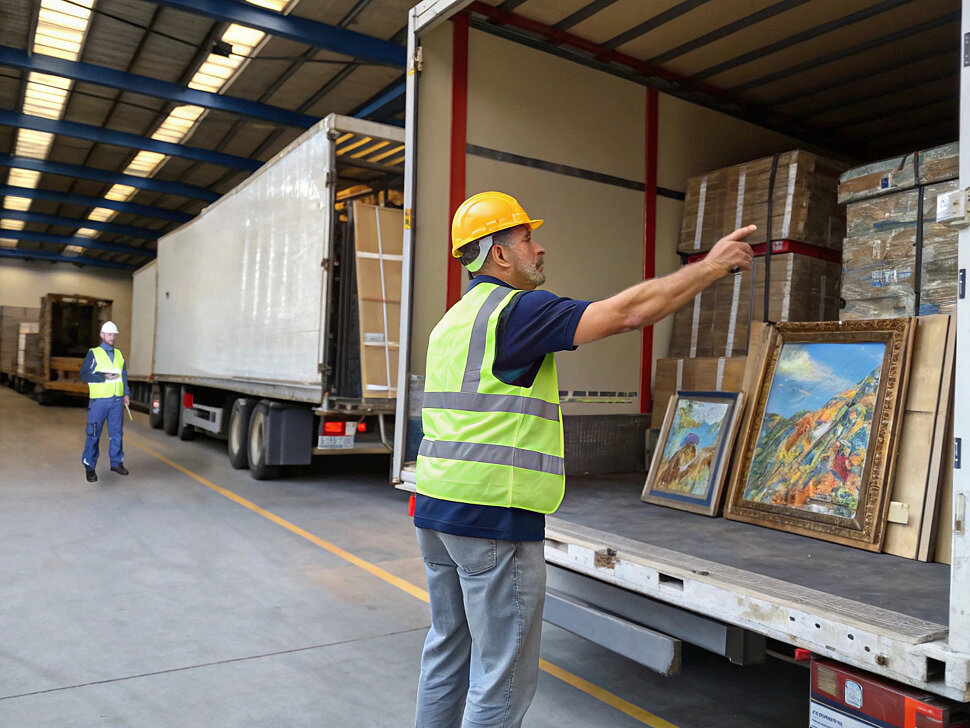
Successful transportation of valuable artistic objects depends on the coordinated coordination of several processes: from route planning and choosing carriers to compliance with legal norms and timely insurance. If the work crosses several countries, you need to make sure that all documents are valid at each transit point. Late processing can lead to additional storage costs or legal claims.
To minimize risks, it's better to enlist the support of companies specializing in international transportation of artworks. They will advise how to properly pack and insure works, and will also take on interaction with customs authorities. Saving on professional services can result in much greater costs in case of damage or delay. Thoughtful and thorough preparation guarantees that the appraised value of artworks will remain fair and retain its potential in future transactions. Proper logistics also contributes to a positive impression of foreign partners and buyers, forming a reputation as a reliable owner and supplier of cultural valuables.
How ArtDom gallery helps with appraisal
Since 2016, we have processed export permits for more than 2,000 artworks. We have a well-established procedure – appraisal of a work takes 1-2 days:
- You send us a photo of the work, dimensions, technique, and information about the author.
- Our expert compares the work with auction databases and market prices of similar works.
- We coordinate the appraised value with the state expert of the Ministry of Culture.
- You get the ready export permit with the stated value – within 1 working day.
- In parallel, we prepare the invoice, fill in the declaration, help with insurance – all figures are synchronized.
The cost of processing an export permit for a painting is 550 UAH. Remote processing is possible: you send photos and data via messenger, we ship the ready documents by Nova Poshta within Ukraine or attach them directly to the international parcel. You can create an invoice in English yourself in our free invoice generator.
If you have several works – you can process one permit for several works at once, which is cheaper and faster.
Frequently asked questions
What is the appraised value of a painting?
How is appraised value different from the sale price?
Who has the right to set the appraised value for the export permit?
What happens if I undervalue the appraised value?
What appraised value is considered "normal" for a beginner artist's work?
Can the appraised value be changed after the export permit is issued?
In what currency should the appraised value be stated?
Is insurance required for shipping a work abroad?
What if the work is shipped for an exhibition without sale – what value should be stated?
How does the appraised value affect the shipping cost?
How to prove copyright on a painting or art piece?
Can I get help with appraisal and document processing?
You may also find these related materials useful:
- What documents you need to ship paintings abroad
- How to fill out the customs declaration when shipping art
- Appraising a painting online by photo
- How much does an export permit for a painting cost
- Free invoice generator for artists
Have questions? We'll be happy to consult +38 063 247 8102
Or write to us on Telegram, Viber, or WhatsApp
You may also be interested in our gallery services
Export of paintings abroad (obtaining permit)
Attribution, expertise (establishing authorship)