


How to Properly Sign a Painting?
 Art DomJune 5, 2026
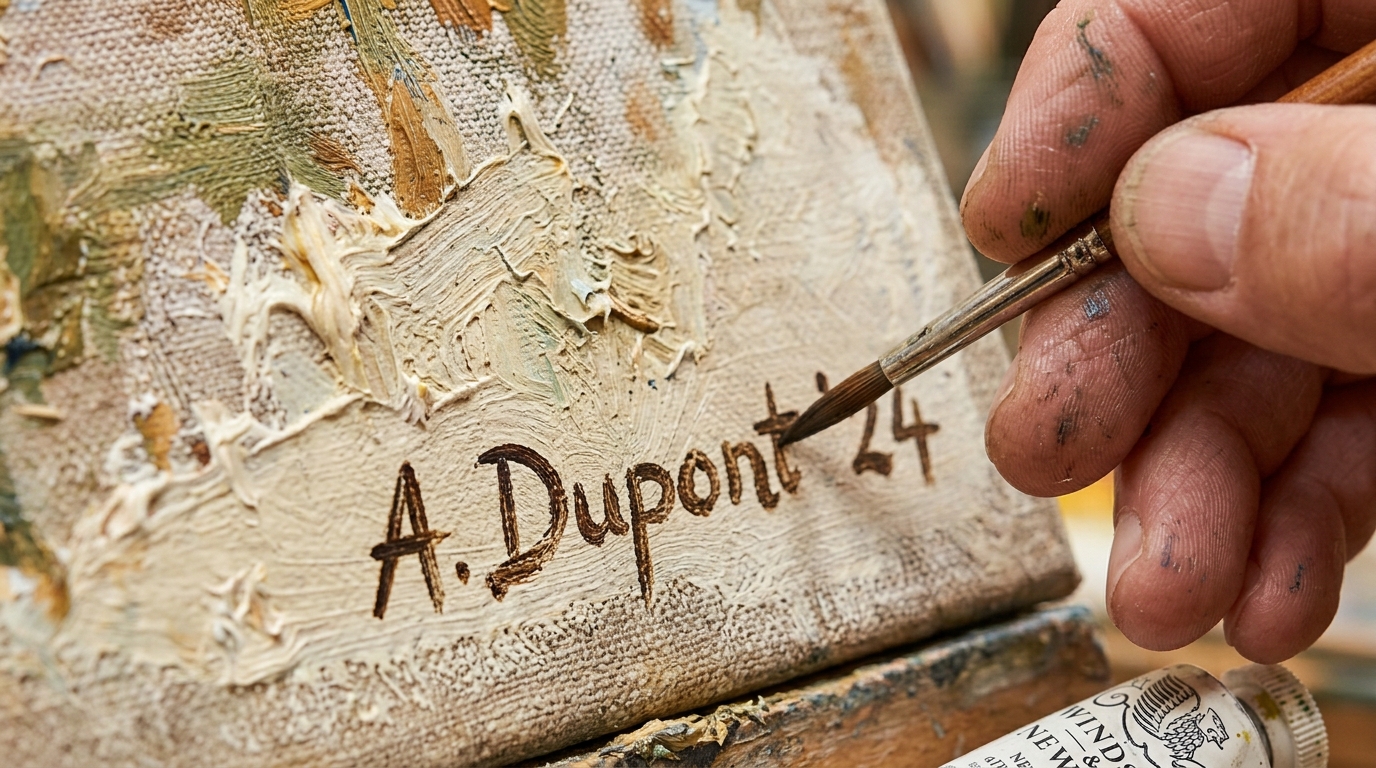
An artist's signature is not just a small element on the canvas, but an important part of the artwork. It helps to identify the author, confirms the origin of the work, and shapes the artist's professional image in the art market. For collectors, galleries, and buyers, the signature is often the first sign that the work has established authorship.
A properly executed signature helps in the future to confirm the origin of the painting and significantly facilitates the processing of documents for the work. In addition, the presence of information about the author is an important factor when preparing such documents as the certificate of authenticity, an expert opinion, or a certificate of authenticity of a painting.
Why an Artist Should Sign Their Paintings
Confirmation of Authorship of the Work
The signature is one of the main ways to designate the ownership of a work by a specific author. Even if the work is accompanied by documents, the presence of a signature significantly simplifies the identification of the painting.
Forming a Recognizable Creative Brand
Many famous artists have become recognizable not only thanks to their works but also thanks to their characteristic signature or monogram. Over time, such a signature turns into an element of a personal brand.
Increasing the Trust of Buyers and Collectors
A signed work inspires more trust from buyers. Collectors and gallerists are much more willing to purchase works whose authorship is easy to establish.
Preparing a Painting for Sale and Exhibitions
Most exhibitions, galleries, and auction sites recommend or require the presence of the author's signature. This helps avoid questions about the origin of the work and facilitates the processing of accompanying documentation.
How to Properly Place a Signature on a Painting
Signature on the Front Side of the Work
Traditionally, the signature is placed on the front side of the painting. This allows the viewer to immediately see the author's name without having to turn the work over.
Lower Right or Left Corner of the Painting
The classic option is to place the signature in the lower right corner. If the composition does not allow this, it is acceptable to use the lower left corner.
Signature, Monogram, or Author's Surname
The artist can use:
- a full surname;
- a first name and surname;
- an author's monogram;
- a creative pseudonym.
The main condition is that the signature must be recognizable and used consistently on different works.
Should the Year of Creation of the Work Be Indicated
Many artists additionally indicate the year of creation of the work next to the signature. This facilitates the identification of the work and helps in the further processing of documents.
What Language Is Best to Sign a Painting In
Signature for the Ukrainian Market
For Ukrainian buyers, it is quite acceptable to use a signature in Ukrainian or in Cyrillic.
Signature for International Buyers
If the artist works with foreign clients, it is preferable to use Latin script. Such a signature is easier for an international audience to perceive.
Why Many Artists Use English
A signature in English or in Latin script facilitates participation in international exhibitions, sale through foreign galleries, and the processing of documents for foreign buyers.
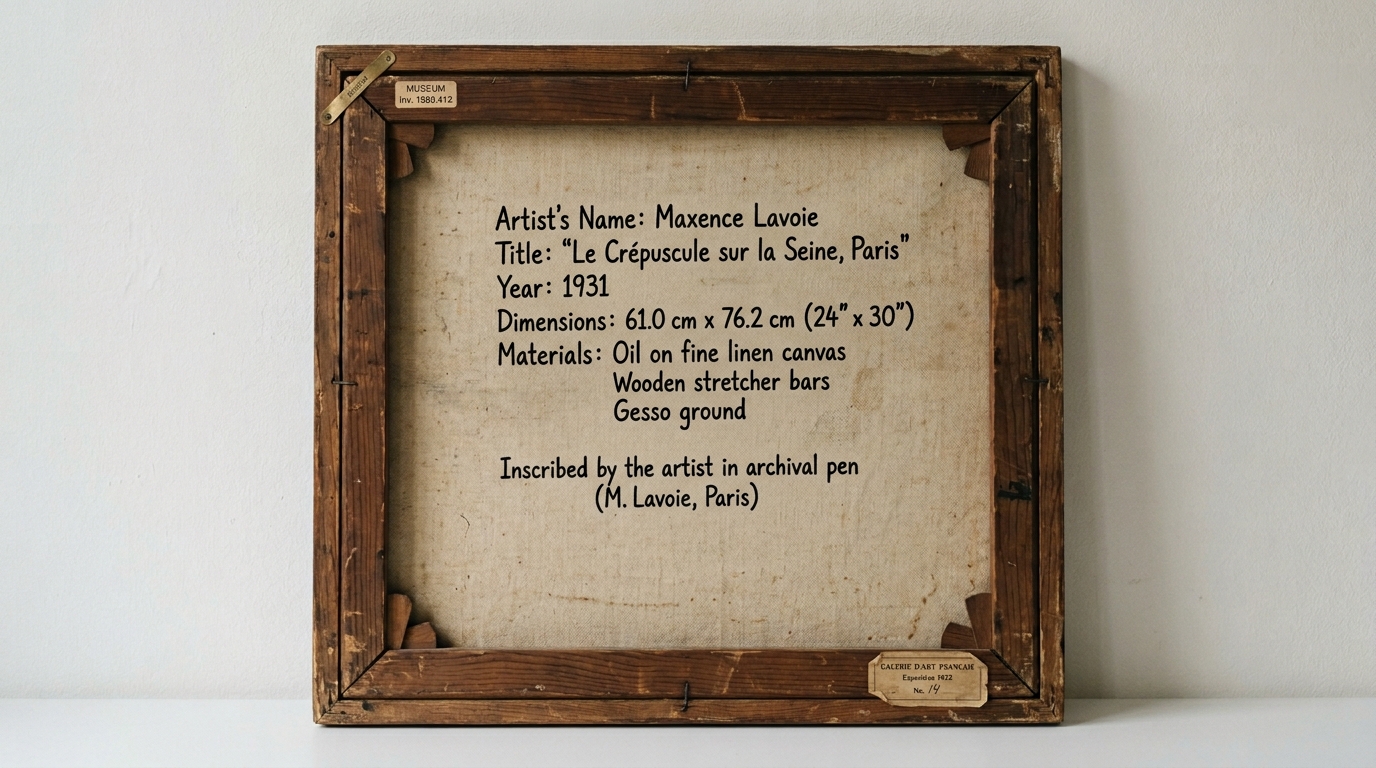
What Data Is Recommended to Be Indicated on the Reverse Side of the Painting
Artist's First Name and Surname
On the reverse side, it is advisable to indicate the full name of the author.
Year of Birth of the Author
This information helps to identify the artist more accurately.
Title of the Work
The title of the painting is recommended to be written in full.
Year of Creation of the Painting
The date of creation plays an important role in the attribution of the work.
Dimensions of the Work
The dimensions of the painting should be indicated in centimeters.
Materials and Execution Technique
It is recommended to specify the materials used in detail:
- canvas, oil;
- canvas, acrylic;
- paper, watercolor;
- mixed technique;
- cardboard and other materials.
How the Signature Helps Confirm the Authenticity of the Painting
The Role of the Signature in the Attribution of the Work
When conducting an expertise, the signature is one of the elements of the research and helps to establish the origin of the work.
What Experts Study When Confirming Authorship
Specialists analyze:
- the style of the signature;
- the features of letter writing;
- the correspondence of the signature to other works of the author;
- the location of the signature on the work.
Can the Signature Serve as Proof of Authenticity
The signature in itself is not absolute proof of authenticity. However, it significantly helps in conducting an attribution expertise.
When Additional Expertise Is Required
If doubts arise about the origin of the work, additional research on materials, execution technique, and the history of ownership of the work may be required.
Center for packaging valuable and fragile items in Ukraine
What Is a Certificate of Authenticity of a Painting
What a Certificate of Authenticity Is For
The certificate of authenticity of a painting confirms the origin of the work and contains basic information about the work and its author.
How the Certificate of Authenticity Differs from an Expert Opinion
The certificate of authenticity is usually issued by the artist or their official representative. The expert opinion is drawn up by independent specialists after conducting research.
When the Artist's Certificate Is Issued
Most often, the artist's certificate is issued when the painting is sold to the first owner.
Who Can Issue a Certificate of Authenticity of a Painting
The document can be issued by:
- the artist;
- a gallery;
- the official representative of the author;
- the artist's foundation;
- an expert organization.
What Information Should Be in the Certificate for a Painting
Information About the Author
The first name, surname, and, if necessary, biographical data of the artist are indicated.
Detailed Description of the Work
The document must contain the title of the work and its brief description.
Dimensions and Materials
Dimensions and execution technique must be recorded.
Photograph of the Painting
A photograph allows the work to be unambiguously identified.
Signature of the Author and Details of the Certificate
Each certificate for a painting must contain the author's signature and the date of issue.
How to Properly Prepare a Certificate of Authenticity for a Painting
What Data the Artist Fills In
The author indicates information about the work and confirms its origin.
What Data the Expert Confirms
If necessary, the expert checks the information and can supplement the document with the results of the research.
International Standards for Issuing Certificates
For the international market, it is recommended to use a unified format of design and duplicate information in English.
Common Mistakes When Preparing
The most common mistakes are:
- absence of a photograph of the work;
- inaccurate dimensions;
- absence of the date of issue;
- incomplete description of the work.
How the Signature and Certificate Increase the Value of the Work
Trust of Buyers and Collectors
Working with documents inspires significantly more trust from buyers.
Sale Through Galleries and Auctions
Most professional platforms prefer to work with works that have a certificate of authenticity for a painting.
International Exhibitions and Art Fairs
The presence of documents facilitates participation in international events.
Transfer of the Work by Inheritance
Documents help preserve the history of the work and confirm its origin for future owners.
Additional Ways to Identify a Painting
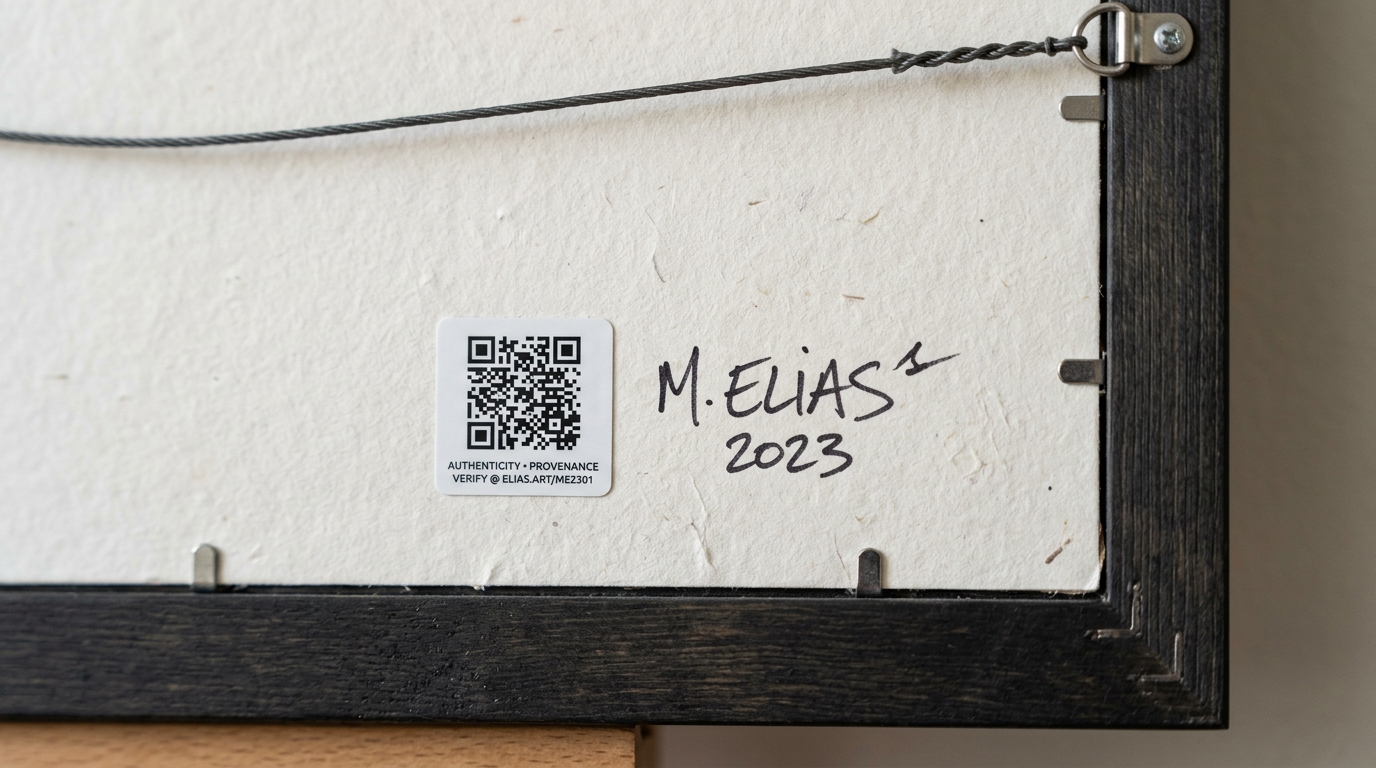
Artist's QR Code
A QR code allows quick access to information about the work.
Author's Website
A personal website helps confirm authorship and the history of the work.
Digital Archive of Works
An electronic catalog facilitates the identification of paintings and record keeping.
Online Passport of the Painting
Modern artists increasingly use digital passports of works.
Common Mistakes of Artists When Signing Paintings
Absence of a Signature
An unsigned work is much more difficult to identify in the future.
Lack of Information on the Reverse Side
The lack of information complicates the processing of documents and the conduct of expertise.
Use of Unstable Materials
The signature must be made with archival materials that are resistant to fading.
Discrepancy of Data in the Certificate and on the Painting
All information must completely match the actual characteristics of the work.
Where to Order a Certificate of Authenticity of a Painting
When the Artist's Certificate Is Sufficient
For modern original works, a document issued by the artist themselves is often sufficient.
When Expert Confirmation Is Required
For expensive works, works by famous authors, and disputed cases, additional expertise may be needed.
How to Issue a Certificate of Authenticity Through the ArtDom Gallery
The ArtDom Gallery helps to prepare documents, issue a certificate, and conduct the necessary consultations.
What Documents Will Be Needed for Processing
Usually required are:
- photographs of the painting;
- data about the author;
- dimensions of the work;
- information about materials and execution technique.
FAQ
What is a certificate of authenticity and why is it needed?
A certificate of authenticity is a document that confirms the origin and authorship of a work of art. It helps buyers to be sure of the authenticity of the work, increases trust in the artist, and simplifies the further sale of the painting in the art market.
How does a certificate of authenticity differ from an expert opinion?
The certificate of authenticity is usually issued by the artist, gallery, or official representative of the author and confirms the origin of the work. The expert opinion is drawn up by specialists after conducting art historical research and can be used for additional confirmation of authorship and authenticity of the work.
Who can issue a certificate of authenticity of a painting?
In most cases, the certificate of authenticity of a painting is issued by the artist themselves when selling the work. For works by famous authors, such documents may also be issued by galleries, artists' foundations, heirs, or official representatives of the author.
What information should a certificate for a painting contain?
A quality certificate for a painting usually includes the author's name, the title of the work, the year of creation, dimensions, materials, a photograph of the work, the date of issue of the document, and the artist's signature. The more detailed the document is filled out, the easier it is to confirm the origin of the work in the future.
When is a certificate of authenticity for a painting necessary?
A certificate of authenticity for a painting is especially important when selling works of art through galleries, auctions, and international platforms. It may also be required for insurance, participation in exhibitions, and the transfer of the work by inheritance.
What is an artist's certificate?
An artist's certificate is a document that the author independently issues for their own work of art. Such a certificate confirms that the work was created precisely by this artist and contains basic information about the painting.
How is a certificate of authenticity of a painting useful for collectors?
The presence of a certificate of authenticity of a painting significantly increases the trust of collectors and investors. In addition, a properly issued certificate of authenticity of a painting helps preserve the history of the work and simplifies its subsequent sale or transfer to new owners.
Conclusion
The artist's signature is an important part of a professional approach to the creation of a work of art. It helps to confirm authorship, form the recognition of the author, and facilitates the identification of the painting in the future.
No less important is the document certificate of authenticity of a painting, which confirms the origin of the work and increases the trust of buyers and collectors. A properly issued certificate of authenticity of a painting helps with sales, participation in exhibitions, insurance, and the transfer of the work by inheritance.
The presence of a signature, a complete description of the work, and a well-executed certificate significantly increases the value and liquidity of a work of art in the modern art market.
Call us: +380632478102.
Reliable packaging and international delivery of valuable items