



World Customs Tariff Database
 Art DomMay 15, 2026
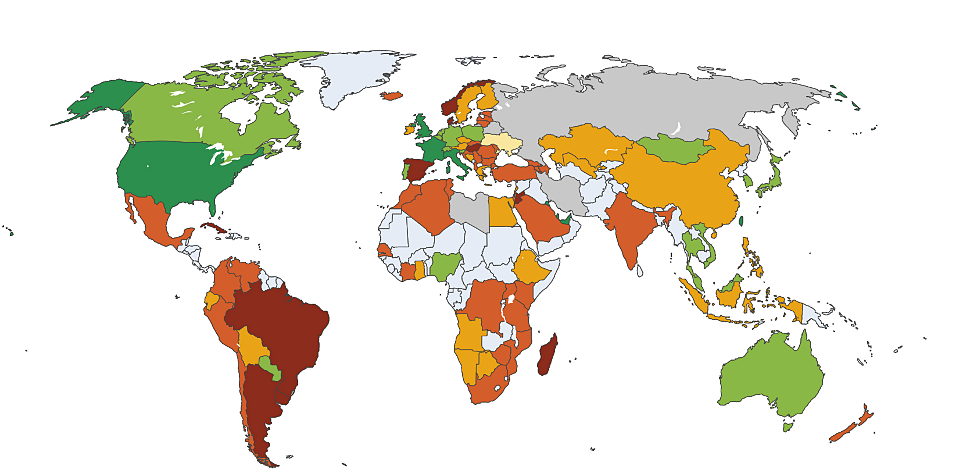
If you are an artist or a gallery and you send paintings, drawings, graphics or sculptures abroad, it is important to know in advance how much the recipient (buyer) will have to pay when they receive the parcel. This article collects an up‑to‑date database of customs duties and VAT rates on art objects in more than 50 countries worldwide. At the bottom is an interactive map where green countries mean minimal duties (or their complete absence) and red countries show the highest rates. Just hover the cursor or tap on the country to see the details.
This is not just a reference table – it is a practical tool for anyone who sells art abroad. In most countries there is an international convention that original works of art are exempt from customs duty, but they are subject to import VAT when entering the country. The size of this VAT can vary from 0% (Hong Kong, Switzerland under certain conditions) up to 27% (Hungary). This difference significantly affects the final price paid by a foreign buyer – and therefore your decision about which country to ship to.
HS codes for art objects
Before looking at the rates, it is important to correctly classify your item. An HS code (Taric/Customs code) is an international number used by customs to determine what duties and VAT to apply. For art shipped from Ukraine the following codes are used:
- 9701 91 0000 – modern paintings, drawings and pastels, made entirely by hand (oil painting, acrylic, watercolour, graphics).
- 9701 21 0000 – paintings, drawings and pastels that are over 100 years old (antique paintings).
- 8306 21 0000 – souvenir sculptures and figurines (mass production, serial).
- 9703 10 0000 – modern author sculptures (originals made by an artist by hand).
- 9703 90 0000 – antique sculptures over 100 years old.
In most countries, goods classified in chapter 97 of the HS code have a zero customs duty – this is an international norm that protects cultural exchange. However, VAT (import VAT) works differently and varies greatly from country to country. It is this VAT that needs to be considered.
Interactive map of customs duty levels
On the map below, colour indicates the level of tax burden when importing paintings and sculptures from Ukraine: green means minimal rates or 0%, light green means 5–10%, yellow means 10–15%, orange means 15–20%, and dark red indicates high rates of 20% or more.
Full table: import VAT and customs duties for art from Ukraine
The table contains 113 countries, grouped by region. Use Ctrl+F (on a computer) and type a country name for a quick search.
Europe
| Country | VAT/tax | Duty | Comment |
|---|---|---|---|
| United Kingdom | 5% (reduced for art) | 0% | After Brexit a reduced VAT of 5% applies on importing original art (standard rate 20%). Applicable to all works under HS code 9701. The duty‑free allowance is £135. |
| Italy | 5% (from June 2025) | 0% | Since June 2025 Italy has sharply reduced VAT on art import from 22% to 5%, making it one of the most attractive EU markets. Applies to original paintings, sculptures and prints. |
| France | 5.5% (reduced) | 0% | One of the lowest rates in the EU – 5.5% on original works (paintings, drawings, sculptures, lithographs). Standard VAT is 20%. Customs duty 0%. |
| Belgium | 6% (reduced) | 0% | Reduced VAT of 6% on original art. Standard rate 21%. Customs duty 0%. |
| Germany | 7% (reduced from 2025) | 0% | From early 2025 Germany lowered VAT on original art from 19% to 7% for traditional works – paintings, author sculptures and limited signed prints. Digital works and mass reproductions remain at 19%. |
| Luxembourg | 8% (reduced) | 0% | Reduced VAT of 8% on cultural goods. Standard VAT 17% (the lowest in the EU). Customs duty 0%. |
| Netherlands | 9% (reduced) | 0% | Reduced VAT 9% on cultural goods including art. Standard VAT 21%. Customs duty 0%. |
| Poland | 8% (reduced for art) | 0% | Reduced VAT 8% on importing original works of art. Standard VAT 23%. Convenient gateway for shipping art from Ukraine into the EU. |
| Portugal | 6% (reduced) | 0% | Reduced VAT 6% on original works of art. One of the lowest in the EU. Customs duty 0%. |
| Slovenia | 9.5% (reduced) | 0% | Reduced VAT 9.5% on original art. Standard VAT 22%. Customs duty 0%. |
| Switzerland | 8.1% (standard) or 0% (freeports) | 0% | Standard Swiss VAT is 8.1%. Swiss freeports (Geneva, Zurich) allow art to be stored without paying VAT, making the country a major art hub. |
| Austria | 13% (reduced) | 0% | Reduced VAT 13% on original art. Standard rate 20%. Customs duty 0%. |
| Bosnia & Herzegovina | 17% (standard) | 0% | Standard VAT 17%. Customs duty 0%. |
| Greece | 13% (reduced) | 0% | Reduced VAT 13% on original works of art. Standard rate 24%. Customs duty 0%. |
| Ireland | 13.5% (reduced) | 0% | Reduced VAT 13.5% on original works of art. Standard rate 23%. Customs duty 0%. |
| Finland | 10% (reduced) | 0% | Reduced VAT 10% on import of original art. Standard rate 25.5%. Customs duty 0%. |
| Czechia | 15% (reduced) | 0% | Reduced VAT 15% on cultural goods. Standard rate 21%. Customs duty 0%. |
| Sweden | 12% (reduced) | 0% | Reduced VAT 12% on original works of art. Standard rate 25%. Customs duty 0%. |
| Albania | 20% (standard) | 0% | Standard VAT 20% on imports. Customs duty 0%. |
| Bulgaria | 20% (standard) | 0% | Standard VAT 20% applied to all art imports. Customs duty 0%. |
| Iceland | 24% (standard) | 0% | High standard VAT 24%. No reduced rate for art. Customs duty 0%. |
| Latvia | 21% (standard) | 0% | Standard VAT 21% on art imports. Customs duty 0%. |
| Lithuania | 21% (standard) | 0% | Standard VAT 21% on importing art. Customs duty 0%. |
| Moldova | 20% (standard) | 0% | Standard VAT 20% on import. Customs duty 0% for art. |
| Romania | 19% (standard) | 0% | Standard VAT 19% applies to all imports. No reduced rate for art. Customs duty 0%. |
| Serbia | 20% (standard) | 0% | Standard VAT 20%. Customs duty 0% for original art. |
| Slovakia | 20% (standard) | 0% | Standard VAT 20% applies to all imports, including art. Customs duty 0%. |
| Croatia | 25% (standard) | 0% | Standard VAT 25%. No reduced rate for art. Customs duty 0%. |
| Estonia | 22% (standard) | 0% | Standard VAT 22% applies to all imports. No reduced rate for art. Customs duty 0%. |
| Hungary | 27% (highest in the EU) | 0% | Hungary has the highest VAT rate in the EU (27%). No reduced rate for art. Customs duty 0%. |
| Denmark | 25% (no reduced rate) | 0% | Denmark does not apply a reduced rate for art – standard VAT 25% applies. One of the highest in the EU. Customs duty 0%. |
| Spain | 21% (from early 2026) | 0% | Note: At the beginning of 2026 Spain introduced a 21% import tax on art – the highest in Western Europe for this category. Art dealers are protesting against the measure. Customs duty 0%. |
| Norway | 25% (standard) | 0% | Norway is not an EU member. It has a high standard VAT of 25% on all imports, including art. Customs duty 0%. |
| Belarus | — | — | Direct export of art from Ukraine to Belarus is severely restricted due to the war and sanctions. |
| Russia | — | — | Direct export of art from Ukraine to Russia is prohibited due to the war. |
| Ukraine | Point of origin | — | This is your origin country. The rates in this article refer to what the buyer will pay when receiving a parcel from Ukraine. |
Asia & Middle East
| Country | VAT/tax | Duty | Comment |
|---|---|---|---|
| Hong Kong | 0% | 0% | Hong Kong is a free trade zone for art – no VAT and no customs duties on original artworks. |
| Qatar | 0% (VAT waived for cultural goods) | 0% | Qatar has no VAT on art imports and no customs duty on original works. |
| Kuwait | 0% | 0% | No VAT and no customs duty on art, making Kuwait an attractive destination. |
| United Arab Emirates | 0% | 0% | The UAE promotes itself as an art hub with 0% VAT and no customs duties on original art (chapter 97 items). |
| Taiwan | 5% (VAT) | 0% | Taiwan charges a 5% VAT on imported art. No customs duty on original works. |
| Vietnam | 5% (VAT) | 0% | A 5% VAT applies when importing art. No customs duty on chapter 97 goods. |
| Malaysia | 6% (GST) | 0% | Malaysia charges 6% GST on art imports. No customs duty on original works. |
| Mongolia | 10% (VAT) | 0% | Standard VAT on imported art. No customs duty for chapter 97 items. |
| Singapore | 8% (GST in 2026) | 0% | Singapore imposes an 8% goods and services tax on art imports. No customs duty on original works. |
| Thailand | 7% (VAT) | 0% | Thailand charges 7% VAT on imported art. No customs duty on chapter 97 goods. |
| South Korea | 10% (VAT) | 0% | South Korea applies 10% VAT on original artworks. No customs duty for chapter 97 goods. |
| Japan | 10% (consumption tax) | 0% | Japan charges 10% consumption tax on imported art. Customs duty is 0%. |
| Indonesia | 11% (VAT) | 0% | Indonesia imposes 11% VAT on art imports. There is no customs duty for chapter 97 art, but administrative handling fees may apply. |
| Kazakhstan | 12% (VAT) | 0% | Kazakhstan levies 12% VAT on imported art. Customs duty is zero for chapter 97 goods. |
| China | 13% (VAT) | 0% | China applies 13% VAT on imported art, though certain cultural exchange programs can grant temporary duty‑free entry. Customs duty is 0% for chapter 97 goods. |
| Lebanon | 15% (VAT) | 0% | Lebanon applies 15% VAT on imported art. No customs duty on original artworks. |
| Uzbekistan | 15% (VAT) | 0% | Uzbekistan charges 15% VAT on art imports but no customs duty on chapter 97 goods. |
| Philippines | 12% (VAT) | 0% | The Philippines impose 12% VAT on art imports. No customs duty on original artworks. |
| Azerbaijan | 18% (VAT) | 0% | Azerbaijan levies 18% VAT on art imports. Customs duty is waived for chapter 97 goods. |
| Armenia | 20% (VAT) | 0% | Armenia charges 20% VAT on art imports but exempts original artworks from customs duty. |
| Georgia | 18% (VAT) | 0% | Georgia imposes 18% VAT on imported art. Customs duty is 0% for chapter 97 goods. |
| Israel | 17% (VAT) | 0% | Israel applies 17% VAT on art imports. No customs duty on original artworks. |
| India | 18% (GST on import) | 10% | India levies 10% customs duty on original art plus 18% GST on import. Some states may add further taxes. Hand‑carried works may be assessed differently. |
| Saudi Arabia | 15% (VAT) | 5% | Saudi Arabia imposes a 15% VAT on imported art and a 5% customs duty. Recent free‑trade zones may offer relief for cultural goods. |
| Turkey | 20% (VAT) | 10% | Turkey charges 20% VAT on art imports and a 10% customs duty. Some artwork categories may benefit from reduced rates. |
| Jordan | 16% (VAT) | 10% | Jordan applies 16% VAT and 10% customs duty on art imports. The total tax burden is relatively high for the region. |
| Iran | 9% (VAT) | 5% | Iran levies 9% VAT and 5% customs duty on imported art. Additional handling fees may apply. |
North & South America
| Country | VAT/sales tax | Duty | Comment |
|---|---|---|---|
| United States | — (no federal VAT) | 0% | The US has no federal VAT. Original paintings and sculptures are duty‑free under chapter 97. However state sales tax (2.9–7%) may be applied on import depending on the state. Some states may require an import permit or disclosure. |
| Canada | 5% (GST) | 0% | Canada applies a 5% goods and services tax (GST) on art imports. There is no customs duty on original works under chapter 97. |
| Paraguay | 0% | 0% | Paraguay is one of the few Latin American countries with zero VAT and zero customs duty on art imports. |
| Bolivia | — (no VAT, but import tax varies) | 0–10% | Bolivia has no VAT on art imports but may impose an import tax up to 10% depending on classification. Original works under chapter 97 are often exempt. |
| Ecuador | 12% (VAT) | 0% | Ecuador charges 12% VAT on art imports. No customs duty on original artworks under chapter 97. |
| Venezuela | 16% (VAT) | 0–10% | Venezuela imposes 16% VAT on art imports. Customs duty on original art under chapter 97 is typically 0%, but general import duties up to 10% may apply. |
| Colombia | 19% (VAT) | 0% | Colombia applies 19% VAT on art imports. No customs duty on original artworks under chapter 97. |
| Mexico | 16% (VAT) | 0% | Mexico charges 16% VAT on imported art but exempts original works from customs duties. |
| Peru | 18% (VAT) | 0% | Peru imposes 18% VAT on imported art. Customs duty for original works under chapter 97 is waived. |
| Chile | 19% (VAT) | 6% | Chile imposes 19% VAT on art imports and a 6% customs duty. Temporary exhibitions may qualify for duty exemption. |
| Argentina | 10.5% (VAT) | 0–10% | Argentina charges 10.5% VAT on art imports. Customs duty for original works may be 0%, but general import duties up to 10% apply for decorative pieces. |
| Brazil | 20% (ICMS) | 0–15% | Brazil levies a state tax (ICMS) around 20% on imported art, and customs duties can be up to 15%. Some states may have reduced rates for cultural goods. |
| Cuba | — | — | Art export and import to Cuba is highly restricted. Consult a specialised broker for current rules. |
| Uruguay | 22% (VAT) | 10% | Uruguay applies 22% VAT and a 10% customs duty on art imports. Temporary imports for exhibitions may be duty‑free. |
Africa
| Country | VAT/tax | Duty | Comment |
|---|---|---|---|
| Nigeria | 5% (VAT) | 0% | Nigeria charges 5% VAT on art imports. Customs duty is waived for original works under chapter 97. |
| Angola | 7% (VAT) | 0–10% | Angola has a 7% VAT on imports, and customs duty for art can be up to 10% depending on classification. |
| Botswana | 12% (VAT) | 5% | Botswana applies 12% VAT and a 5% duty on art imports. There may be additional handling charges. |
| Ghana | 15% (VAT) | 5% | Ghana imposes 15% VAT and a 5% import duty on art. Additional taxes may apply for luxury goods. |
| Egypt | 14% (VAT) | 5% | Egypt levies 14% VAT and a 5% customs duty on art imports. Special permits may be required for antiques. |
| Namibia | 15% (VAT) | 0% | Namibia applies 15% VAT on art imports. There is no customs duty for chapter 97 goods. |
| Ethiopia | 15% (VAT) | 5% | Ethiopia charges 15% VAT and 5% customs duty on art imports. Cultural heritage regulations may apply to ancient works. |
| Algeria | 19% (VAT) | 10% | Algeria applies 19% VAT and a 10% import duty on art. Additional fees may be charged on luxury goods. |
| Democratic Republic of the Congo | 16% (VAT) | 10% | The DRC imposes 16% VAT and a 10% customs duty on art imports. Transport insurance and local taxes can significantly add to costs. |
Oceania
| Country | VAT/tax | Duty | Comment |
|---|---|---|---|
| Australia | 10% (GST) | 0% | Australia charges 10% goods and services tax on art imports. Original works under chapter 97 are duty‑free. |
| New Zealand | 15% (GST) | 0% | New Zealand imposes 15% goods and services tax on art imports. There is no customs duty on original artworks. |
EU notes
Although most EU countries charge a reduced VAT of 5–10% on art imports, there are outliers: Spain (21%), Denmark (25%) and Hungary (27%) have the highest rates. Germany, France and Italy have the lowest in Western Europe at 5–7%. Switzerland, though not in the EU, offers freeports in Geneva and Zurich with no VAT if the art remains in the bonded zone.
Since 2025 the EU has tightened rules: import of cultural items older than 100 years requires mandatory certification. This does not apply to contemporary art but is mandatory for antiques.
For artists from Ukraine the easiest entry to the EU is through Poland or Germany (close, with direct logistics and clear documentation), but the most favorable VAT to pay is in France (5.5%) or Italy (5%).
Top 5 mistakes when sending art abroad
- Wrong HS code on the invoice. The description “painting” is too vague. The exact code 9701 91 0000 qualifies your work for zero customs duty. Without a correct code the default rates may apply.
- Describing the work as “decoration” or “interior”. This automatically classifies it as a decorative item with VAT 20–27%. Use “original artwork” or “original sculpture”.
- Under‑declared value on the invoice. You might think it reduces the buyer’s tax, but customs check market values and a low declaration can result in delays, fines or confiscation.
- No certificate of authenticity. Without it customs may treat the work as a reproduction rather than an original. Provide a certificate to avoid extra taxes.
- Not warning the buyer about VAT. The buyer may refuse to pay VAT on delivery and the parcel returns at your cost. Always inform buyers about possible taxes in advance.
DDU vs DDP: who pays the duties?
When shipping internationally there are two main regimes for paying customs charges:
- DDU (Delivered Duty Unpaid) – the standard regime. The buyer pays VAT and any duties upon receiving the parcel. The courier collects the charges before releasing the package.
- DDP (Delivered Duty Paid) – the seller pays all duties and taxes in advance. The buyer receives the parcel with no additional payment. This is more convenient for the buyer but requires you to know the exact rates in the destination country.
For expensive works (above $1 000) we recommend DDP – it is a sign of respect to the buyer and ensures they won’t refuse the parcel. The VAT amount is included in the price or invoiced separately.