


How to Properly Describe a Painting for Export Documents
 Art DomMay 8, 2026

If a painting needs to be sent abroad, it is important not only to choose a carrier and packaging. One of the first steps is to correctly describe the artwork for the documents. Based on the description, specialists, experts, and customs authorities understand exactly what is being exported: a contemporary painting, old painting, icon, graphic work, sculpture, or another art object.
An accurate description helps prepare documents faster and understand whether a permit to export a painting from Ukraine is required. This is especially important if you are already trying to understand how to send a painting abroad from Ukraine without delays.
Why the Description of a Painting Is Important for Export Abroad
The Description Helps Identify the Artwork
The description records the main details of the painting: the author, title, technique, material, dimensions, year of creation, condition, signature, and frame. This makes it possible to clearly distinguish the artwork from other art objects and correctly include it in the documents.
Inaccurate Data Can Delay Document Processing
Mistakes in the description may raise questions: for example, if the dimensions are incorrect, the signature is not mentioned, or an old work is described as contemporary. In urgent shipments, such inaccuracies can delay the export of paintings from Ukraine.
For Customs and Experts, Not Only Photos Matter, but Also the Painting’s Characteristics
Photos show the appearance of the artwork, but experts also need its characteristics: technique, base material, dimensions, condition, origin, and approximate period of creation.
What Data Should Be Included in the Painting Description
Author, Title, and Year of Creation
Indicate the author if they are known. If not, it is better to write “unknown author” rather than guess. The title should also be indicated exactly or conditionally: “Landscape,” “Portrait,” “Still Life.” The year of creation should be written exactly or approximately if there are grounds for this.
Technique: Oil, Acrylic, Watercolor, Graphics
The technique is the way the work was created: oil, acrylic, watercolor, pastel, pencil, ink, tempera, mixed media. Do not confuse technique with genre: “landscape” is a genre, while “oil on canvas” is the technique and material.
Base Material: Canvas, Cardboard, Paper, Wood
The base is the material on which the artwork is made: canvas, cardboard, paper, wood, plywood, or another material. For example: “oil on canvas,” “watercolor on paper,” “tempera on wood.”
Dimensions of the Painting With and Without the Frame
It is better to indicate the dimensions separately: the size of the artwork itself and the size with the frame. For example: “40 × 60 cm without frame, 55 × 75 cm with frame.” This is important for documents, packaging, and delivery.
Signature, Inscriptions, Stamps, and Marks on the Back
Indicate whether there is a signature, date, author’s inscriptions, exhibition labels, stamps, inventory numbers, or gallery stickers. The reverse side often contains important information about the painting’s origin.
How to Describe the Condition of a Painting
Condition of the Canvas, Paper, or Other Base
Describe whether there is deformation, tears, creases, traces of moisture, sagging canvas, or damage to the paper. For old works, this is especially important.
Preservation of the Paint Layer and Varnish
It is necessary to indicate whether there are cracks, flaking, darkened varnish, dirt, or abrasions. Do not hide damage: during inspection, it may be noticed anyway.
Presence of Cracks, Abrasions, Stains, or Signs of Restoration
Defects can be described in simple words: “there are abrasions along the edges,” “cracks in the paint layer are visible,” “there are stains on the paper,” “there are signs of restoration.”
Condition of the Frame, Glass, and Mounts
If the painting is framed, describe the condition of the frame as well: chips, cracks, old mounts, glass, damaged corners. This is important both for documents and for packaging.
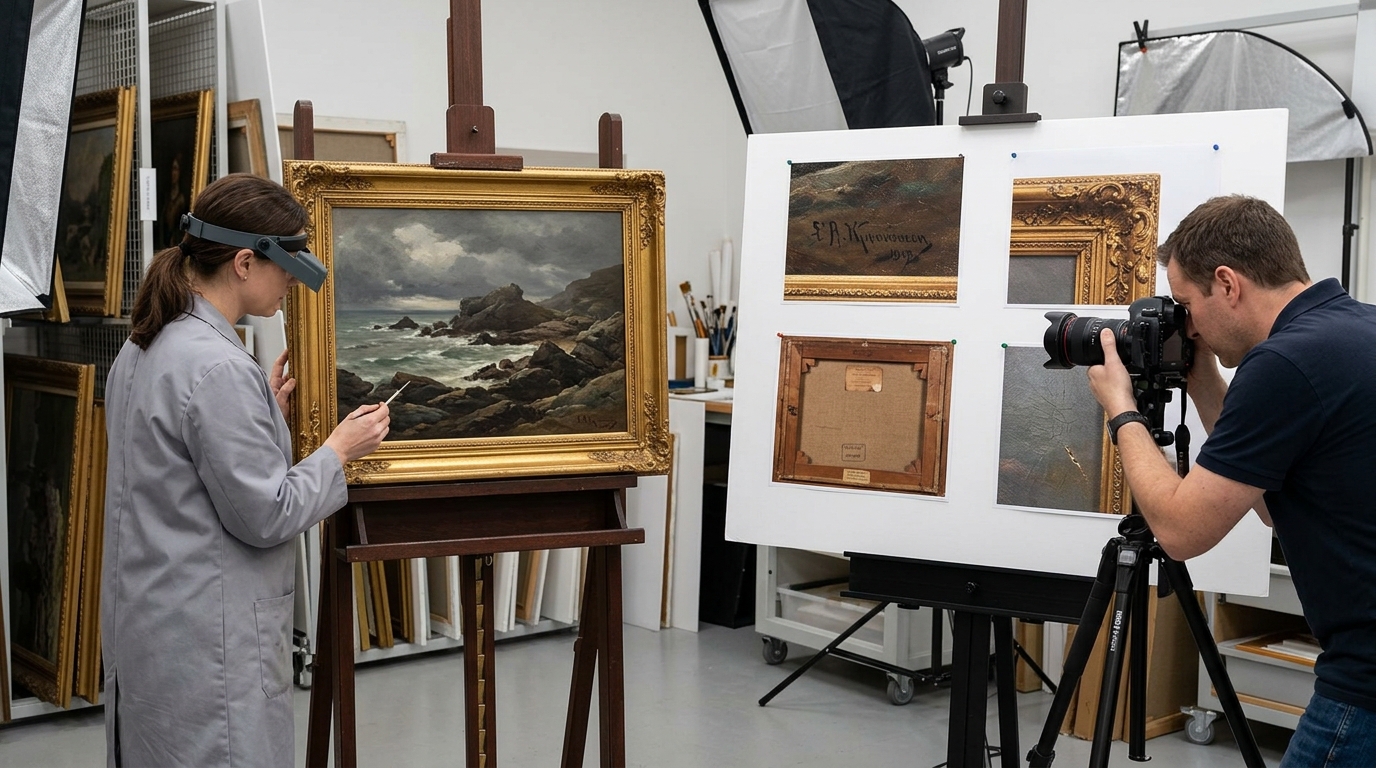
What Photos Should Be Prepared Together With the Description
General View of the Painting in Good Lighting
Take a photo of the entire painting in even lighting, without strong glare or distortion. The artwork should fit completely in the frame.
Close-Up Photo of the Author’s Signature
If there is a signature, monogram, or date, be sure to take a separate close-up photo.
Photo of the Back Side of the Painting
The back side should be photographed completely. It may contain inscriptions, labels, stamps, traces of restoration, or old mounts.
Photos of the Frame, Corners, Defects, and Important Details
Separately photograph the frame, corners, damage, glass, mounts, texture, labels, and other important details.
Center for packaging valuable and fragile items in Ukraine

How Descriptions Differ for Different Types of Art Objects
Description of Painting on Canvas or Cardboard
For painting, indicate the author, title, technique, base material, dimensions, condition, signature, and presence of a frame. If the export of painting is planned, these details help determine what documents may be required.
Description of Icons Before Export Abroad
The export of icons requires special attention. In the description, it is important to indicate the base material, technique, size, condition of the board, presence of an oklad, darkening, cracks, signs of restoration, and inscriptions.
Description of Graphics, Watercolors, and Works on Paper
For works on paper, indicate the technique, sheet size, paper condition, presence of passe-partout, glass, signature, stains, creases, or yellowing.
Description of Sculptures and Non-Standard Art Objects
If the export of sculptures is planned, it is necessary to indicate the material, dimensions, weight, condition, presence of a signature, mark, base, damage, and fragile elements.
Permit to Export a Painting from Ukraine: How the Description Is Connected to Documents
Why the Description Is Used When Preparing the Permit
A permit to export a painting from Ukraine is issued for a specific object, so the description must be accurate. It is not enough to write “painting in a frame” - it is necessary to indicate the characteristics by which the artwork can be identified.
How Data About the Painting Helps Experts Prepare a Conclusion
Photos and description help experts evaluate the artwork, determine the technique, period, condition, and possible cultural value. In some cases, an expert conclusion on paintings, art, and painting may be required.
When Additional Information About the Artwork’s Origin May Be Needed
Additional information is needed if the painting is old, the author is unknown, the work was inherited, purchased long ago, or visually resembles an object of cultural value. Receipts, contracts, certificates, old photos, and family history can be useful.
Common Mistakes When Describing a Painting for Export
Indicating Only the Dimensions With the Frame
For documents, it is better to indicate separately the size of the artwork itself and the size with the frame.
Not Photographing the Back Side and the Signature
Without photos of the signature and back side, it is more difficult for experts to assess the artwork. Sometimes this is where the key information is found.
Confusing Technique, Material, and Genre
“Portrait” or “landscape” is a genre, not a technique. It is important to separately indicate what the work is made with and what it is made on.
Not Indicating Visible Damage
Damage should be described immediately. This helps prepare an honest and accurate description.
Describing an Old Work as Contemporary Without Verification
If a painting looks old, it should not be described as contemporary without consultation. This may raise questions during document processing.
How to Properly Prepare Information Before Contacting Specialists
Collect Basic Data About the Painting in One Message
Prepare the following: author, title, year, technique, material, dimensions, condition, presence of a signature, destination country, and purpose of shipment.
Take Quality Photos Before Packaging
Photos should be taken before packaging so the artwork is clearly visible. After packaging, assessing the painting becomes much more difficult.
Clarify the Destination Country and Purpose of Shipment
It is important to understand where and why the painting is being sent: sale, gift, exhibition, relocation, temporary export, or transfer to relatives.
Do Not Send the Painting Before Checking the Documents
If you are not sure whether a permit, expert assessment, or accompanying documents are needed, it is better to first check the rules for the export of paintings from Ukraine.
How ArtDom Helps With Descriptions and Export Documents
We Check the Painting Data and Tell You What Is Missing
ArtDom helps check the description and understand what data should be added: dimensions, photos, signature, condition, back side, purchase documents, or information about origin.
We Help Prepare a Description for Experts and Documents
We help create a clear description for experts, documents, and international shipment. This is especially important if you do not know where to start preparing.
We Support Permit Processing and International Shipment
ArtDom helps deal with the permit, expert conclusion, and requirements for international transportation of art objects.
We Organize Packaging and Delivery of Art Objects Abroad
We help with packaging and delivery of paintings, icons, graphics, sculptures, and other art objects abroad. This approach reduces the risk of delays and damage.
FAQ: Description of a Painting for Export Documents
Why Is It Necessary to Describe a Painting in Detail Before Sending It Abroad?
A detailed description helps identify the artwork and correctly prepare the documents. This is especially important if you are already trying to understand how to send a painting abroad from Ukraine without customs delays.
What Data Must Be Included in the Description of a Painting?
Usually, the author, title, year of creation, technique, base material, dimensions without and with the frame, condition, presence of a signature, inscriptions, stamps, and marks on the back side are indicated.
Is a Permit Required to Export a Painting From Ukraine?
In some cases, a permit to export a painting from Ukraine is required. It depends on the age, origin, author, and cultural value of the artwork. Therefore, it is better to check the documents in advance before shipment.
How Is the Description Connected to the Export Permit?
The description is used to prepare documents and expert assessment. If the data is inaccurate, processing may take longer, and the export of paintings from Ukraine itself may raise additional questions.
What Should Be Done if the Author or Year of Creation Is Unknown?
Do not indicate data at random. It is better to write that the author or year is unknown, take quality photos, and submit the artwork for preliminary assessment by specialists.
When Is an Expert Conclusion Needed?
An expert conclusion on paintings, art, and painting may be required if the work is old, has unknown origin, bears the signature of a known author, shows signs of cultural value, or is planned for international shipment.
How Does the Description of Painting Differ From the Description of an Icon?
For painting, the technique, base material, dimensions, condition, and signature are usually indicated. The export of icons requires a more detailed description: board material, oklad, darkening, cracks, signs of restoration, inscriptions, and approximate period of creation.
How to Describe a Sculpture for Export?
If the export of sculptures is planned, it is necessary to indicate the material, dimensions, weight, condition, presence of a signature, mark, base, damage, and fragile elements. For non-standard art objects, it is also important to describe the shape and packaging specifics.
What Mistakes Are Most Often Made When Describing a Painting?
Common mistakes include indicating only the size with the frame, not photographing the signature and back side, confusing technique with genre, not describing damage, and calling an old work contemporary without verification.
Can the Description Be Prepared Independently?
A basic description can be prepared independently: collect data, take photos, and indicate the condition of the artwork. But if the export of painting, an old painting, icon, or sculpture is planned, it is better to check the description with specialists before preparing documents.
Conclusion: An Accurate Description Reduces the Risk of Export Delays
The More Detailed the Data, the Easier It Is to Prepare Documents
A good description helps prepare documents faster and avoid unnecessary questions. It is important to indicate the author, title, technique, base material, dimensions, condition, signature, and origin of the artwork.
For Paintings, Icons, and Sculptures, the Description Should Reflect the Specific Features of the Object
A painting on canvas, an icon, graphic work, and sculpture are described differently. Each object has its own important characteristics.
Before Sending Abroad, It Is Better to Check the Description and Documents With Specialists
If the export of painting, export of icons, export of sculptures, or another international shipment of art objects is planned, it is better to check the description and documents in advance. This will help avoid mistakes, delays, and customs problems.
Call us: +380632478102.
Reliable packaging and international delivery of valuable items