


How to Transport a Non-Standard Art Object: Installation, Ceramics, Panel, or Author’s Decor
 Art DomMay 8, 2026
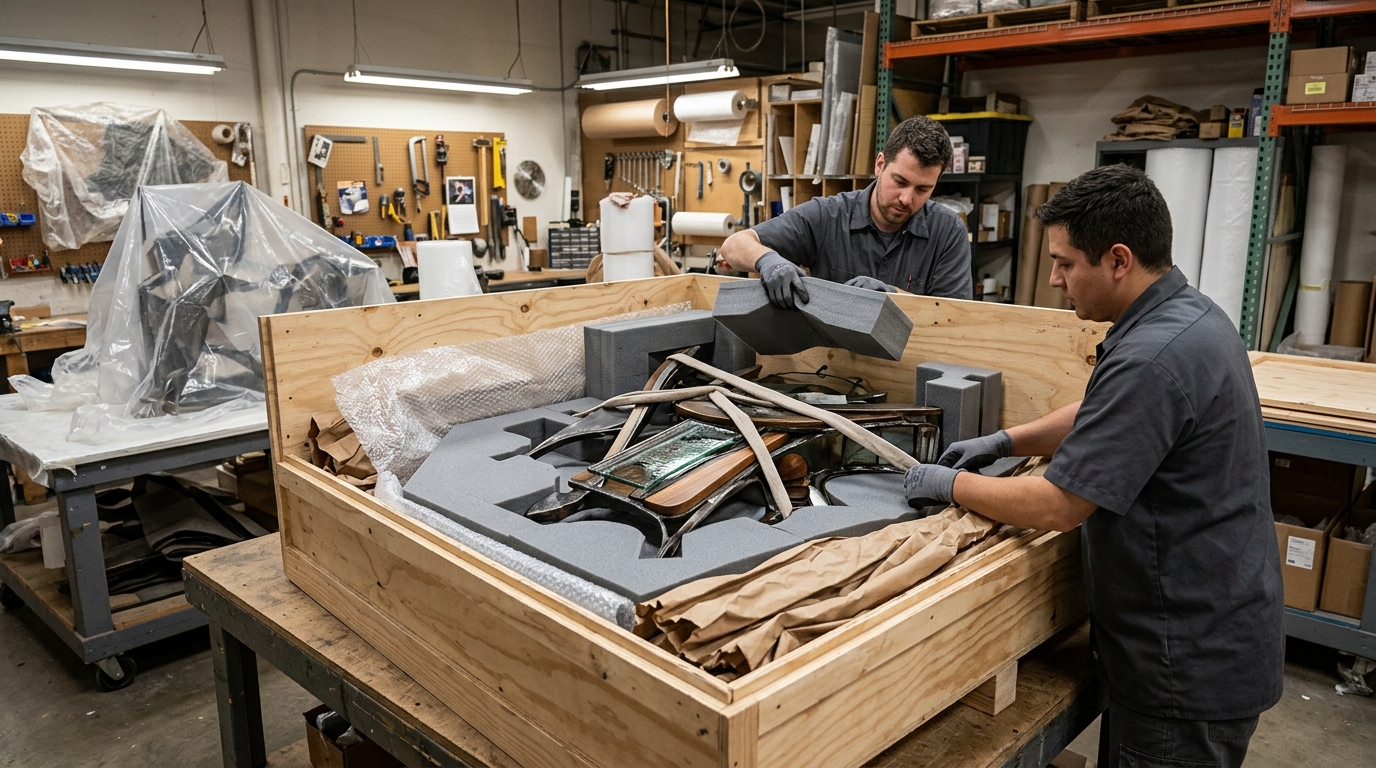
Transporting a non-standard art object is more difficult than sending a regular painting. Installations, ceramics, panels, author’s decor, or three-dimensional works may have a complex shape, fragile details, unusual weight, and special packaging requirements.
If the object needs to be sent abroad, it is important to think through not only the route, but also the documents, fixation inside the packaging, and the delivery method in advance. Even if you already know how to send a painting abroad from Ukraine, a standard scheme may not work for a non-standard art object.
Why Non-Standard Art Objects Are More Difficult to Transport
They Have No Universal Shape or Standard Packaging
A painting usually has a clear rectangular shape. An art object, however, may be three-dimensional, asymmetrical, composite, or have protruding details. That is why the box and protection often have to be selected individually.
Fragile Details Can Be Damaged by Vibration and Pressure
Ceramics, glass, porcelain, thin decorative elements, or parts of an installation can be damaged even without a strong impact. Sometimes vibration during transport or incorrect fixation inside the box is enough.
Dimensions, Weight, and Material Affect the Transportation Method
A light wall panel and a heavy ceramic sculpture require different approaches. It is important to consider:
- the object’s material;
- weight and dimensions;
- center of gravity;
- fragile and protruding elements;
- possibility of disassembly;
- surface sensitivity to pressure.
What Items Are Considered Non-Standard Art Objects
Installations and Composite Art Objects
Installations may consist of several parts, fasteners, and materials of different strength. Before transportation, it is important to understand whether the object can be disassembled and how to properly label the parts.
Ceramics, Glass, Porcelain, and Other Fragile Materials
Such items are especially sensitive to impacts, vibration, and temperature changes. Even a small chip can spoil the appearance and reduce the value of the work.
Panels, Author’s Decor, and Interior Art Objects
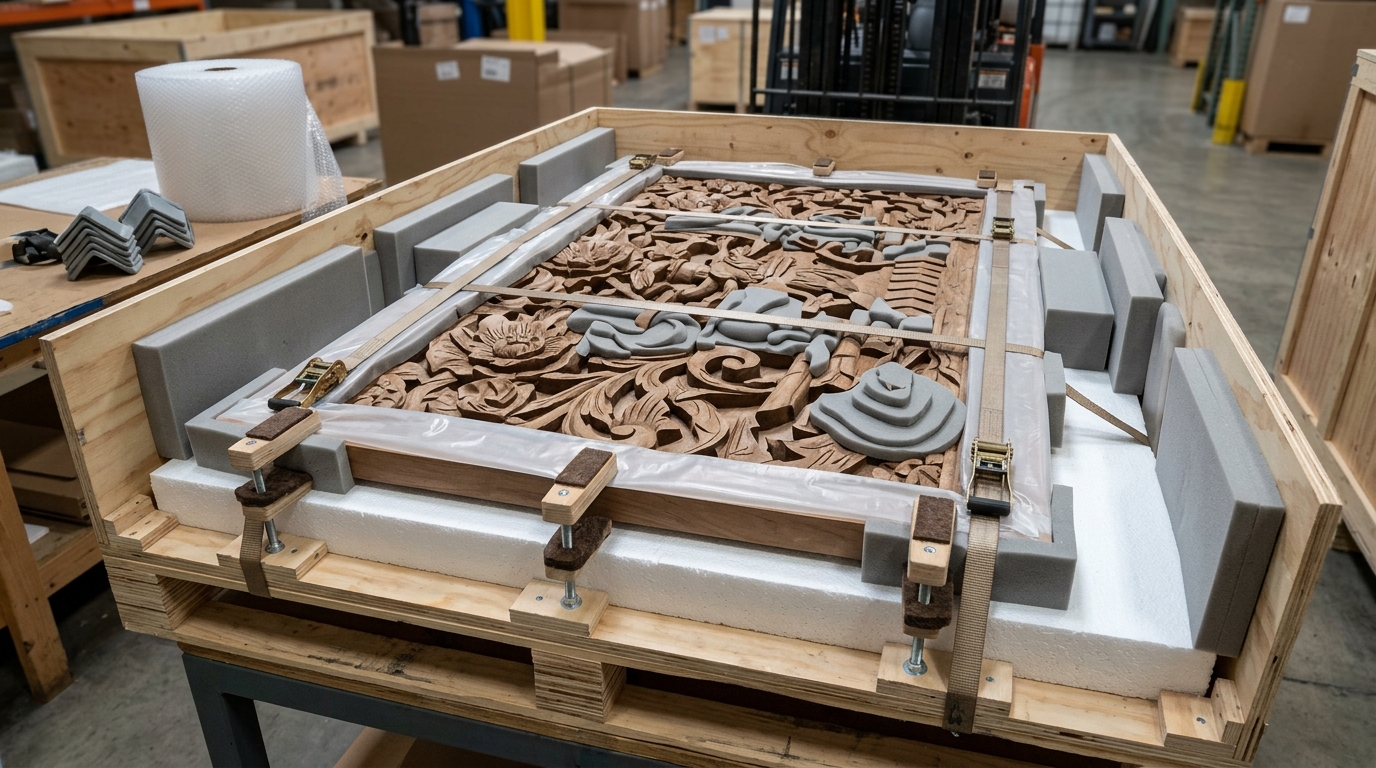
Panels and decor often have relief, texture, inserts made of wood, metal, glass, or ceramics. They cannot simply be wrapped in film - they need fixation without pressure on the front side.
Sculptures, Reliefs, and Three-Dimensional Works
Sculptures and reliefs can be heavy, fragile, or unstable. During transportation, it is necessary to protect the base, protruding parts, corners, and surface.
Where to Start Preparing for Transportation
Determine the Material, Dimensions, Weight, and Fragile Zones
First, you need to understand what the object is made of, how much it weighs, what its dimensions are, and where the most vulnerable areas are located. These may include thin details, corners, glass parts, decorative inserts, or a weak base.
Take Photos of the Object From All Sides Before Packaging
Before packaging, take photos from the front, back, side, top, and bottom. Separately photograph the signature, marks, defects, fasteners, and fragile elements. This will help record the condition of the object before shipment.
Clarify the Destination Country and Delivery Timeframe
For international transportation, it is important to know the country, city, recipient’s address, and desired delivery timeframe in advance. The route, carrier, documents, and type of packaging depend on this.
Check Whether Documents Are Needed for Export Abroad
If the art object is being sent abroad, documents should be checked in advance. This is especially important for old works, sculptures, ceramics, icons, paintings, and items that may have cultural value.
Documents for International Shipment of an Art Object
Description of the Object: Author, Title, Material, Technique, and Year of Creation
For documents, you need to prepare a description: author, title, technique, material, dimensions, weight, year of creation, condition, and purpose of shipment. If the author or date is unknown, it is better to state this honestly rather than write data at random.
Photos, Proof of Value, and Recipient Details
Usually, photos of the object, proof of value, an invoice or accompanying document, as well as sender and recipient details are required. If the item has been sold, an invoice, contract, or purchase confirmation may be needed.
When an Expert Conclusion or Export Permit May Be Required
An expert conclusion or permit may be required if the object is old, expensive, has unknown origin, or shows signs of cultural value. This applies not only to paintings, but also to sculptures, ceramics, panels, and other works of art.
Can an Art Object Be Sent Without a Certificate?
The query how to send a painting abroad without a certificate often arises when sending art objects as well. Everything depends on the age, author, material, origin, and destination country. Sometimes basic documents are enough, but without verification there is a risk of customs delay.
Center for packaging valuable and fragile items in Ukraine
How to Package a Non-Standard Art Object
Protect Protruding, Thin, and Fragile Elements
Protruding details must be protected separately. The load must not fall on a thin element, handle, edge, decorative insert, or protrusion.
Fix the Object Inside the Packaging Without Pressure on the Surface
The object should not move inside the box or crate. But fixation must not press on the surface, relief, or fragile parts.
Use Cushioning Materials and a Rigid Outer Box
For protection, dense cardboard, foam materials, soft pads, cushioning layers, and a rigid outer box are used. The packaging must withstand not only the object’s weight but also pressure during transportation.
When an Individual Fiberboard or Wooden Crate Is Needed
An individual crate is needed for large, expensive, heavy, fragile, and non-standard works. It is especially important for international delivery, exhibition transportation, or multi-stage transportation.
Features of Transporting Different Types of Art Objects
How to Transport Ceramics and Porcelain
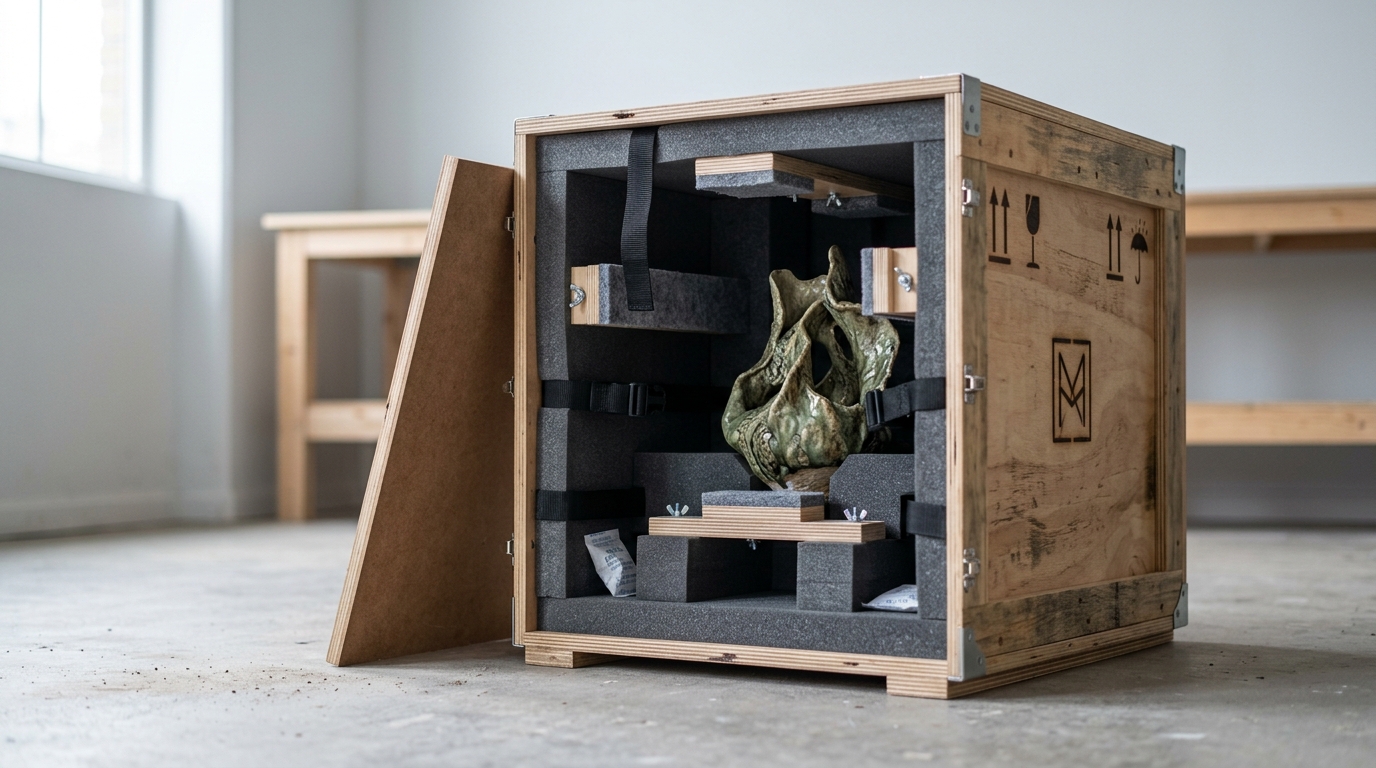
Ceramics and porcelain should be fixed so that the item does not touch the walls of the packaging and does not move inside. If there are several items, each element should be packed separately.
How to Prepare a Panel or Wall Decor
A panel should be protected from the front and back. If there is relief or fragile elements, the packaging should follow the shape of the object and not press on the surface.
How to Transport an Installation Made of Several Parts
An installation is better disassembled if this can be done without risk of damage. Each part should be labeled, photographed, and packed separately. It is also advisable to prepare an assembly diagram.
How to Transport Large and Heavy Works
For heavy works, the center of gravity, stability, loading method, and fixation inside the crate are important. Sometimes individual logistics are needed rather than standard courier delivery.
Delivery of Paintings Abroad and Transportation of Art Objects: What Is the Difference?
Why Delivery of Paintings Is Usually Easier Than Transportation of Non-Standard Objects
Delivery of paintings is usually easier because a painting has a flat shape. Usually, the corners, frame, glass, or canvas need to be protected. A non-standard object can have any shape, so packaging is not selected according to a template.
When Painting Rules Can Be Applied to a Panel or Decor
If a panel or decor is flat in shape, some solutions used for paintings can be applied: protection of the front side, corners, back side, and rigid outer packaging.
Why a Non-Standard Object Requires an Individual Solution
Even if an object resembles a painting, it may have relief, glass, ceramic inserts, protruding details, or unusual weight. Therefore, delivery of paintings abroad and transportation of a complex art object require different preparation.
Can an Art Object Be Sent Abroad by Post?
When Postal Shipment Is Suitable for Small Works
Postal shipment may be suitable for small, durable, and well-packed objects that meet the carrier’s restrictions on weight and size.
What Restrictions May Apply to Fragile Items and Dimensions
Postal and courier services may have restrictions on glass, ceramics, fragile items, weight, size, insurance, and type of packaging.
Why Carrier Rules Should Be Clarified Before Shipment
If you are looking for how to send a painting by post abroad or how to send a painting by post abroad from Ukraine, it is important to clarify the delivery service rules in advance. For a non-standard art object, this is even more important: the carrier may refuse to accept the item or limit liability for damage.
Common Mistakes When Transporting Non-Standard Art Objects
Most often, problems arise not because of the delivery itself, but because of incorrect preparation. The most common mistakes are:
- using a regular box without individual fixation;
- ignoring protruding elements and the center of gravity;
- leaving empty spaces inside the packaging;
- pressing the packaging against relief or a fragile surface;
- not taking photos of the object before shipment;
- not preparing documents before handing the object to the carrier.
If it turns out that a description, invoice, proof of value, permit, or expert conclusion is needed, the shipment may be delayed.
How ArtDom Helps Transport a Non-Standard Art Object
We Assess the Specific Features of the Object Before Packaging
ArtDom helps assess the material, shape, weight, fragile zones, condition, and possible risks during transportation. This allows us to select a safe packaging scheme in advance.
We Select Safe Packaging or Manufacture an Individual Crate
We select packaging for a specific object: protection for fragile elements, cushioning materials, rigid outer box, reinforced packaging, or an individual fiberboard or wooden crate.
We Help With Documents for Export and International Delivery
ArtDom helps prepare the description, photos, accompanying documents, and understand whether additional permits or an expert conclusion are needed. This is especially important if the client does not know how to send a painting abroad or another art object without delays.
We Organize Transportation of Paintings, Sculptures, and Non-Standard Art Objects
We organize transportation of paintings, sculptures, panels, ceramics, installations, author’s decor, and other art objects across Ukraine and abroad. This approach helps reduce the risk of damage, delays, and document-related problems.
FAQ: Transportation of Non-Standard Art Objects
Can a Non-Standard Art Object Be Sent Abroad?
Yes, it can, but such an item requires individual preparation. It is important to assess the material, shape, weight, fragile elements, prepare documents, and select reliable packaging in advance. If you are already studying how to send a painting abroad, keep in mind that a standard scheme may not work for an installation, ceramics, panel, or author’s decor.
How to Send a Painting Abroad From Ukraine if It Is Not a Classical Painting?
If the object resembles a painting but has relief, three-dimensional elements, ceramic inserts, or a non-standard shape, it should be prepared as an art object. To understand how to send a painting abroad from Ukraine, first take photos, describe the item, check the documents, and then choose packaging and delivery method.
Can an Art Object Be Sent Abroad Without a Certificate?
The question how to send a painting abroad without a certificate depends on the specific item: its age, author, material, origin, and destination country. Sometimes basic documents are enough, but if the object may have cultural value, it is better to get advice in advance.
What Documents Are Needed for International Shipment of an Art Object?
Usually, a description of the item, photos, sender and recipient details, proof of value, or an invoice are needed. In some cases, an expert conclusion, export permit, or additional documents on the origin of the work may be required.
How Is Delivery of Paintings Different From Transporting Non-Standard Art Objects?
Delivery of paintings is usually easier because a painting most often has a flat shape and clear protection zones: corners, frame, canvas, or glass. A non-standard art object can be three-dimensional, fragile, heavy, or composite, so it requires individual packaging.
When Is Delivery of Paintings Abroad Suitable, and When Is Art Logistics Needed?
Delivery of paintings abroad may be suitable for flat works, panels, or small objects with reliable packaging. But if the item is expensive, heavy, fragile, non-standard, or consists of several parts, it is better to choose individual art logistics.
How to Send a Painting by Post Abroad?
If you are looking for how to send a painting by post abroad, first clarify the rules of the chosen carrier. You need to check restrictions on size, weight, glass, ceramics, fragile items, insurance, and packaging.
How to Send a Painting by Post Abroad From Ukraine?
To understand how to send a painting by post abroad from Ukraine, prepare a description, photos, recipient details, proof of value, and reliable packaging. If the object is non-standard or fragile, it is better to clarify in advance whether the carrier will accept it.
Can Ceramics, Glass, or Porcelain Be Sent by Regular Delivery?
Sometimes yes, if the item is small, well packaged, and the carrier accepts fragile contents. But for expensive ceramics, glass, porcelain, author’s decor, or exhibition works, it is safer to use reinforced packaging and individual transportation.
What Should Be Done if the Art Object Consists of Several Parts?
If an installation or art object consists of several elements, it is better to photograph, label, and pack each part separately. It is also advisable to prepare an assembly diagram so that the recipient can correctly restore the object after delivery.
Conclusion: A Non-Standard Art Object Requires Individual Preparation
The Main Thing Is to Consider the Shape, Material, and Fragile Elements
A non-standard art object cannot be sent as a regular parcel. Before transportation, it is necessary to assess the shape, material, weight, fragile zones, stability, and condition of the item.
For International Transportation, Documents, Packaging, and Delivery Method Are Important
Safe international shipment begins with the object description, photos, document check, proper packaging, and choosing the right carrier. This is relevant both for those looking for how to send a painting abroad from Ukraine and for owners of complex art objects.
The More Complex the Object, the Higher the Value of Professional Art Logistics
Ceramics, glass, panels, installations, sculptures, and author’s decor require an individual approach. Professional art logistics helps protect the item, properly prepare the documents, and organize delivery so that the object arrives safely.
Call us: +380632478102.
Reliable packaging and international delivery of valuable items