



International Transportation of Works of Art: Professional Standards and Practical Nuances
 Art DomApril 2, 2026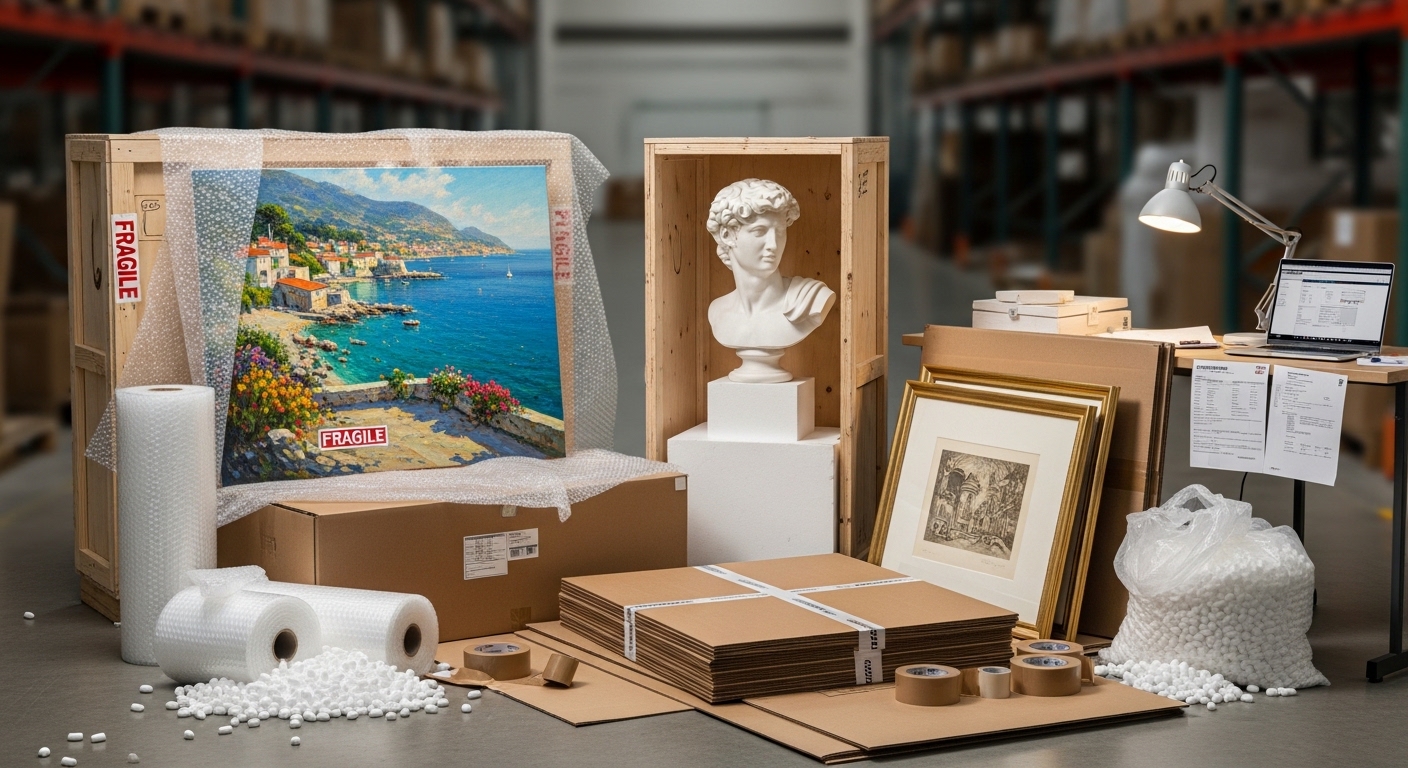
International shipment of art requires more attention than ordinary parcel delivery. A painting, graphic work, sculpture, or art object is not just cargo, but an item with artistic, material, and sometimes cultural value. That is why delivery of paintings abroad is always connected not only with logistics, but also with packaging, documentation, route planning, and possible customs issues.
The main mistake owners make is thinking that art can be shipped the same way as a regular parcel. In practice, problems most often arise because of weak preparation: incomplete descriptions, unsuitable packaging, the wrong choice of delivery method, and attempts to deal with documents at the last moment. That is why it is important to understand in advance how to send a painting abroad, what restrictions the carrier may have, and when it is better not to take risks with a simplified approach.
Why International Transportation of Works of Art Requires a Special Approach
Art differs from ordinary shipments because of its fragility, uniqueness, and increased handling requirements. Even a small mistake during transportation can lead to damage, delay, or return of the shipment.
How Art Delivery Differs from Ordinary Shipping
An ordinary product can be sent in standard packaging with a minimal description. A work of art requires precise data about size, technique, materials, condition, and method of protection. That is why delivery of paintings and other art objects is always organized with greater care.
What Risks Arise During International Transportation
The main risks are damage, deformation, moisture, mistakes in documents, return of the shipment, and customs delay. The worse the preparation, the higher the likelihood of problems.
Why Professional Standards Matter for the Safety of the Work
A professional approach reduces the risk of mistakes. When a work is described correctly, securely packed, and handed over to a carrier with a clear set of documents, the chances of smooth delivery are significantly higher.
What Types of Works of Art Are Most Often Sent Abroad
Most often, paintings, graphic works, photographs, prints, sculptures, and original art objects are sent abroad. But each category requires its own solutions.
Delivery of Paintings Abroad: Main Features
Delivery of paintings abroad requires protection of the surface, corners, frame, and support. Even a contemporary work needs careful preparation if it is crossing a border.
What Nuances Arise When Transporting Graphic Works, Sculptures, and Art Objects
Graphic works are sensitive to bending and moisture. Sculptures require protection of shape and protruding parts. Art objects often have non-standard materials and sizes, so they require individual logistics.
Why Different Types of Works Require Different Solutions
A canvas, a sheet of graphic art, and a ceramic sculpture cannot be packed in the same way. Format, weight, fragility, and material directly affect the transportation method.
Where Preparation for Shipping a Work of Art Begins
Preparation begins not with calling a courier, but with gathering information about the work.
How to Gather Basic Information About the Work
You need to record in advance the artist, title, technique, dimensions, condition, whether there is a signature, the year of creation, and the purpose of shipment.
Why It Is Important to Consider the Dimensions, Materials, and Condition of the Object
The size affects the rate and packaging, the materials affect sensitivity during transportation, and the condition determines the allowable load. These things need to be understood before shipping.
What Should Be Clarified Before You Send a Painting Abroad
It is important to understand the route, shipment format, packaging requirements, and possible documents in advance. It is at this stage that the question often arises of how to send a painting abroad from Ukraine without unnecessary risks.
Documents and Formalities in International Art Transportation
Documents are one of the most sensitive stages. It is better to think them through before packaging.
What Documents May Be Required for Export
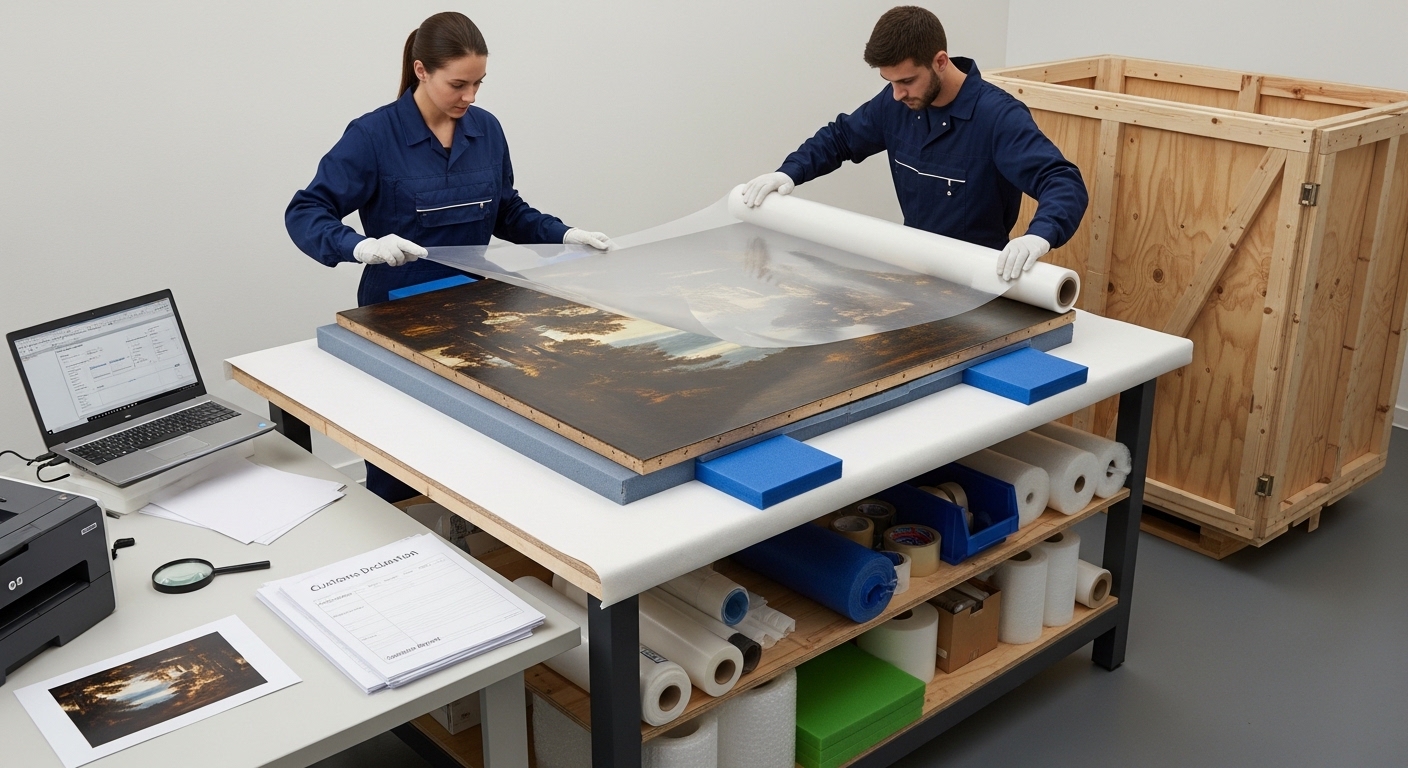
Depending on the status of the work, you may need a description of the object, proof of ownership, an invoice or contract, and in some cases expert or permit documents.
Why Documentation Should Be Resolved Before Packaging and Shipping
If you pack the work first and only then begin collecting papers, you may face a lack of precise data, measurements, or photographs. Packaging and documents should be prepared in parallel.
What Is Important to Know for Those Looking for How to Send a Painting Abroad Without a Certificate
The query how to send a painting abroad without a certificate is common, but such shipment is far from always possible. If the work falls under additional requirements, trying to bypass that stage only increases the risk of delay.
How to Avoid Mistakes When Preparing Supporting Documents
You should not limit yourself to wording like “painting” or “fine art.” The more precise the description - artist, technique, size, condition, purpose of shipment - the more smoothly the processing goes.
Center for packaging valuable and fragile items in Ukraine
How Works of Art Are Properly Packed for International Transportation
Packaging is not just protection from impact, but part of the overall logistics strategy.
Why Packaging Affects Not Only Safety but Also the Delivery Process
Weak packaging leads to damage, and illogical packaging leads to additional questions during transportation and inspection. Good packaging must be both reliable and understandable.
What Materials Are Used to Protect Paintings and Other Art Objects
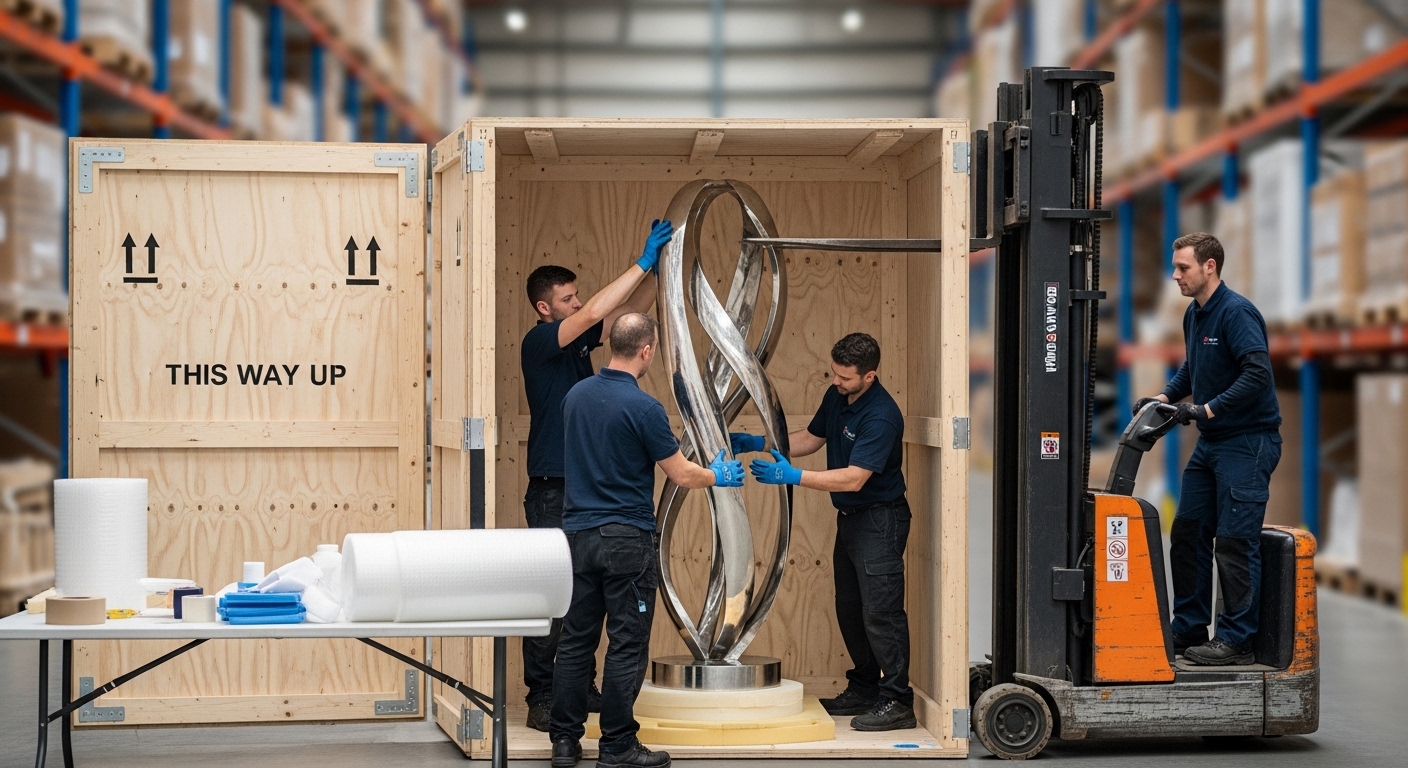
Protective corners, rigid cardboard, foam materials, inserts, reinforced boxes, and crates are usually used. The exact set depends on the object.
How Packaging Is Chosen Depending on the Format and Fragility of the Work
For canvas, protection of the surface and corners is important; for graphic works, protection from bending; for sculpture, fixation of the shape and protruding parts.
What Packaging Mistakes Are Most Common
The most common mistakes are weak corner protection, lack of a rigid layer, the wrong box size, and the use of random materials.
Delivery of Paintings and Other Works of Art: What Shipping Methods Exist
The shipping method is chosen based on the size, value, timing, and complexity of the object.
When Courier Transportation Is Suitable and When Postal Shipping Works
Postal service may work for pieces that are simpler in size and format. For expensive, fragile, and non-standard objects, courier or individual logistics is usually better.
How to Send a Painting by Post Abroad and What Restrictions Exist
If a person is looking for how to send a painting by post abroad, it is important to consider restrictions on contents, dimensions, packaging, and the carrier’s requirements.
How to Send a Painting by Post Abroad from Ukraine Taking Processing Requirements Into Account
When it comes to how to send a painting by post abroad from Ukraine, it is especially important to clarify in advance the rules of the specific postal service and whether such shipment is acceptable for art.
In What Cases It Is Better to Choose Individual Logistics
An individual scheme is better for expensive paintings, works under glass, sculptures, large objects, and complex art objects where the cost of error is too high.
Practical Nuances of International Delivery of Works of Art
In practice, problems most often arise precisely in the details.
How to Calculate Timeframes and Avoid Unnecessary Delays
The timeframe should be calculated not only by delivery itself, but also by preparation: photographs, packaging, documents, and route coordination. Otherwise, the real timeline will almost always turn out longer than expected.
Why It Is Important to Coordinate the Route and Transportation Conditions in Advance
The route affects reloading, storage conditions, inspection, and transit time. The earlier it is coordinated, the fewer surprises there will be.
How to Minimize the Risks of Damage, Return, or Delay of the Shipment
Three things work best: an accurate description, quality packaging, and documents prepared in advance.
What Needs to Be Checked Before Handing the Work Over to the Carrier
Before shipping, it is worth checking once again the documents, dimensions, packaging, address, route, and condition of the work.
Common Mistakes When Shipping Works of Art Abroad
Most problems repeat themselves again and again.
Trying to Organize Delivery Without Prior Consultation
Without consultation, it is easy to underestimate the requirements for packaging, route, and documentation, and then lose time and money.
Underestimating Packaging and Documentation Requirements
One of the most common mistakes is thinking that it is enough to simply wrap the painting well. In practice, packaging and documents are equally important.
Choosing the Wrong Delivery Method
Not every work should reasonably be sent by post. And not every painting requires a complicated individual scheme. A mistake here means either unnecessary expense or unnecessary risk.
Expecting That Delivery of Paintings Abroad Works Like Ordinary Shipping
This is one of the most common misconceptions. Delivery of paintings abroad requires much more careful preparation.
How to Choose a Reliable Partner for International Art Transportation
A good partner helps not only transport the work, but also avoid typical mistakes.
What Criteria to Look at When Choosing a Company
It is important to look at experience with art, understanding of fragile cargo packaging, transparency of terms, and willingness to discuss documents and route details.
Why Experience in Art Logistics Is Crucial
A company that understands the specifics of art sees weak points in advance and helps eliminate them before shipment.
What Questions Should Be Asked Before Arranging Transportation
You should clarify how the packaging will be organized, who is responsible for different stages, whether insurance is available, and what experience the company has with similar objects.
How to Understand That the Delivery Will Be Organized Professionally
A professional partner does not simply promise to “ship it quickly,” but clarifies the details: technique, dimensions, condition, route, and packaging method.
FAQ
How does delivery of paintings differ from ordinary international shipping?
Delivery of paintings requires more careful preparation than sending ordinary items. Here, not only timing and cost matter, but also packaging, the description of the work, its condition, format, and possible documentation requirements.
Why does delivery of paintings abroad require a special approach?
Delivery of paintings abroad involves increased risks: the work may be damaged, delayed at customs, or require additional documents. That is why such shipments are better prepared in advance rather than at the last moment.
Where should you begin if you need to understand how to send a painting abroad?
If you want to understand how to send a painting abroad, you first need to gather basic information about the work: the artist, technique, dimensions, condition, whether there is a frame, and the purpose of shipment. Only after that does it make sense to choose packaging and a shipping method.
Is it possible to understand how to send a painting abroad from Ukraine without mistakes and unnecessary delays?
Yes, if you clarify the shipping requirements in advance, prepare a correct description of the work, think through the packaging, and choose the right carrier. The issue of how to send a painting abroad from Ukraine is better solved step by step rather than spontaneously.
What is important to know for those looking for how to send a painting abroad without a certificate?
The query how to send a painting abroad without a certificate is common, but it is important to understand that this option is not realistic for every work. If the object falls under additional export requirements, the lack of the necessary documents may lead to delay or return of the shipment.
When is the option how to send a painting by post abroad suitable?
The format how to send a painting by post abroad may be suitable for works that are simpler in size and format, if the carrier allows such shipment and the packaging meets the requirements. But for expensive, fragile, or non-standard works, postal shipping is not always suitable.
What nuances exist in the issue of how to send a painting by post abroad from Ukraine?
If you are researching how to send a painting by post abroad from Ukraine, you need to check in advance the restrictions of the specific postal service, the requirements for packaging, size, and supporting documents. It is precisely at this stage that unexpected difficulties most often arise.
What most often prevents delivery of paintings abroad from being organized smoothly?
Usually, three things interfere: weak packaging, an incomplete description of the work, and the wrong choice of shipping method. Even a good painting may encounter problems if the preparation was too superficial.
What mistakes are most often made when trying to understand how to send a painting abroad?
The most common mistakes are the desire to simplify the processing, underestimating packaging requirements, and trying to ship the work without clarifying all details in advance. As a result, the issue of how to send a painting abroad turns out to be more complicated than expected.
When is it better not to choose postal shipping?
If the work is expensive, fragile, large, framed under glass, or has a non-standard format, it is better to consider not postal shipping, but individual or courier transportation. In such cases, delivery of paintings requires a more reliable and controlled solution.
How can you tell that delivery of paintings will be organized professionally?
A professional approach is visible in the attention to detail: you are asked about the technique, dimensions, condition of the work, packaging method, documents, and route. The more precise the preparation at the start, the more smoothly delivery of paintings abroad usually proceeds.
What needs to be checked before sending a painting abroad?
Before shipping, it is worth checking once again the packaging, address, description of the work, dimensions, route, and all documents. This is especially important if you have already decided how to send a painting by post abroad or chosen another carrier, but want to avoid unnecessary risks.
Conclusion
International transportation of works of art is a combination of logistics, packaging, documentation, and attention to detail. It is not enough simply to know how to send a painting abroad, how to send a painting by post abroad, or how to send a painting by post abroad from Ukraine. It is important to understand when ordinary shipment is possible, why the approach of how to send a painting abroad without a certificate does not always work, and how delivery of paintings differs from standard international shipping.
Why Successful International Transportation of Works of Art Is Built on Details
Successful delivery of paintings abroad is almost always made up of small things: an accurate description, reliable packaging, the right route, and a competent choice of carrier. It is the details that make such transportation truly professional.
Call us: +380632478102.
Reliable packaging and international delivery of valuable items