



The Most Unusual Works of Art That Have to Be Transported Across Borders
 Art DomOctober 12, 2026

International art transportation does not always involve shipping an ordinary framed painting. Sometimes, a huge canvas several meters long, a fragile glass sculpture, or an installation made up of dozens of separate components needs to cross an international border. Each of these objects requires an individual approach, specialized packaging, and properly prepared documentation. That is why international painting shipping and the transportation of other artworks can be considerably more complicated than shipping ordinary goods.
Why Transporting Works of Art Can Be More Complicated Than Shipping Ordinary Cargo
How Art Transportation Differs from Shipping Everyday Items
The main characteristic of works of art is their uniqueness. A damaged household item can often be replaced, while restoring an original painting or sculpture is much more difficult.
That is why art transportation involves considering not only the dimensions and weight of an object but also its materials, condition, age, and sensitivity to environmental influences.
Why the Size and Value of an Artwork Do Not Always Determine Shipping Complexity
A small porcelain figurine with thin, protruding elements may sometimes require more complicated packaging than a large contemporary painting.
Even an inexpensive art object can be extremely fragile. Therefore, the complexity of transportation primarily depends on its construction and the properties of its materials.
What Unexpected Problems Can Arise During International Art Transportation
During preparation, unexpected difficulties may arise, including unusual dimensions, unstable fittings, existing damage, or the need for additional documentation.
Sometimes, an artwork cannot fit through a standard doorway or be placed inside a conventional shipping box.
Huge Paintings That Cannot Be Transported in Standard Packaging
How Large-Scale Paintings and Canvases Several Meters Long Are Transported
Large paintings require special preparation. If an artwork cannot be safely rolled, it is transported in a rigid structure that protects the canvas from pressure and deformation.
The dimensions of doorways, elevators, vehicles, and loading equipment must also be checked in advance.
When a Painting Can Be Removed from Its Stretcher and Rolled Up
Some paintings on flexible supports can be transported in rolls. However, this method is far from suitable for every artwork.
Rolling antique paintings, works with cracks, or paintings with heavily textured surfaces can be dangerous. A specialist should examine the artwork before deciding whether it can be removed from its stretcher.
Why Some Paintings Require Custom-Made Shipping Crates
A standard box does not always provide sufficient protection for a large-format painting.
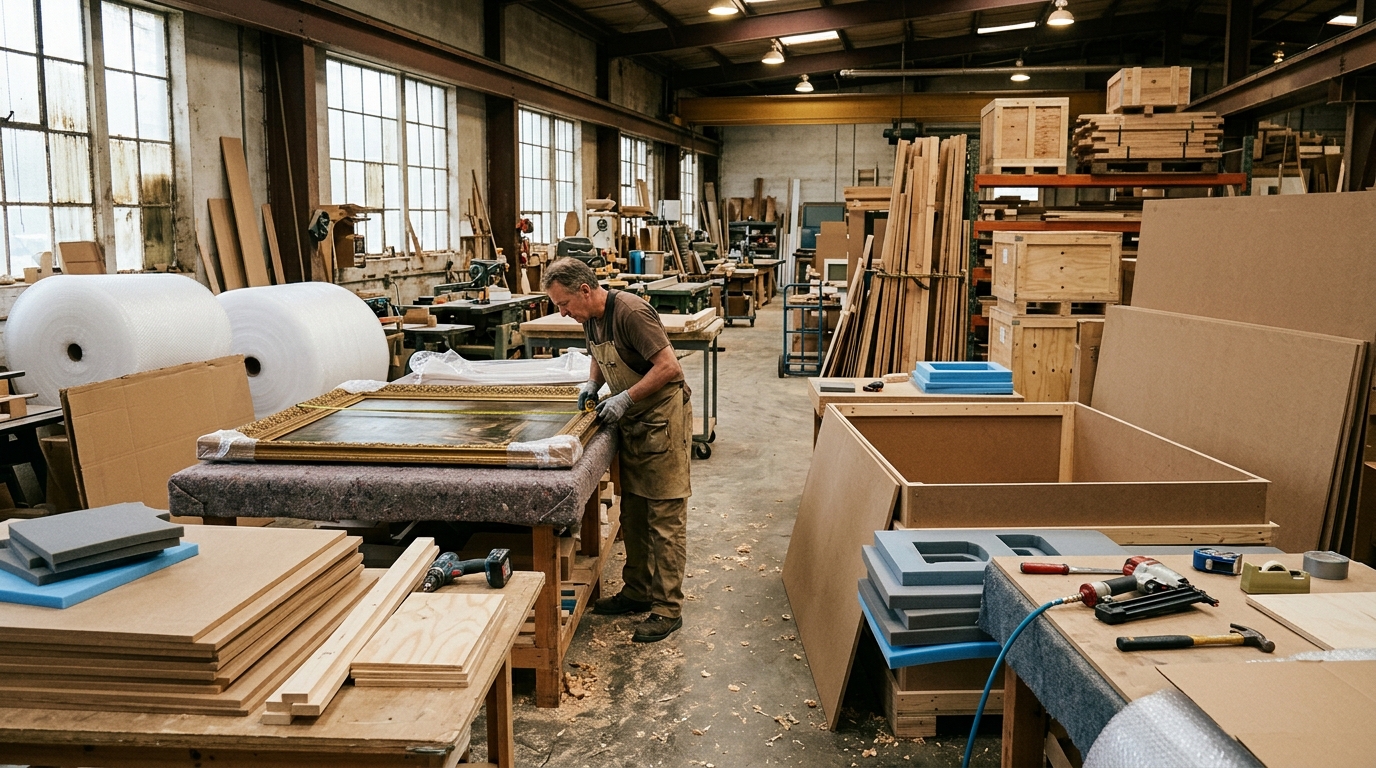
In such cases, reinforced crates made from fiberboard or other suitable materials are manufactured. Internal supports, cushioning elements, and corner protection are incorporated into the design.
Properly organized painting delivery ensures that the artwork does not move inside its packaging and that no pressure is applied to the paint layer.
Fragile Sculptures That Can Be Damaged by the Slightest Movement
How Glass, Ceramic, and Porcelain Artworks Are Transported
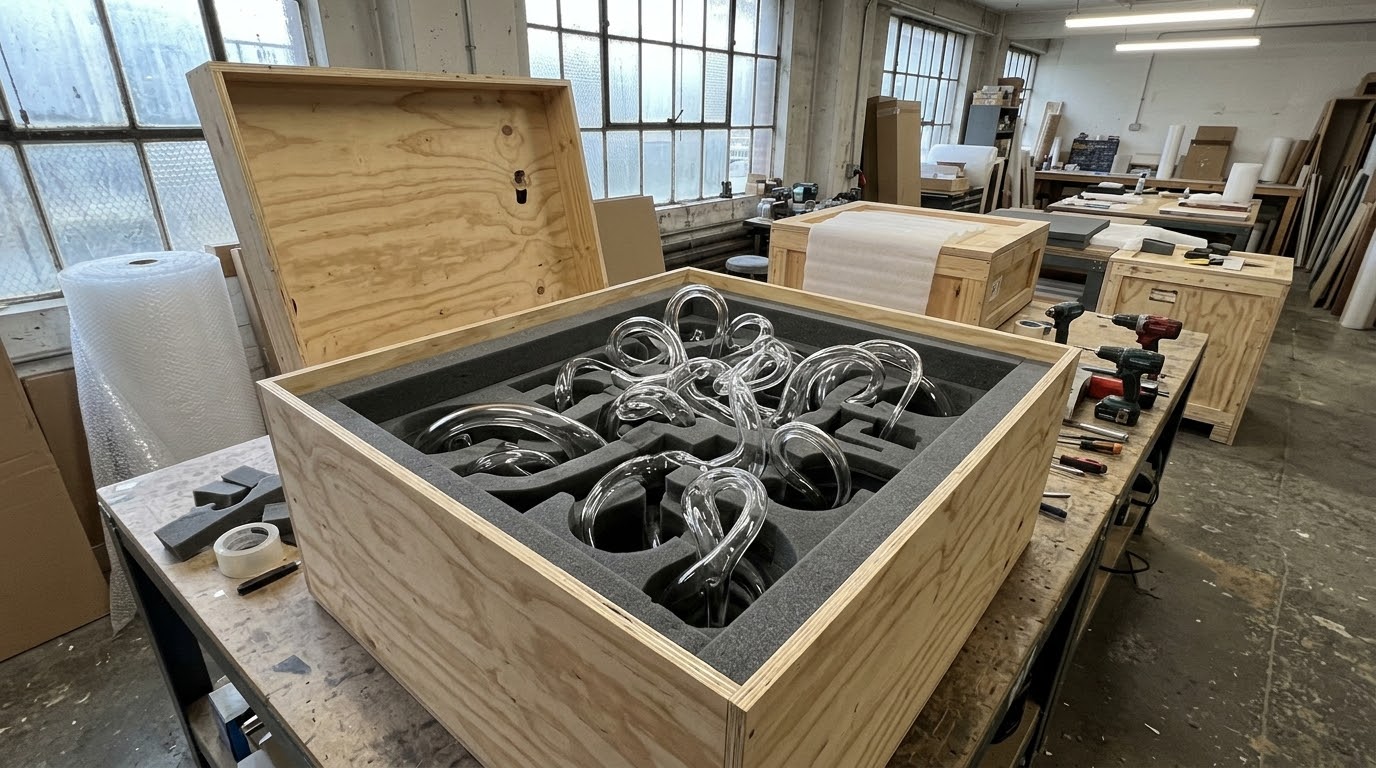
Glass and ceramic sculptures are sensitive to impacts and vibrations. Thin components, joints, and protruding elements are particularly vulnerable.
Custom-fitted protective padding, rigid boxes, and shock-absorbing materials are used to distribute loads and protect these delicate objects.
Why Complex Sculpture Shapes Create Additional Risks
Some sculptures have long projections, thin connections, or unstable bases.
These elements can be damaged even by slight movements while the vehicle is in motion. It is therefore important to identify the most vulnerable areas before transportation.
How Special Mounts Protect Protruding and Fragile Elements
Support structures are created inside the shipping crate to hold the sculpture securely at its strongest points.
Fragile components must not be subjected to pressure. Sometimes, custom-made supports that match the artwork's shape are used to ensure safe transportation.
Unusual Art Objects That Are Difficult Even to Package Properly
Installations Made Up of Dozens of Separate Components
Contemporary art installations may consist of numerous elements, including metal structures, glass components, fabrics, and decorative objects.
Each component must be labeled, photographed, and properly packaged. An assembly diagram is also prepared to ensure that the artwork can be reconstructed in its original form.
Artworks Made from Fabric, Paper, and Unconventional Materials
Textile compositions, paper sculptures, and mixed-media artworks require special attention.
Paper is sensitive to moisture and bending, fabrics can become distorted, and certain contemporary materials may change their properties when exposed to temperature fluctuations.
Packaging for such artworks must prevent excessive pressure and provide suitable transportation conditions.
Kinetic Sculptures and Art Objects with Moving Mechanisms
Kinetic artworks contain moving elements, motors, bearings, and other mechanical components.
Before transportation, moving parts are usually secured, and sensitive components are removed when necessary. This helps prevent accidental movement and structural damage.
Why Some Artworks Must Be Disassembled Before Transportation
Large installations sometimes cannot be transported fully assembled.
If their construction allows disassembly, individual elements are packed separately after documenting how the components fit together.
However, an artwork should never be disassembled without consulting the artist or a specialist, as certain connections may be an essential part of the artistic concept.
Center for packaging valuable and fragile items in Ukraine
Works of Art That Require Special Transportation Conditions
Why Antique Paintings Are Sensitive to Temperature and Humidity
Older paintings may have weakened ground layers, cracks in the paint, or deformed supports.
Sudden changes in temperature and humidity can make existing damage worse. Therefore, such artworks should ideally be transported under stable environmental conditions.
How Paintings with Damaged or Unstable Paint Layers Are Transported
Before transportation, a conservator assesses the artwork's condition and determines whether preliminary stabilization is necessary.
If the paint layer is flaking, ordinary packaging may not provide sufficient protection. In some cases, transportation must be postponed until the painting has been stabilized.
Which Art Objects Need Additional Protection Against Vibration and Impact
Porcelain compositions, glass sculptures, antique paintings, and objects with complex joints are particularly sensitive to vibration.
Shock-absorbing mounts, rigid crates, and additional measures for monitoring transportation conditions may be used to protect them.
How Unusual Works of Art Go Through Customs Clearance
Why Unconventional Art Objects Can Be Difficult to Describe in Customs Documents
For customs clearance, the object must be correctly identified, with its materials, purpose, value, and other relevant characteristics specified.
If an artwork consists of different materials or has an unusual structure, a more detailed description may be required.
When a Permit Is Required to Export Artworks from Ukraine
Documentation requirements depend on the status of the artwork.
If a state examination determines that an object qualifies as cultural property, an appropriate export certificate is generally required to take it out of Ukraine. If the artwork is not classified as cultural property, an expert opinion may be used during customs clearance.
Certain categories of cultural property cannot be permanently exported from Ukraine, while temporary export is subject to specific requirements.
Can You Send a Painting Abroad Without an Expert Certificate, and What Determines the Required Documents?
The question of how to ship a painting abroad without an expert certificate arises quite frequently, especially when contemporary paintings are being shipped.
However, a painting's relatively low artistic value does not automatically exempt it from documentation requirements. Certain categories of objects are subject to exceptions, but an expert opinion may still be needed when the status of an artwork requires confirmation.
Therefore, before shipping, it is important to check the current regulations and determine which documents are required for the particular painting.
What Difficulties Arise When Declaring Collections and Multi-Part Installations
If an artwork consists of dozens of components, a detailed inventory must be prepared.
The documents should ideally specify the number of components, their materials, photographs, and how they form part of a single artwork.
This helps prevent discrepancies between the actual contents of the shipment and their description during customs inspections.
How to Choose a Shipping Method for Unconventional Works of Art
When Standard International Painting Shipping Is Suitable
Standard transportation may be appropriate for small artworks in good condition that can be reliably protected using conventional shipping packaging.
However, even for these paintings, the carrier's restrictions and documentation requirements must be considered.
Can a Painting or Small Art Object Be Sent by International Mail?
If you are wondering how to send a painting abroad by post, you should check the postal operator's size and weight limits, list of permitted items, and packaging requirements.
Small artworks can sometimes be sent through postal services, but this option may not be suitable for particularly fragile or valuable objects.
When Specialized Fine Art Logistics Are Necessary
Specialized fine art logistics are needed when an artwork has unusual dimensions, significant value, or a complicated structure.
These services may include custom packaging, the manufacture of a shipping crate, transportation arrangements, and assistance with preparing the necessary documents.
Why the Shipping Route and Number of Transfers Can Matter More Than Delivery Speed
Every transfer increases the number of times an artwork must be handled and creates additional risks.
For this reason, a longer route with fewer transfers between vehicles may sometimes be safer than a faster delivery option.
How to Prepare an Unusual Art Object for International Transportation
Why It Is Important to Assess an Artwork's Condition and Characteristics Before Shipping
Preparation begins with a careful inspection of the artwork. It is important to identify fragile components, existing damage, and the properties of the materials used.
If you are researching how to ship a painting internationally, the first step should be assessing its condition rather than choosing a transportation company.
How Packaging Is Selected for Unusual Shapes and Materials
A suitable packaging solution is selected for each artwork, whether it is a cardboard box, reinforced crate, custom support structure, or specialized container.
It is especially important to prevent pressure on sensitive surfaces and ensure that the object is securely fixed in place.
Why the Condition of an Art Object Should Be Documented Before Packaging
Before shipping, it is recommended to photograph the artwork, its individual components, and any existing damage.
This documentation helps compare its condition before and after transportation and may also be useful when contacting the carrier or insurance company.
How to Ship a Painting Abroad from Ukraine While Minimizing the Risk of Damage
Anyone planning international art transportation should check the necessary documents, select appropriate packaging, and agree on delivery arrangements in advance.
If you are looking for information about how to ship a painting abroad from Ukraine, consider not only transportation costs but also the artwork's condition, shipping route, number of transfers, and customs clearance requirements.
For unconventional artworks, it is advisable to discuss packaging and transportation with fine art logistics specialists beforehand.
Frequently Asked Questions (FAQ)
What Unusual Works of Art Can Be Transported Across International Borders?
International painting delivery and art transportation services cover large-format paintings, sculptures, installations, antiques, and art objects made from unconventional materials. Packaging is selected individually for each object, taking into account its dimensions, construction, and fragility.
How Can I Ship a Painting Abroad from Ukraine?
If you want to know how to ship a painting abroad from Ukraine, begin by checking the artwork's condition and documentation requirements. Then select suitable packaging and a transportation method. Specialized fine art logistics are recommended for large or valuable works.
Can I Send a Painting Abroad Without an Expert Certificate?
The question of how to ship a painting abroad without an expert certificate depends on the artwork's characteristics and current customs requirements. In some cases, special documents are not required, while other artworks need a cultural property export certificate or an expert opinion. The documentation requirements should be clarified before shipping.
How Are Large Paintings Transported When They Do Not Fit into Standard Boxes?
Large-format paintings are usually transported in custom-made reinforced crates. Sometimes a canvas can be removed from its stretcher and transported in a roll, but this method is not suitable for every artwork. A specialist should determine whether rolling is safe.
How Can I Send a Painting Abroad by Post?
Anyone researching how to send a painting abroad by post should check the selected postal service's restrictions on size, weight, and shipment contents. The painting must be protected against impacts, pressure, and movement inside the packaging.
Can I Send an Unusual Art Object from Ukraine by International Mail?
If you are researching how to send a painting abroad by post from Ukraine, remember that not all artworks are suitable for standard postal delivery. Small, durable art objects can sometimes be shipped through ordinary postal services, while fragile sculptures and complex installations require special transportation conditions.
How Are Fragile Glass and Ceramic Sculptures Transported Safely?
Rigid packaging with shock-absorbing inserts is prepared for glass and ceramic artworks. Protruding components are protected from pressure, and the object itself is securely fixed inside the box or shipping crate.
When Is Specialized Art Transportation Necessary?
Specialized international painting shipping is recommended for antique paintings, large canvases, fragile sculptures, and multi-component installations. This approach makes it possible to select custom packaging, reduce the risk of damage, and organize transportation properly.
Are Documents Required to Transport a Contemporary Painting?
Documentation requirements depend on the artwork's status and the applicable export regulations. Even contemporary paintings may require confirmation that they are not classified as cultural property. Therefore, customs requirements should be checked before shipping.
What Should Be Checked Before Transporting an Unusual Art Object Internationally?
Before deciding how to ship a painting internationally or transport an unconventional sculpture, it is important to assess the artwork's condition, verify its dimensions, prepare the necessary documents, and select a safe route. It is also recommended to photograph the object before packaging to document its original condition.
Why Even the Most Unusual Works of Art Can Be Prepared for Safe Transportation
An unusual shape, large dimensions, or fragile materials do not necessarily make international transportation impossible. The most important thing is to examine the artwork's characteristics in advance and select an appropriate method of protection.
Modern packaging solutions make it possible to transport large-format paintings, complex installations, porcelain compositions, and other unconventional artworks. However, there is no universal packaging solution suitable for every work of art.
Anyone researching how to send a painting abroad by post from Ukraine should remember that postal delivery is not suitable for every art object. In more complicated cases, custom packaging and specialized transportation can significantly reduce the likelihood of damage.
Safe international art transportation begins long before loading. Careful preparation, properly completed documentation, and consideration of each artwork's unique characteristics help preserve even the most unusual artistic creations on their journey to a new owner, exhibition, or gallery.
Call us: +380632478102.
Reliable packaging and international delivery of valuable items