


Why an Old Painting Cannot Be Packed Like a Modern Print
 Art DomAugust 14, 2026
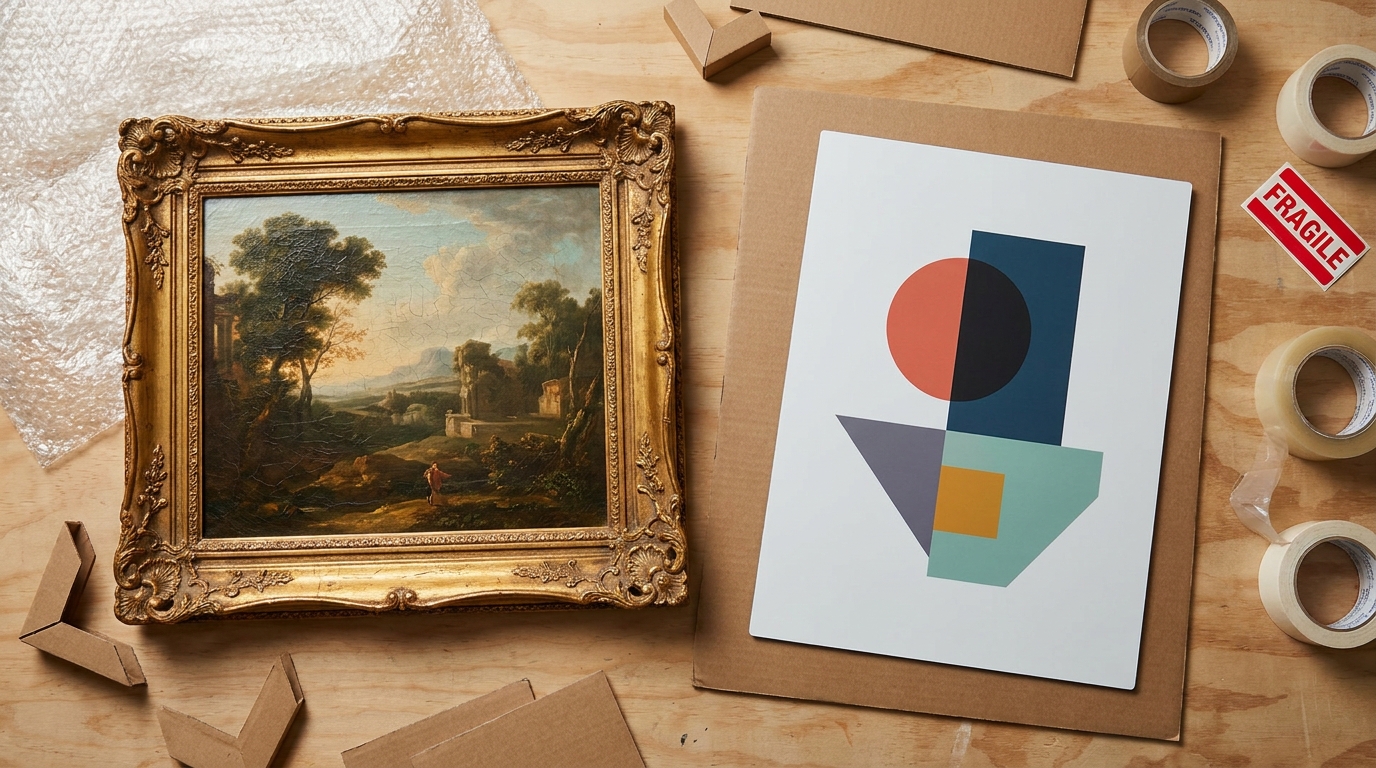
An old painting and a modern print may be the same size, but they require completely different protection. A print usually has a smooth and stable surface, while an old painting may be highly sensitive to pressure, vibration, humidity, and temperature changes. For this reason, professional painting delivery must take into account the age of the artwork, its technique, the condition of the paint layer, and the strength of its frame.
How an Old Painting Differs from a Modern Print
Age and Natural Deterioration of Materials
Over time, canvas loses its elasticity, the stretcher dries out, varnish darkens, and the bond between the ground layer and paint becomes weaker. Even a painting that appears to be intact may suffer damage from minor shaking during transportation.
The Complex Multilayered Structure of a Painting
An old painting consists of a support, a ground layer, a paint layer, and varnish. These materials react differently to changes in temperature and humidity, which can create internal tension between the layers during transportation.
The More Stable Structure of a Modern Print
A modern print is usually produced on new paper or canvas. It does not have old varnish, craquelure, or a flaking paint layer, so it generally tolerates standard packaging more easily.
Which Types of Damage Are Especially Dangerous for an Old Painting?
Craquelure and a Weakened Paint Layer
Craquelure may be a natural result of aging. However, vibration can cause the edges of cracks to lift and particles of paint to separate from the support.
Canvas Deformation and Sagging
A weakened canvas moves while the vehicle is in motion. These movements widen existing cracks and increase the risk of paint loss.
Evidence of Previous Restoration
Patches, reinforcements, and restored areas may react to pressure differently from the original materials. For this reason, the restoration history must be considered before the painting is packed.
A Weakened Stretcher and Old Frame
Dried-out wood, weak corners, and corroded fasteners increase the risk of deformation and canvas tearing.
Why Standard Packaging Can Damage an Old Painting
Contact Between Film and the Paint Layer
Bubble wrap and stretch film must not be pressed directly against the painted surface. The material may stick to varnish or raised brushstrokes and pull away particles of paint when removed.
Packaging That Is Too Tight
Tightly wrapped packaging places pressure on the canvas and frame. Stretch film pulled firmly around an old artwork is particularly dangerous.
The Use of Unsuitable Cardboard and Paper
Ordinary cardboard may contain dust and dyes and may absorb moisture. Old paintings should be protected with clean materials that do not come into direct contact with the painted surface.
Lack of Internal Fixation
If the painting moves inside the box, repeated impacts loosen the frame and worsen existing damage.
Why a Modern Print Is Usually Easier to Pack
A Smooth and Relatively Durable Surface
A print can be placed between rigid sheets that protect it from creases, punctures, and pressure.
The Possibility of Removing the Work from Its Frame
Some prints can be transported without their decorative framing, either in flat packaging or in a tube. This reduces the overall weight and makes transportation easier.
Easier Replacement of a Damaged Copy
A limited-edition or mass-produced print can sometimes be printed again. An old painting is unique, so the loss of original paint cannot be fully compensated.
How the Condition of a Painting Is Assessed Before Packing
Examination of the Front
The painting is checked for cracks, raised areas, flaking, stains, darkened varnish, and signs of moisture.
Examination of the Reverse
The canvas, stretcher, patches, fasteners, labels, traces of mold, and damage to the wood are examined.
Checking the Frame and Hanging Hardware
The frame must be able to support the weight of the artwork. Old hanging wires and hooks should not be used to secure the painting during transportation.
Photographic Documentation of the Condition
The painting, signature, corners, reverse, and all existing damage should be photographed. The main stages of the packing process should also be documented.
How an Old Painting Is Packed
Creating a Protective Barrier in Front of the Paint Layer
A contact-free protective barrier is installed in front of the painting. It rests on the frame and does not place pressure on the paint.
Reinforcing Vulnerable Elements
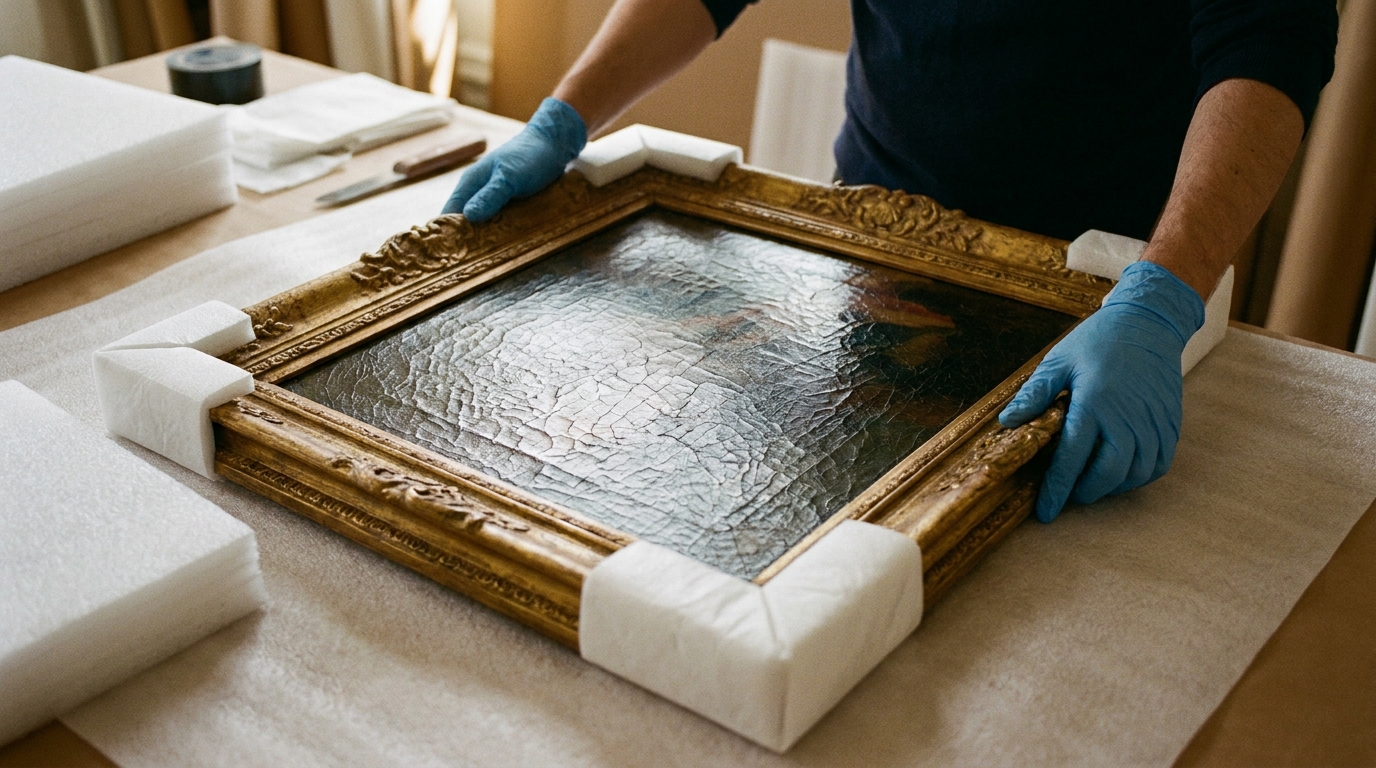
The corners are protected with special guards, and loose components are secured. Only a professional conservator should temporarily stabilize flaking paint.
Adding Cushioning Materials
Soft padding reduces the effects of impact and vibration. It is placed around the perimeter without pressing against the painted surface.
Placing the Painting in Rigid Packaging
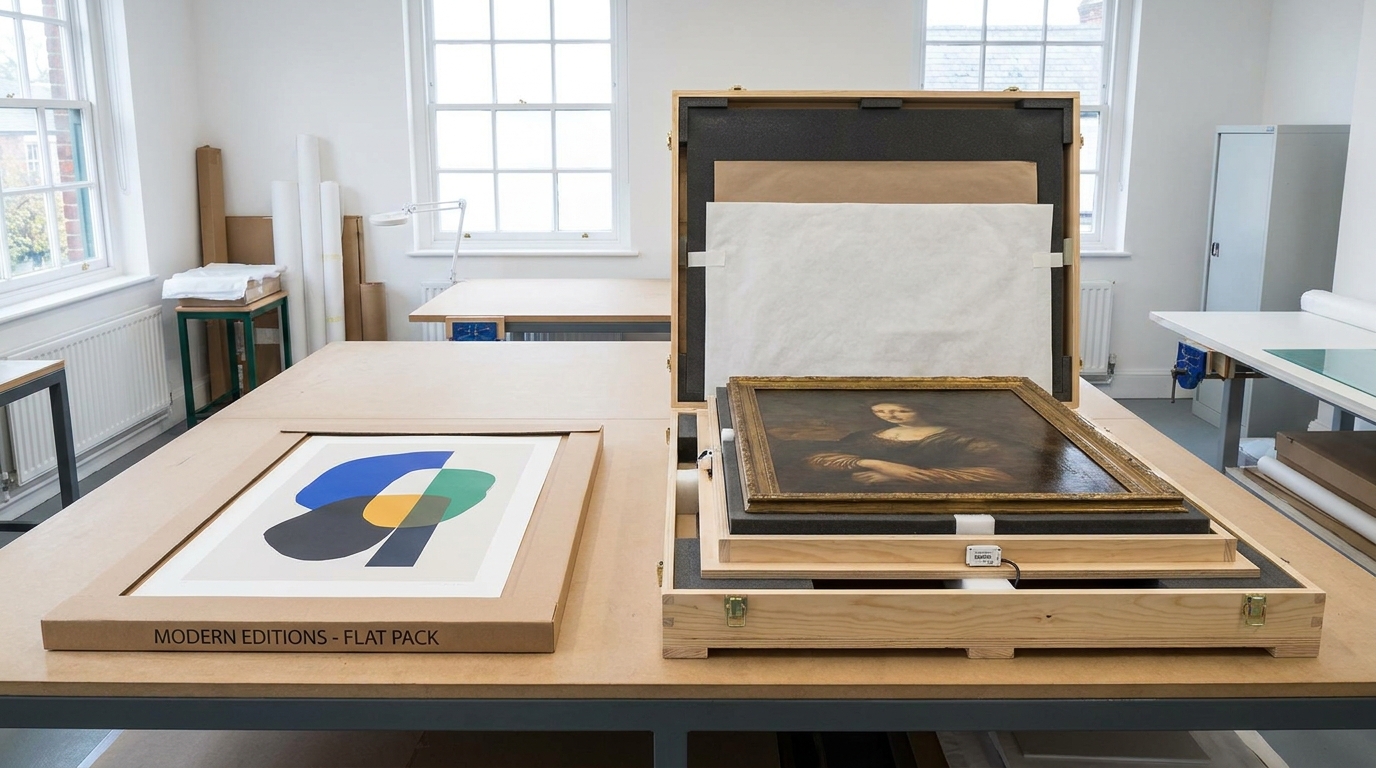
A reinforced box may be suitable for a small and stable work. A custom-made crate should be used for a valuable or damaged painting.
Why an Old Painting Cannot Simply Be Rolled Up
The Paint Layer May Crack
When the painting is rolled, the canvas bends, but an old paint layer cannot safely follow this change in shape.
Old Canvas Loses Its Elasticity
Brittle fibers may develop creases, tears, and permanent deformation.
Restretching Creates Additional Risk
Removing the painting from the stretcher and stretching it again places additional strain on the canvas edges, ground, and paint layer.
How a Modern Print Is Packed
Transportation in Flat Packaging
The print is placed between protective sheets and rigid panels, after which a moisture-resistant outer layer is added.
Transportation in a Tube
Only flexible prints may be rolled. The type of paper, ink, and protective coating must be taken into account.
Packing a Framed Print
If the print is behind glass or placed in a heavy frame, the corners, front, and backing must all be protected.
How Temperature and Humidity Affect an Old Painting
Temperature Fluctuations
Canvas, wood, paint, and varnish expand and contract at different rates. This increases internal tension and may worsen existing cracks.
High Humidity
Moisture can cause the canvas to sag, the stretcher to deform, mold to develop, and the paint layer to separate.
Dry Air
Excessively dry air causes materials to shrink, weakens joints, and may lead to the formation of new cracks.
Condensation
A painting should not be unpacked immediately after transportation in cold weather. It needs time to adapt gradually to the temperature of the room.
How Vibration Affects Old Paintings
Repeated Loads That Are Difficult to Notice
Prolonged minor vibration causes the canvas to move and gradually weakens the fasteners.
Flaking of the Paint Layer
Unstable particles of paint may separate from the ground layer throughout the journey.
Loosening of the Frame and Fasteners
Old nails, staples, and corner joints should be checked and reinforced before transportation.
Center for packaging valuable and fragile items in Ukraine
Which Packaging Is Suitable for International Transportation?
Reinforced Cardboard Box
This option may be suitable for a small painting in stable condition. There must be enough space inside for cushioning materials.
Double-Box Packaging
The artwork is secured inside an inner box, which is then placed inside a larger outer box. The cushioning layer between them reduces the effects of impact.
Rigid Transportation Crate
A custom-made crate is necessary for a large, expensive, or damaged painting.
Internal Support Structure
A custom internal support holds the frame in one position and prevents it from touching the walls of the packaging.
How to Ship an Old Painting Abroad
Conduct a Preliminary Inspection
Before deciding how to ship a painting abroad, the condition of the canvas, paint, stretcher, and frame must be assessed.
Check Whether Documents Are Required
The age, authorship, and possible cultural value of the artwork may affect the export procedure.
Choose a Carrier
A courier service may sometimes be suitable for a small and stable work. Specialized international painting delivery is safer for old paintings.
Agree on Storage and Loading Conditions
It is important to clarify the position of the painting inside the vehicle, the number of loading stages, and the protection provided against temperature fluctuations.
How to Ship a Painting Abroad from Ukraine
Prepare a Description of the Artwork
The description should include the artist, title, year of creation, technique, support material, dimensions, and approximate value.
Obtain the Necessary Expert Documents
When deciding how to ship a painting abroad from Ukraine, the requirements for the particular artwork and the possible need for expert documents should be checked in advance.
Prepare the Painting for a Possible Inspection
The packaging should allow the artwork to be opened safely for inspection and then repacked with all protective layers restored.
Document the Packing Process
Photographs should show the condition of the painting, the internal protection, and the completed shipment.
Can an Old Painting Be Sent by Post?
Risks of Standard Postal Handling
Postal shipments may be exposed to sorting equipment, falls, repeated loading, and pressure from other boxes.
Size and Weight Restrictions
A rigid crate may be considerably larger and heavier than the painting itself.
When Postal Delivery May Be Acceptable
A small and stable work may be sent by post if it has been packed professionally.
When Postal Delivery Should Be Avoided
Postal delivery is not suitable when the paint is flaking, the frame is weak, the painting is large, or the artwork has a high value.
How to Mail a Painting Abroad
Check the Postal Operator’s Rules
It is necessary to determine whether the service accepts old paintings and shipments packed in rigid crates.
Do Not Conceal the Nature of the Shipment
An incorrect description may lead to delays, return of the shipment, or refusal of compensation.
Use Insurance and a Declared Value
An appraisal, photographs, and provenance documents may be required for insurance.
Provide Multilayered Protection
When determining how to mail a painting abroad, the packaging should include contact-free surface protection, cushioning, reinforced corners, and a rigid outer box.
How to Mail a Painting Abroad from Ukraine
Prepare a Customs Description
The documents should state the type of artwork, artist, technique, materials, value, and purpose of the shipment.
Check the Documents Before Packing
Before deciding how to mail a painting abroad from Ukraine, the export requirements for the specific artwork must be determined.
Allow for a Possible Repeat Inspection
The packaging must allow the shipment to be opened and closed again safely.
Coordinate Delivery with the Recipient
The recipient should be informed in advance about customs clearance, possible fees, and the safe unpacking procedure.
Can a Painting Be Shipped Abroad Without a Certificate?
Why the Age of the Painting Matters
An old work may raise more questions during export clearance than a modern print, even if its monetary value is relatively low.
When a Document May Not Be Required
The need for an expert conclusion depends on the age, provenance, authorship, and current export requirements.
Why This Should Not Be Decided Independently
The search phrase how to ship a painting abroad without a certificate does not mean that the official procedure can be bypassed. It is first necessary to confirm through the appropriate channels whether the particular artwork requires a document.
Risks of Shipping Without the Required Documents
The shipment may be delayed, returned, or inspected again, which may disturb the internal fixation of the packaging.
Common Mistakes When Packing Old Paintings
Applying Stretch Film Directly to the Surface
The film may stick to varnish or paint and create conditions in which condensation can form.
Packaging That Is Too Tight
Tight wrapping transfers pressure directly to the canvas and old frame.
Using an Ordinary Box Without Reinforcement
Thin cardboard bends and stops protecting the artwork.
Ignoring Existing Damage
Small cracks and weakened joints may become significantly worse during transportation.
Attempting to Stabilize Paint Independently
Household glue, varnish, or adhesive tape can cause irreversible damage to the painting.
What to Do After the Painting Has Been Delivered
Do Not Unpack It Immediately After Exposure to Cold
The packaging should be allowed to adjust gradually to room temperature.
Open the Packaging on a Stable Surface
The crate should be placed on a clean surface, and tools should always be directed away from the painting.
Compare the Condition with the Photographs
The paint layer, corners, frame, stretcher, and internal packaging should all be examined.
Contact a Conservator If Any Changes Are Found
New cracks, flaking, and deformation should not be repaired without professional assistance.
When Professional Painting Delivery Is Necessary
When Cracks or Flaking Are Present
An unstable work should be examined by a conservator before transportation.
When the Artwork Has High Artistic or Market Value
Professional packing costs considerably less than the potential loss of a unique artwork.
When the Painting Is Large or Has a Heavy Frame
A large painting requires a custom crate and controlled loading.
During International Transportation
Professional international painting delivery combines document preparation, packing, and safe logistics. This type of painting delivery reduces the effects of vibration, impact, temperature changes, and repeated handling.
Frequently Asked Questions
Why Can an Old Painting Not Be Packed Like an Ordinary Print?
An old painting may have a weakened canvas, craquelure, evidence of restoration, and an unstable paint layer. Ordinary film or excessively tight packaging can damage the surface. Professional painting delivery therefore includes contact-free protection, cushioning, and rigid external packaging.
Can an Old Painting Be Rolled Up?
This is generally not recommended. Old canvas loses its elasticity, while the paint layer cannot withstand strong bending. Rolling may cause cracks to widen and paint to begin flaking. Removal from the stretcher should only be considered after consultation with a conservator.
How Should an Old Painting Be Shipped Abroad?
Before deciding how to ship a painting abroad, the canvas, paint, stretcher, and frame must be assessed. The document requirements should then be checked, a suitable carrier selected, and packaging prepared to protect the work from pressure, impact, vibration, and temperature changes.
How Can a Painting Be Shipped Abroad from Ukraine?
When deciding how to ship a painting abroad from Ukraine, a description of the artwork should be prepared, including the artist, title, approximate date, technique, support, dimensions, and value. It is also necessary to check in advance whether expert or supporting documents are required for the export of the specific work.
Can an Old Painting Be Shipped Abroad Without a Certificate?
There is no universal answer. The search phrase how to ship a painting abroad without a certificate involves checking the age, provenance, authorship, and possible cultural value of the work. It should not be assumed that no document is required simply because the painting has a low financial value.
What Happens If a Painting Is Shipped Without the Required Documents?
The shipment may be delayed, returned to the sender, or sent for an additional inspection. Reopening the packaging increases the risk of incorrect fixation and damage to the paint layer. Requirements should therefore be clarified before the final packing stage.
Can an Old Painting Be Sent by Ordinary Post?
This may be possible only for a small and stable work without flaking paint, a heavy frame, or serious existing damage. Postal handling involves sorting, repeated loading, vibration, and possible falls, so fragile works are safer with a specialized carrier.
How Can a Painting Be Mailed Abroad?
Before choosing how to mail a painting abroad, the operator’s rules, size and weight limits, insurance options, and rigid-packaging requirements must be checked. The painting should have contact-free protection over the front, cushioning, and a strong outer box or crate.
Conclusion
An old painting differs from a modern print because of its fragile materials, multilayered structure, and possible history of restoration. Standard packaging may cause paint loss, canvas deformation, and damage to the frame.
Before transportation, the condition of the artwork must be assessed, direct contact between the packaging and painted surface must be prevented, cushioning must be added, and rigid external protection must be used.
Call us: +380632478102.
Reliable packaging and international delivery of valuable items