


Is a Permit Required to Export a Family Portrait or an Amateur Painting?
 Art DomAugust 14, 2026
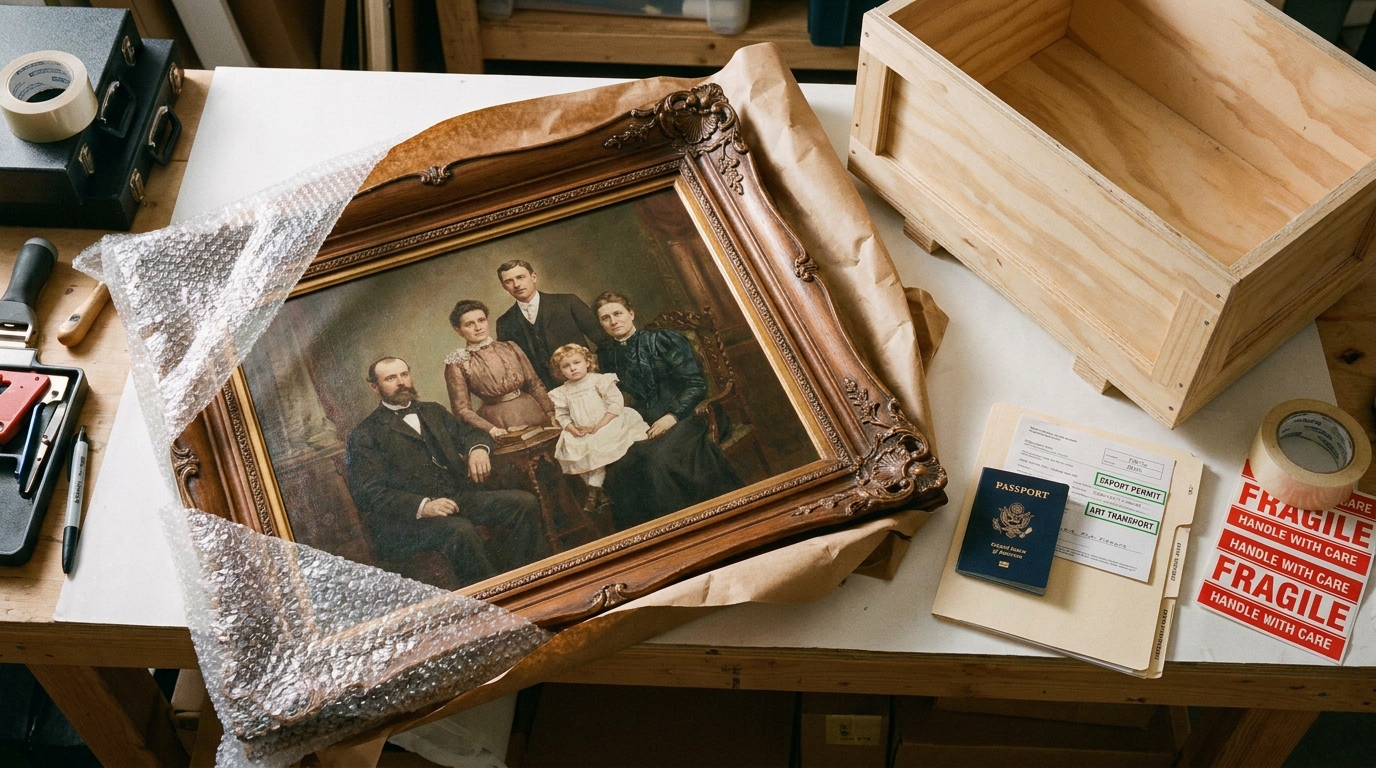
A family origin, low price, or amateur level of execution does not automatically mean that a painting can be taken abroad without documentation. To determine whether a permit to export a painting from Ukraine is required, it is necessary to consider the age, authorship, materials, provenance, and possible cultural value of the artwork. The export of paintings from Ukraine is governed by specific rules, and the procedure for issuing certificates authorizing the export of cultural property was updated in March 2026.
What Is Considered a Family Portrait or an Amateur Painting?
Family Portrait
A family portrait is an image of one or more relatives that has been kept in a home for a long time and may have been passed down through generations.
Its creator may be a well-known artist, a local master, an unknown painter, or a member of the family.
Amateur Painting
An amateur painting is usually created for personal enjoyment, during art studies, or as a gift, without a professional exhibition history.
This category may include landscapes, portraits, still lifes, and copies of well-known subjects.
Why Everyday Use Does Not Determine the Documentation Requirements
A painting may have been used as ordinary home decoration while still being old or historically significant.
When documentation is prepared, the characteristics of the artwork itself are considered, not only the reason why it was stored or transported.
Is a Permit Always Required to Export a Painting from Ukraine?
When a Certificate May Be Required
If an examination determines that the artwork is cultural property, the appropriate certificate must be obtained before it can be exported.
This document confirms the official right to export the object permanently or temporarily.
When an Object May Not Be Considered Cultural Property
An expert may conclude that the examined painting does not have the legal status of cultural property.
In that case, the expert report may contain the appropriate conclusion, which can be used during customs clearance or postal shipment processing.
Why Price Alone Is Not a Reliable Criterion
An inexpensive family portrait may be old or connected with a particular person or historical period.
At the same time, an expensive contemporary painting is not necessarily cultural property requiring an export certificate.
Which Characteristics of a Painting Are Examined Before Export?
Artist and Date of Creation
The signature, monogram, date, and other markings are checked. If the artist is unknown, experts may establish an approximate period and possible artistic school.
Technique and Materials
The canvas, paper, wood, cardboard, paints, ground layer, varnish, stretcher, fasteners, and frame are examined.
These materials help determine the approximate age of the artwork.
Artistic and Historical Value
An expert assesses the quality of execution, rarity of the subject, condition, artistic manner, and possible connection with notable people or events.
Provenance of the Artwork
Experts try to establish who previously owned the painting, how it entered the family, and whether documents, letters, or old photographs have survived.
Are Documents Required for a Modern Amateur Painting?
The Work Was Created Recently
If the painting was recently created by its owner, a relative, or a beginning artist, its provenance is usually easier to confirm.
It is useful to keep information about the artist, the date of creation, and photographs showing the painting process.
The Artist Is Alive and Can Confirm the Origin
The artist may provide the title, date, technique, dimensions, and circumstances under which the painting was transferred to its current owner.
A contract, receipt, proof of payment, or artist’s certificate may also be useful.
Why the Carrier or Customs Authorities May Still Request a Description
Even a contemporary artwork must be declared correctly.
The description should include the artist, materials, dimensions, value, and purpose of the shipment.
What Should Be Done If the Artist and Age of a Family Portrait Are Unknown?
Examine the Front and Reverse Sides
The signature, date, monogram, inscriptions, stamps, exhibition labels, and inventory numbers should be checked.
The stretcher and old frame may also contain important information.
Collect the Family History of the Painting
It is useful to determine who is shown in the portrait, who previously kept it, and when it first appeared in the family.
Even approximate information can help a specialist during the examination.
Request an Expert Examination
A professional expert opinion on paintings, art, and fine art helps establish the technique, materials, age, and possible cultural value of the artwork.
It is particularly important when the painting is old, unsigned, or known only through oral family stories.
Center for packaging valuable and fragile items in Ukraine
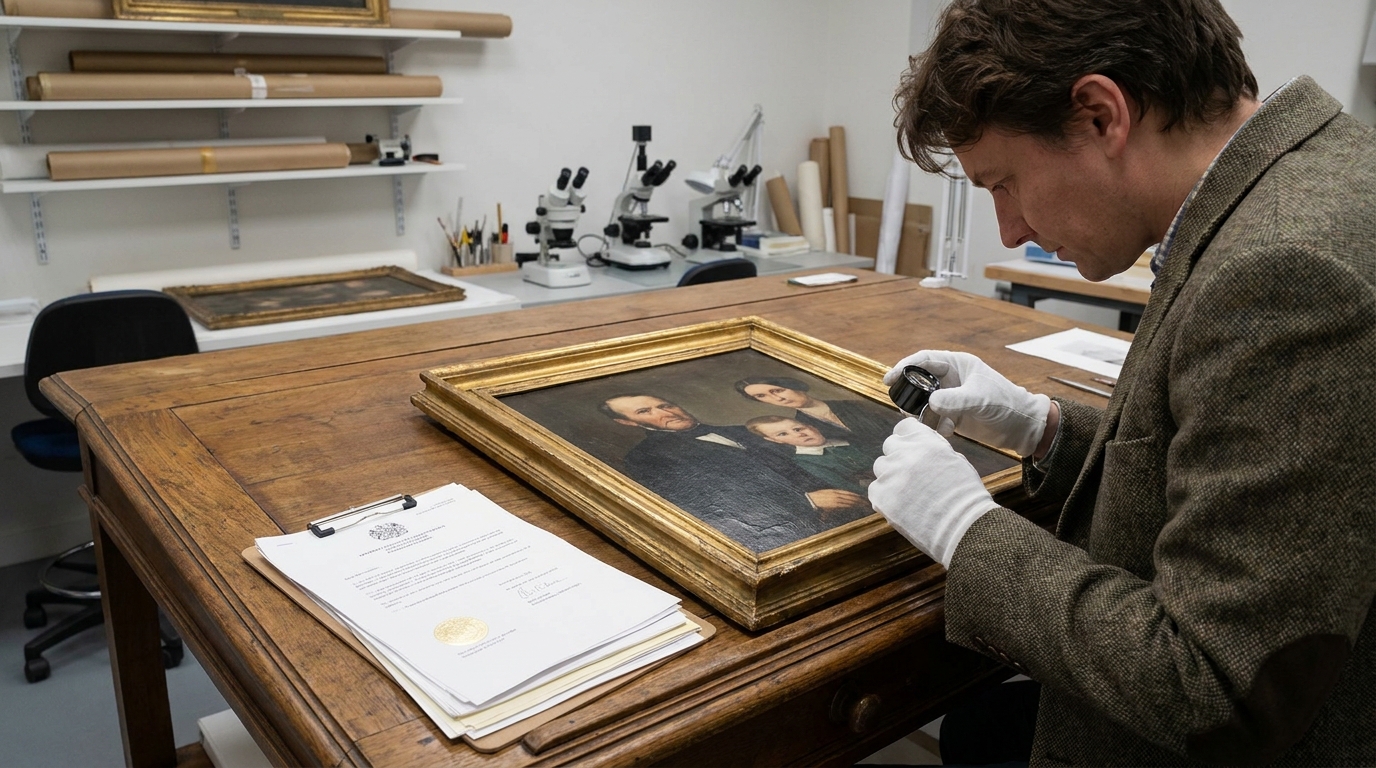
How Is an Examination Conducted Before Export?
Preliminary Consultation Based on Photographs
Photographs should show the overall appearance of the painting, its reverse side, signature, frame, stretcher, and separate details.
The images should be clear and free from filters and strong reflections.
Physical Examination of the Artwork
To reach a reliable conclusion, a specialist may need to examine the texture, materials, fasteners, and signs of restoration in person.
It is not always possible to determine the age and condition of a painting accurately from photographs alone.
Preparation of an Expert Report
The document records the artist or the status “artist unknown,” as well as the technique, dimensions, materials, period, and condition.
It also states whether the examined object is considered cultural property.
Which Documents May Be Required for Export?
Document Confirming the Owner’s Identity
The applicant presents a passport or another identity document. A representative will also need proof of authority to act on the owner’s behalf.
Documents Confirming Ownership
These may include a purchase agreement, receipt, deed of gift, inheritance certificate, or another document proving lawful ownership.
Photographs and Description of the Painting
Information should be prepared about the artist, title, period of creation, technique, dimensions, and condition.
Expert Report and Export Certificate
The expert report determines the characteristics and legal status of the artwork.
The certificate provides the official right to export it if the painting is recognized as cultural property. A valuation alone does not provide such permission.
How to Send a Painting Abroad from Ukraine
First Check Whether Authorization Documents Are Required
When deciding how to send a painting abroad from Ukraine, the first step is to determine the legal status of the artwork.
The painting should be fully packed and handed over to the carrier only after the examination has been completed and the necessary documents have been prepared.
Prepare a Customs Description
The description should clearly state that the shipment contains a painting or portrait and should include the artist, materials, dimensions, value, and purpose of export.
The artwork should not be concealed behind general descriptions such as “decoration” or “personal belongings.”
Select a Transportation Method
A painting can be carried in personal luggage, sent by post, delivered by a courier service, or transported through a specialized art logistics company.
For old and fragile works, it is safer to choose a carrier experienced in handling artworks.
Photograph the Condition and Packaging
Before packing, photograph the front and reverse sides, the frame, and all existing damage.
The protective materials and completed shipment should also be documented separately.
Special Features of Transporting Family Property
What Is Meant by Family Property?
The personal history of an object does not remove the need to determine its age, materials, and legal status.
A family painting may also have artistic or historical significance.
Which Documents Confirm Family Provenance?
Inheritance certificates, deeds of gift, photographs, letters, and records left by previous owners may be used.
Together, these materials help reconstruct the history of ownership.
Why a Family Object Should Not Be Described as Ordinary Decoration
An overly general description may raise questions during customs control.
It is better to state directly that the item is a family portrait or painting and provide its main characteristics.
How Does the Export of Paintings Differ from the Export of Other Artworks?
Export of Paintings
The export of paintings includes works on canvas, paper, wood, and cardboard, including portraits, landscapes, and amateur works.
The age, artist, technique, and provenance of each work must be checked.
Export of Icons
The export of icons requires particularly careful examination because of their possible age, religious significance, and connection with church or historical collections.
An old icon should not automatically be treated as an ordinary household object.
Export of Sculptures
When arranging the export of sculptures, the artist, age, material, artistic value, and history of ownership are considered.
In addition to documentation, the object’s weight, fragility, and safe packaging must be taken into account.
Can a Painting Be Sent by Post?
International Postal Shipment Does Not Cancel Export Requirements
Sending a painting by post does not allow the rules for moving cultural property to be bypassed.
If the painting is recognized as cultural property, the appropriate certificate will also be required for postal shipment.
What Information Will the Postal Operator Request?
The description of the contents, declared value, and details of the sender and recipient are usually required.
The operator may also request documents and information about the artist, age, and materials.
Why Documents Should Be Prepared Before Packing
For the examination, the specialist may need to inspect the front, reverse, signature, stretcher, and frame.
If the painting has already been sealed in a reinforced box or crate, the packaging will have to be opened.
Common Mistakes When Exporting Family and Amateur Paintings
Assuming That an Amateur Painting Definitely Requires No Documents
The owner may not know the exact age or provenance of the artwork.
For this reason, a questionable painting should be shown to a specialist before transportation.
Describing the Painting as a Souvenir or Decorative Object
An inaccurate description may result in delays, inspection, or return of the shipment.
Even an amateur painting should be described truthfully.
Packing the Painting Completely Before the Examination
The expert needs to see the signature, reverse side, and stretcher construction.
Final packaging should be completed after the expert report has been obtained.
Lack of Provenance Documents
Even if the original receipt has not survived, it is useful to collect family photographs, letters, and inheritance documents.
Confusing Valuation with an Export Permit
A market valuation does not replace an expert report or an official certificate.
Before shipment, it is necessary to distinguish between the financial value of the painting, its status as cultural property, and the legal right to export it.
Before international transportation, it is important to understand that the export of paintings from Ukraine, export of paintings, export of icons, and export of sculptures require accurate descriptions and a preliminary check of the objects’ legal status. Only after this can the documents be prepared, a carrier selected, and safe packaging arranged.
Frequently Asked Questions
Is a Permit Required to Export a Family Portrait?
Not always. The decision depends not on the family origin of the painting but on its age, authorship, materials, and possible cultural value. If the work is recognized as cultural property, a permit to export a painting from Ukraine will be required in the form of the relevant official document.
Are Documents Required for a Modern Amateur Painting?
It is usually easier to confirm the provenance of a recently created work. It is advisable to have information about the artist, date of creation, technique, dimensions, and value. Photographs of the creative process, a receipt, contract, or confirmation that the painting was transferred to the owner may also be useful.
How to Send a Painting Abroad from Ukraine
Before deciding how to send a painting abroad from Ukraine, the age and legal status of the artwork must be established. A description and provenance documents are then prepared, followed by an expert report if necessary. Only after that should the carrier and packaging be selected.
Is an Examination of a Family Portrait Always Required?
An examination is particularly important if the artist and date of creation are unknown, the artwork appears old, or it contains signatures, stamps, and exhibition labels. A professional expert opinion on paintings, art, and fine art helps describe the work and determine whether further documentation is required.
What Should Be Done If the Painting Is Not Cultural Property?
The expert document may state that the examined object is not considered cultural property. Such a report helps confirm the characteristics of the work during customs control or international shipment.
Can the Decision Be Based Only on the Painting’s Value?
No. A low price does not exclude historical or artistic value, while the high price of a contemporary work does not automatically mean that it belongs to protected cultural property. The age, authorship, materials, and provenance must also be considered.
How Does the Export of Paintings Differ from Transporting Ordinary Items?
The export of paintings requires an accurate description of the artwork, including the artist, technique, materials, dimensions, age, and value. A painting should not be described merely as decoration or a personal belonging if that wording does not properly identify the contents.
Can an Old Icon Be Exported as a Family Item?
Family provenance alone does not remove the need for examination. The export of icons requires particular attention to the object’s age, technique, religious and historical significance, provenance, and condition.
Conclusion
A family portrait or amateur painting should not automatically be considered exempt from export documentation. Its age, artist, materials, provenance, and possible cultural value must first be established.
If the painting is not considered cultural property, an appropriate expert report and provenance documents may be sufficient. If cultural property status is confirmed, an official export certificate will be required.
Call us: +380632478102.
Reliable packaging and international delivery of valuable items