



Can a Damaged Painting by a Ukrainian Artist Be Sold?
 Art DomAugust 14, 2026

Damage does not always make an artwork impossible to sell. A painting with cracks, a torn canvas, or areas of paint loss may still retain artistic and collectible value. Its final price depends on the artist’s reputation, the rarity of the work, the nature of the damage, the possibility of restoration, and its documented provenance. For this reason, buying paintings and subsequently selling them requires professional assessment.
Which Damaged Paintings Retain Their Value?
Works by Well-Known Ukrainian Artists
Works by recognized artists may remain in demand even when they have visible damage. If the artist is represented in museum collections, has participated in major exhibitions, and is mentioned in professional catalogues, collectors may be interested in purchasing the work for subsequent restoration.
However, a famous name does not automatically guarantee a high price. The period in which the painting was created, its subject, quality of execution, and current condition must also be considered.
Rare Works and Important Creative Periods
Paintings from a rare or particularly well-known period in an artist’s career may have significant value. The subject, technique, series, and place of the work within the artist’s overall legacy all matter.
A damaged but rare painting can sometimes be worth more than a typical work by the same artist that has been preserved in excellent condition.
Paintings with Documented Provenance
Provenance describes the ownership history of an artwork. A certificate of authenticity, expert opinion, archival photographs, and exhibition catalogues can increase buyer confidence.
Even a damaged painting accompanied by reliable documents is generally valued more highly than a well-preserved work with a questionable signature and unknown origin.
What Types of Damage Are Most Common?
Cracks and Flaking Paint
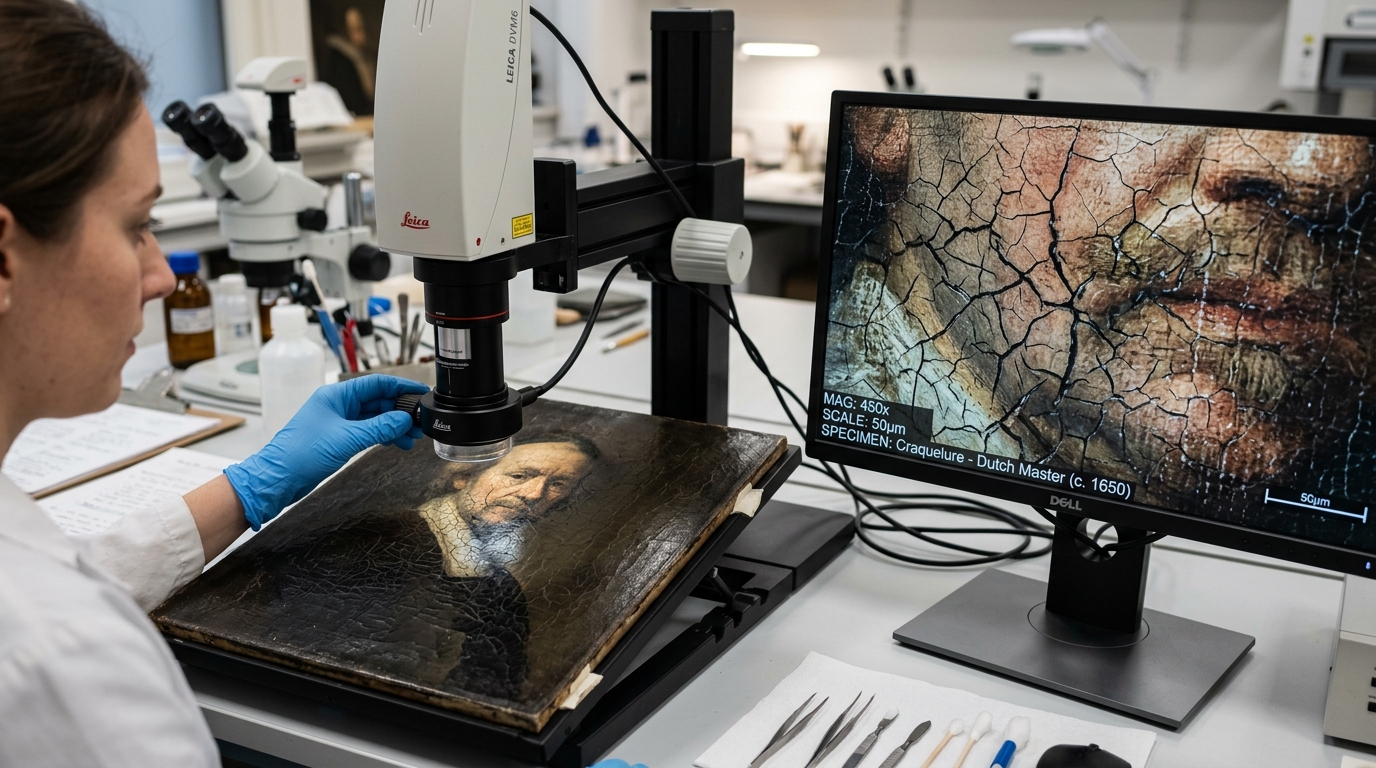
Craquelure is a network of cracks that may appear as art materials age naturally. If the cracks are stable, they do not always pose an immediate threat to the painting.
Active flaking of the paint layer requires urgent consultation with a professional conservator. Loose fragments should never be glued back or the surface cleaned without specialist guidance.
Tears, Punctures, and Canvas Deformation
Mechanical damage to a canvas can often be repaired. A small puncture near the edge is generally less serious than a large tear in the center of the composition.
Deformation may result from improper storage, insufficient canvas tension, or pressure placed on the surface. The sooner the painting is inspected by a specialist, the greater the chance of preserving the original paint layer.
Moisture, Mold, and Surface Contamination
Excess moisture may cause canvas deformation, ground-layer separation, stains, mold, and deterioration of the stretcher. Works on paper and cardboard are especially vulnerable.
Dust, soot, and greasy deposits require different cleaning methods. The correct treatment should always be selected by a professional conservator.
Damage to the Frame and Stretcher
Damage to a decorative frame does not always affect the condition of the painting itself. The frame can often be repaired or replaced.
A damaged stretcher is more dangerous because it supports and tensions the canvas. If it becomes warped, the canvas may sag and develop additional cracks.
How Does Damage Affect the Value of a Painting?
Scale and Location of the Damage
A small area of loss near the edge usually has less effect on the price than damage to a face, central figure, or important compositional detail.
The stability of the defect must also be assessed. Even a small crack can become a serious problem if the paint layer continues to deteriorate.
Cost and Complexity of Restoration
Expected restoration costs are taken into account when determining a painting’s price. The more complex the conservator’s work, the greater the potential discount compared with a similar artwork in good condition.
Before selling, it is advisable to obtain a preliminary opinion regarding whether restoration is possible and how much it may cost.
Artistic and Collectible Value
A rare painting by a recognized artist may be worth more than a perfectly preserved work by an unknown painter.
For this reason, the search phrase painting purchase does not reflect all the factors involved in an assessment. Authorship, period, quality of execution, provenance, and restoration potential must all be considered.
Should a Painting Be Restored Before It Is Sold?
When Restoration Can Make a Work More Attractive
Professional cleaning, canvas reinforcement, and stabilization of the paint layer can stop further deterioration and make an artwork safer to store.
However, expensive full restoration does not always pay for itself. In some cases, basic conservation is sufficient to stabilize the painting without changing its appearance.
Why Do-It-Yourself Repairs Are Dangerous
Household glue, adhesive tape, furniture varnish, ordinary paint, and cleaning products can cause irreversible damage to an artwork.
Unprofessional intervention often reduces the value more severely than the original defect. A painting should not be cleaned or repaired before it has been professionally assessed.
When It Is Better to Sell a Painting Without Restoration
A collector may prefer to select a conservator personally and determine the acceptable level of intervention.
In this situation, the seller should describe the condition honestly and provide detailed photographs of every visible defect.
How Is a Damaged Painting Assessed?
Preliminary Assessment from Photographs
For an initial assessment, photographs should show the entire painting, close-up views of the damage, the signature, the reverse side, the frame, the stretcher, labels, and available documents.
The images should be clear, free from filters, and taken without strong glare. A final valuation is generally possible only after the original artwork has been examined in person.
Examination by a Specialist
An expert studies the technique, materials, authorship, approximate date of creation, and overall condition of the painting.
Particular attention is paid to signs of previous restoration, the signature, inscriptions on the reverse, and whether the work can be restored safely.
Preparation of a Condition Report
A condition report records cracks, tears, losses, deformation, contamination, and previous interventions.
This document helps establish a fair price and protects both parties from disputes after the transaction has been completed.
Center for packaging valuable and fragile items in Ukraine
What Documents Are Needed to Sell a Painting?
Proof of Authorship
Authorship may be supported by a certificate of authenticity, expert opinion, attribution report, or inclusion of the artwork in a catalogue.
A signature on the canvas alone is not considered sufficient proof.
Provenance Documents
The owner should collect receipts, contracts, archival photographs, exhibition labels, and information about previous owners.
Even old family photographs may help demonstrate that a painting has been held in a collection for many years.
Proof of Previous Restoration
After professional restoration, it is advisable to keep the conservator’s report and photographs taken before and after the work.
Transparent information about restoration increases buyer confidence and makes the transaction easier to evaluate.
Where Can a Damaged Painting Be Sold?
Specialized Art Buyers
Professional art-buying services can provide a fast valuation and arrange a direct transaction. Such buyers understand how damage affects value and whether an artwork has restoration potential.
Before accepting an offer, it is advisable to compare proposals from several buyers.
Auctions and Galleries
Auction houses and galleries normally examine the authorship, provenance, and condition of a work. A damaged painting may still be accepted if it is by a sought-after artist and has collectible value.
The seller should consider commissions, preparation times, and the possibility that the work may not be accepted.
Selling Online
The search phrase selling and buying paintings online covers galleries, auction platforms, marketplaces, and private listings. The description should honestly disclose all damage and include detailed photographs.
For expensive works, it is advisable to arrange an in-person inspection, secure payment, and professional packaging.
Buyers and Collectors in Ukraine
The search phrase buying paintings in Kyiv can help locate galleries, collectors, auction houses, and specialized art-buying services.
The phrase buying paintings in Ukraine makes it possible to find buyers in other cities as well. For a remote sale, the parties should agree in advance on packaging, delivery, insurance, and responsibility for possible transit damage.
Can a Damaged Old or Antique Painting Be Sold?
Why Age Does Not Always Reduce Value
Stable craquelure, minor abrasions, and natural darkening of varnish may be acceptable in older works.
These signs of age do not always reduce value, provided they do not cause the painting to deteriorate further.
Features of Selling Antique Paintings
Buying antique paintings requires verification of authenticity, condition, materials, and previous restoration.
The buyer will want to understand how much of the original paint layer remains and how extensive any previous intervention has been.
An Old Painting with an Unknown Artist
Before selling such a work, it is advisable to arrange an attribution assessment. A specialist will examine the style, technique, materials, signatures, inscriptions, and provenance.
The search phrase buying old paintings often includes works whose authorship has not been established. Their value is usually lower until a connection with a particular artist has been professionally confirmed.
How Are Damaged Paintings by Contemporary Artists Sold?
Obtaining Confirmation from the Artist
A living artist may be able to confirm the authorship, date, title, and materials used in the work.
Such confirmation is especially useful when the original documentation has been lost.
The Effect of Damage on Contemporary Art
Contemporary artists may use fabric, metal, plastic, natural materials, and nonstandard paint formulations. Traditional restoration methods may not be suitable for these works.
In some cases, even a small defect can significantly alter the artist’s original concept.
Should a Contemporary Work Be Restored?
Buying paintings by contemporary artists requires checking not only authorship but also the specific characteristics of the artist’s technique.
Any intervention should preferably be coordinated with the artist or with a conservator experienced in contemporary materials.
How to Prepare a Damaged Painting for Sale
Do Not Clean or Repair It Yourself
The work should remain in its current condition until a specialist has been consulted.
The surface should not be washed, the canvas should not be glued, and varnish or paint should not be applied over damaged areas.
Document Every Defect
High-quality photographs should be taken, and an accurate description of the condition should be prepared.
The description should identify cracks, tears, stains, deformation, paint loss, and any known restoration work.
Provide Safe Storage
The painting should be protected from moisture, direct sunlight, heating appliances, and sudden temperature changes.
If the paint layer is flaking, the work should not be transported until it has been temporarily stabilized by a specialist.
How to Determine the Correct Price
Compare Similar Works by the Artist
The painting should be compared with works by the same artist that are similar in technique, dimensions, period, subject, and artistic quality.
The provenance, documentation, and condition of each comparable work must also be considered.
Account for Restoration Costs
The expected cost of restoration usually reduces the potential selling price.
However, the rarity of the painting and demand for the artist may partly compensate for the presence of damage.
Do Not Rely Only on Prices for Undamaged Paintings
Asking prices in advertisements do not always reflect the amounts paid in completed transactions.
It is more useful to consider auction results, expert opinions, and offers from professional buyers.
Common Mistakes When Selling a Damaged Painting
Hiding Defects from the Buyer
Undisclosed damage may lead to the cancellation of a transaction or a later dispute.
An honest condition description builds trust and helps establish a fair price.
Overvaluing the Work Because of a Famous Name
The artist’s name matters, but the price also depends on the period, subject, condition, and provenance.
A damaged work should not be valued solely on the basis of the artist’s record auction results.
Attempting Restoration Before an Assessment
Painting over losses or using glue and solvents can destroy important evidence of the artist’s original technique.
The work should first be assessed, and only then should a decision about restoration be made.
Incorrect Packaging and Transportation
A damaged painting is especially vulnerable to vibration and pressure. During transportation, a tear may become larger and the paint may begin to flake.
Valuable artworks should be placed in professional protective packaging and rigid transport crates.
Buying and Selling Damaged Paintings
Damaged works may be of interest to collectors, conservators, and admirers of a particular artist. Buying paintings and fine art in poor condition can sometimes make it possible to acquire a rare work at a more affordable price, but the buyer must understand the costs and risks associated with restoration.
The process of buying and selling paintings should include expert assessment, an honest condition description, and verification of all available documents. Search phrases such as paintings purchase and painting purchase may produce many listings, but works with confirmed authorship and clearly documented condition have the greatest real value. For this reason, buying paintings with defects is reasonable only after the provenance, artistic significance, and restoration potential have been assessed.

Frequently Asked Questions
Can a Painting with a Torn Canvas Be Sold?
Yes. A torn canvas does not always make an artwork impossible to sell. The price will depend on the artist’s reputation, the size and location of the damage, and whether the work can be restored. If the painting is rare or belongs to a recognized artist, buying paintings in damaged condition may be of interest to collectors and conservators.
Do Cracks Significantly Reduce a Painting’s Value?
Minor stable craquelure may be a natural result of material aging and does not always have a major effect on value. Active flaking of the paint layer is more dangerous. When reviewing listings related to painting purchase, it is important to consider not only the appearance of the artwork but also the risk of further deterioration.
Should a Painting Be Restored Before It Is Sold?
Not always. Some buyers prefer to choose their own conservator and determine the acceptable level of intervention. Before a professional assessment, the painting should not be cleaned, glued, or retouched.
What Photographs Are Needed for a Preliminary Assessment?
The seller should provide a full view of the artwork, close-up photographs of every defect, the signature, the reverse side, the frame, and the stretcher. Labels, stamps, and documents should also be photographed. Listings in the paintings purchase category generally inspire less confidence when they do not include detailed images.
Can a Damaged Antique Painting Be Sold?
Yes, provided that the artwork has artistic, historical, or collectible value. Buying antique paintings involves checking authenticity, provenance, condition, and previous restoration. Certain signs of age may be acceptable in older paintings.
Does an Unsigned Old Painting Have Any Value?
Such a work may have decorative or historical value, but an attribution assessment is recommended before it is sold. Buying old paintings by unknown artists involves additional risks, so their value is usually lower than that of works with confirmed authorship.
Where Can a Damaged Painting Be Sold in Kyiv?
The search phrase buying paintings in Kyiv can help locate galleries, auction houses, specialized art-buying services, and private collectors. Before completing a transaction, it is advisable to compare several offers and prepare photographs, documents, and a detailed condition description.
Can a Buyer Be Found in Another Ukrainian City?
Yes. The search phrase buying paintings in Ukraine covers collectors and professional buyers in different regions. In a remote transaction, the parties should agree in advance on inspection, payment, packaging, delivery, and insurance. Damaged paintings should be transported in rigid protective packaging.
Conclusion
A damaged painting by a Ukrainian artist can be sold if it retains artistic, historical, or collectible value. Even visible defects do not always make an artwork undesirable.
Before the sale, the seller should confirm the authorship, assess the condition, collect provenance documents, and determine whether restoration is appropriate. An honest description, professional valuation, and proper packaging will help preserve the artwork and attract a serious buyer.
Call us: +380632478102.
Reliable packaging and international delivery of valuable items