


How to Store Paintings Properly at Home
 Art DomDecember 19, 2024

Paintings are not just decorative elements of an interior; they are works of art that can be passed down from generation to generation. To preserve their beauty and value for many years, they need proper storage conditions.
Improper storage of paintings can lead to the following problems:
- Fading colours: Direct sunlight and artificial lighting can cause paints to fade and lose their vibrancy.
- Cracking: Fluctuations in temperature and humidity can cause cracks in the canvas and flaking paint.
- Canvas distortion: High humidity can cause the canvas to warp, while low humidity dries it out and makes it crack.
- Mould and fungus: In humid conditions, mould and fungus can develop on paintings and destroy the paint layer.
- Stains and dirt: Over time, dust, dirt and other contaminants work their way into the structure of a painting and spoil its appearance.
What factors affect the preservation of paintings?
The main factors that affect the preservation of paintings are:
- Light: Direct sunlight and intense artificial lighting speed up the fading of paints.
- Temperature: Excessively high or low temperatures can distort the canvas and damage the paint layer.
- Humidity: High humidity encourages mould and fungus, while low humidity causes the canvas to dry out and crack.
- Contamination: Over time, dust, dirt and other contaminants work their way into the structure of a painting and spoil its appearance.
In the following sections, we will look in more detail at how to create optimal storage conditions for paintings and protect them from damage.
How to create optimal storage conditions for paintings and protect them from damage
Proper storage is the key to a painting's longevity and to keeping it in its original condition. Let's look at how to create ideal conditions for your works of art.
Optimal storage conditions
- Temperature and humidity: The ideal range is 18 to 22°C with a relative humidity of 50-55%. Sudden changes in these values can distort the canvas, cause cracks and make the paint flake.
- Lighting: Direct sunlight and bright artificial light are harmful to paintings. Choose places protected from direct sunlight and use soft, diffused lighting. Low-power, cool-light lamps are ideal.
- Protection from dust and dirt: Dust your paintings regularly with a soft dry cloth or a special brush. Avoid wet wipes and abrasive materials.
Choosing a place for storage
- Walls: Choose flat walls protected from draughts and moisture. Avoid spots near heaters and air conditioners.
- Distance from windows: The optimal distance from a window is at least 1 metre. This helps protect the painting from direct sunlight and temperature fluctuations.
Framing paintings
- Frames: Choose frames made of natural materials (wood, metal) with secure fixings. The glass should be of high quality and have a UV filter.
- Glass: For oil paintings, it is better to use a mat without glass to avoid moisture condensation. Works on paper and watercolours do need glass, but it should have an anti-reflective coating.
Storing paintings that are not meant to be on permanent display
- Rolls: If a painting is not framed, it can be stored rolled up. The canvas should be rolled with the painted side facing inwards and protected with acid-free paper.
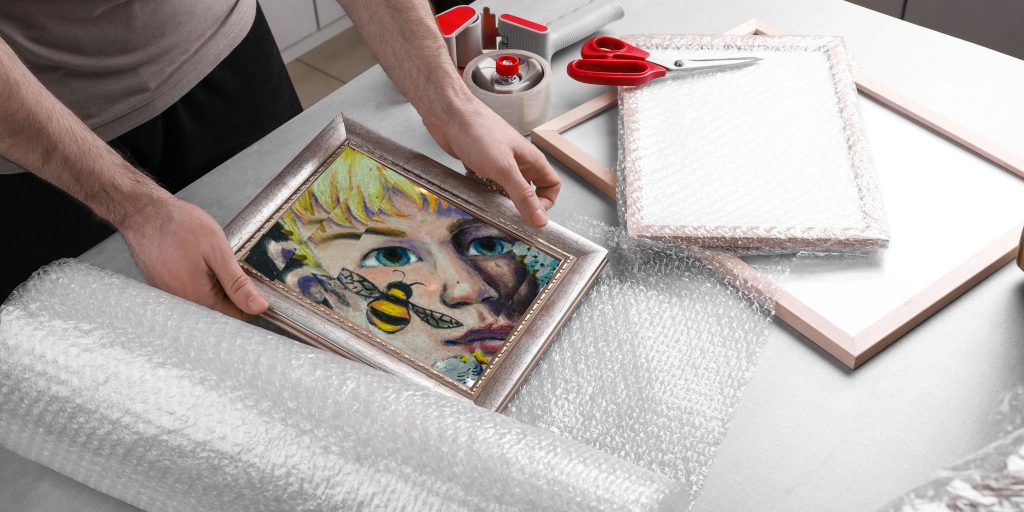
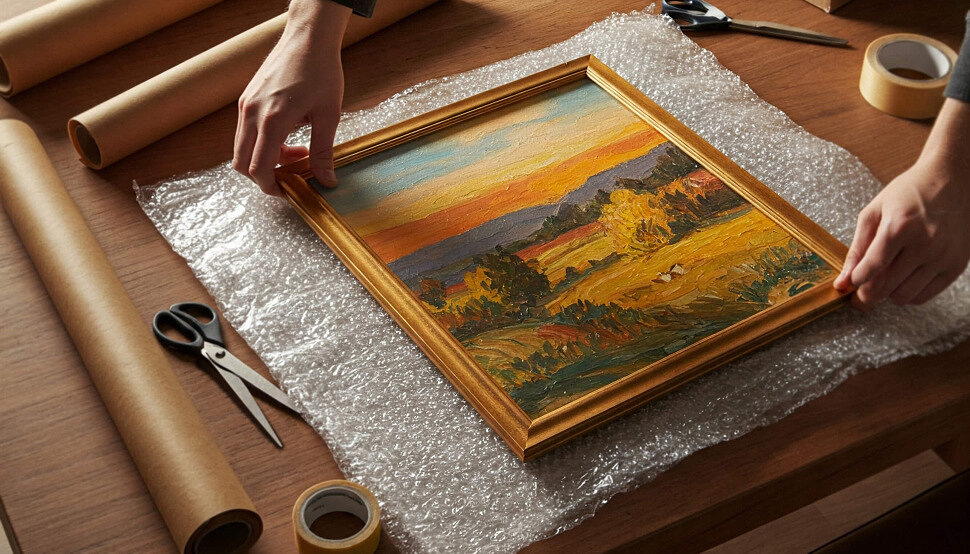
- Boxes: Special boxes made of sturdy cardboard can be used to store paintings. Each painting should be wrapped separately in soft paper or fabric.
First aid for damage
- Physical damage: If cracks or tears appear, contact a professional restorer. Trying to fix the problem yourself is not recommended.
- Dirt: Light dirt can be removed with a soft dry cloth. For heavier soiling, it is best to consult a specialist.
Additional tips
- Regular checks: Inspect your paintings periodically for damage and signs of dirt.
- Climate control: Use a hygrometer and a thermometer to monitor the temperature and humidity in the room.
- Professional restoration: If necessary, turn to professional restorers. They can restore damaged paintings and extend their life.
Remember that proper storage of paintings is an investment in their longevity. By following these recommendations, you can preserve the beauty and value of your works of art for many years.
Framing paintings: frames and glass
Frames: protection and aesthetics
A picture frame is not only decorative but also protective. It helps to:
- Protect the edges of the canvas: It prevents physical damage, cracks and creases.
- Keep the canvas taut: It preserves the painting's geometry and prevents sagging.
- Create a visual composition: The frame highlights the merits of the painting and helps it blend harmoniously into the interior.
Choosing the frame material and design
When choosing a frame, consider the following factors:
- Style of the painting: A classical painting looks better in a wooden frame, while a contemporary one suits a metal or plastic frame.
- Colours of the painting: The frame should complement, not overpower, the colour palette of the work.
- Interior: The frame should fit harmoniously into the overall style of the room.
- Weight of the painting: Heavy paintings need sturdy wooden or metal frames.
Popular frame materials:
- Wood: The most traditional and environmentally friendly material. Wooden frames can be made from various types of wood and decorated with carving, patina or gilding.
- Metal: Metal frames give a painting a modern, stylish look. They can be made of aluminium, steel or brass.
- Plastic: Plastic frames are light and affordable. They can imitate wood, metal or other materials.
Glass: protection and aesthetics
Picture glass performs several functions:
- Protection from dust and dirt: It keeps dust from settling on the surface of the painting and makes it easier to care for.
- Protection from physical damage: It reduces the risk of accidental damage to the painting.
- Reduced glare: An anti-reflective coating lets you view the painting from any angle without distortion.
Types of picture glass:
- Standard glass: The most affordable option, but it has high light transmission and can cause glare.
- Museum glass: Special low-iron glass that provides high clarity and minimal colour distortion.
- Anti-reflective glass: Glass with a special coating that diffuses light and reduces glare.
- UV filter: Glass that protects against ultraviolet rays and prevents paints from fading.
When glass is necessary:
- For oil paintings: Glass protects the painting from dust and dirt.
- For works on paper and watercolours: Glass protects delicate materials from physical damage and moisture.
- For paintings hanging in humid places: Glass prevents condensation from forming on the surface of the painting.
When glass can be omitted:
- For oil paintings stretched on a stretcher: In this case, a mat without glass can be used.
- For paintings kept in a dark place: If the painting will not be exposed to light, glass is not essential.
The choice of glass depends on the type of painting, its storage conditions and your personal preferences.
Preserving beauty for centuries
Summary of the key rules for storing paintings
Proper storage of paintings is a comprehensive approach that combines creating optimal conditions with regular care. Let's briefly recap the key rules:
- Ensure stable conditions: Keep a constant temperature (18-22°C) and humidity (50-55%) in the room where the paintings are kept.
- Protect from light: Avoid direct sunlight and bright artificial lighting. Use soft, diffused lighting.
- Protect from dust and dirt: Clean your paintings regularly with a soft dry cloth or a special brush.
- Choose the right place: Avoid places with high humidity, draughts and sudden temperature changes.
- Frame the painting properly: Use quality frames and glass suited to the type of painting.
- Inspect your paintings regularly: Periodically check the condition of your paintings for damage, cracks and dirt.
Recommendations for regular condition checks
To detect and fix possible problems in good time, it is advisable to inspect your paintings regularly. During an inspection, pay attention to the following:
- Condition of the canvas: Check the canvas for cracks, distortion or signs of flaking paint.
- Condition of the paint layer: Look for fading, darkening or stains.
- Condition of the frame and glass: Check the frame for cracks, chips or corrosion. Make sure the glass is clean and undamaged.
- Fixings: Check that the painting is securely attached to the wall.
Turn to professionals
If you notice any damage or changes in the condition of a painting, do not try to fix them yourself. Contact a professional restorer. Painting restoration is a complex process that requires special knowledge and skills. A specialist can determine the cause of the damage and choose the best restoration method.
Professional restoration makes it possible to:
- Restore the painting's original appearance.
- Extend the life of the work of art.
- Preserve the painting's historical and artistic value.
Conclusion
Proper storage of paintings is an investment in their future. By following a few simple rules, you can preserve the beauty and value of your works of art for many years. Remember that timely prevention and turning to professionals will help you safeguard your artistic heritage.
Want to learn more about our services? Get in touch!
Call us at +38 063 247 8102
Or message us on Telegram, Viber or WhatsApp
Our website: artdom.com.ua