



How Old Paintings Are Transported When They Can No Longer Simply Be Wrapped in Film
 Art DomSeptember 13, 2026
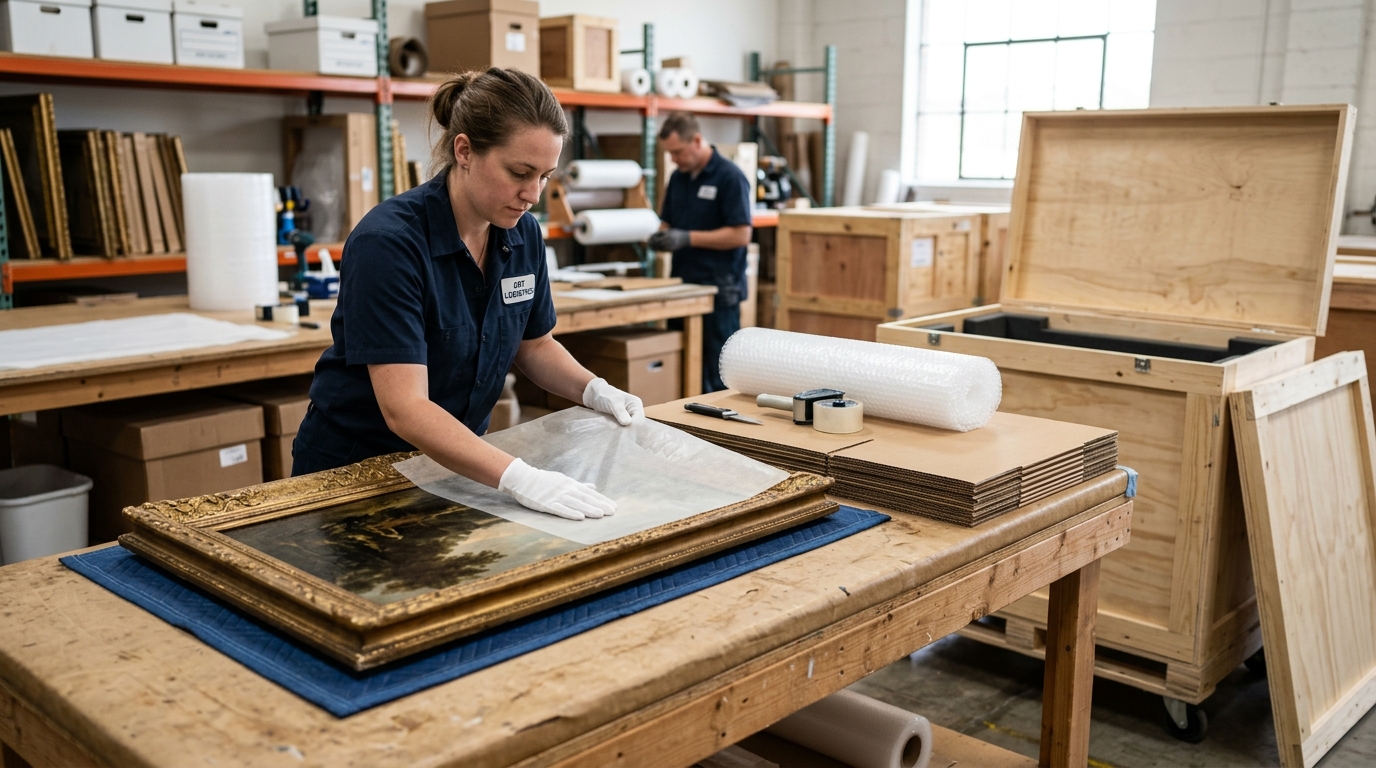
Old paintings require much more careful handling than a modern poster or a recently created artwork. When painting delivery or international painting delivery is planned, bubble wrap alone is not enough. The condition of the canvas, paint layer, frame, and any previous restoration work must be taken into account. And if the owner is trying to understand how to send a painting abroad from Ukraine, it is also important to clarify the documentation requirements in advance.
Why Old Paintings Require a Special Approach to Transportation
Over time, the materials of an old painting become more fragile and sensitive to external influences.
How an Old Canvas Differs from a Contemporary Artwork
An old canvas may lose its elasticity, the stretcher may become deformed, and the bond between the ground and paint layer may weaken.
As a result, the artwork becomes more sensitive to vibration, pressure, and changes in temperature or humidity.
What Damage Can Occur Even During Careful Transportation
If the painting is not properly secured, new cracks, abrasions, paint loss, or canvas deformation may appear.
Impacts, dropping the box, and repeated handling or transfers are particularly dangerous.
What Are the Most Vulnerable Parts of an Old Painting?
Before packing, it is important to identify the weakest areas of the artwork.
Weakened Canvas and Deformed Stretcher
An old canvas may sag, contain tears, or have weakened areas. The stretcher may also lose its shape and strength over time.
For this reason, pressure should never be applied to the central area of the canvas.
Craquelure, Flaking, and Detachment of the Paint Layer
Minor craquelure may be completely natural in an old painting.
However, if the edges of the cracks are lifting or the paint has already started to flake, transportation becomes much more risky. In such situations, it is advisable to consult a restorer.
Old Frame, Glass, and Decorative Elements
Fragile stucco, gilding, carving, and other decorative elements of the frame may be damaged even by a relatively minor impact.
If the artwork is framed behind glass, the risk of the glass breaking must also be considered.
Why Ordinary Film Is Not Enough
Film can be one part of the packaging, but it should not be the only protective material.
Why Direct Contact Between Packaging and the Painting Surface Is Dangerous
Film pressed tightly against the painting may place pressure on raised areas of the paint layer.
This is especially dangerous for textured paintings and unstable old paint.
Why Bubble Wrap Should Not Be the Only Protective Layer
Bubble wrap can absorb minor impacts, but it provides limited protection against strong external pressure.
For this reason, several protective layers are usually used so that the packaging material does not come into direct contact with the painted surface.
What Risks Are Created by Humidity and Temperature Changes
High humidity may cause deformation of the support and weakening of the paint layer.
Sudden changes in temperature and humidity also place additional stress on old materials.
What Is Checked Before Packing an Old Painting?
Preparation begins with an examination of the artwork.
Condition of the Canvas, Paint Layer, and Frame
The canvas tension, tears, cracks, flaking areas, condition of the stretcher, and stability of the frame are checked.
Particular attention is given to the corners and decorative elements.
Should Damage Be Documented Before Transportation?
Yes. Before packing, it is advisable to photograph the overall appearance of the painting and all existing defects.
This makes it possible to compare the condition of the artwork before and after transportation.
When Should a Restorer Be Consulted Before Shipping?
If the paint is flaking, the canvas has serious damage, or the frame is unstable, it is better to seek professional advice first.
In some cases, temporary conservation may be required rather than full restoration.
How Old Paintings Are Properly Packed
The packing method depends on the size, technique, and condition of the artwork.
Protective Layer Between the Artwork and Packing Materials
A protective barrier is placed between the surface of the painting and the outer packing materials.
This helps prevent direct contact between the artwork and bubble wrap, cardboard, or other packaging components.
Protection of Corners, Frame, and Protruding Elements
The corners are protected separately because they often absorb most of the impact if the package is dropped.
Decorative parts of the frame should also never be used as support points.
Securing the Painting Inside a Box or Crate
The painting should not move freely inside the packaging.
At the same time, the securing system should hold the artwork in place without applying excessive pressure to the canvas.
When an Ordinary Box Is No Longer Enough
A cardboard box is not suitable for every artwork.
Which Paintings Require Reinforced Packaging?
Reinforced protection is especially important for large, heavy, old, and particularly fragile artworks.
If international painting delivery involves several transfers or handling stages, packaging requirements become even stricter.
When a Rigid Crate Is Needed for Transportation
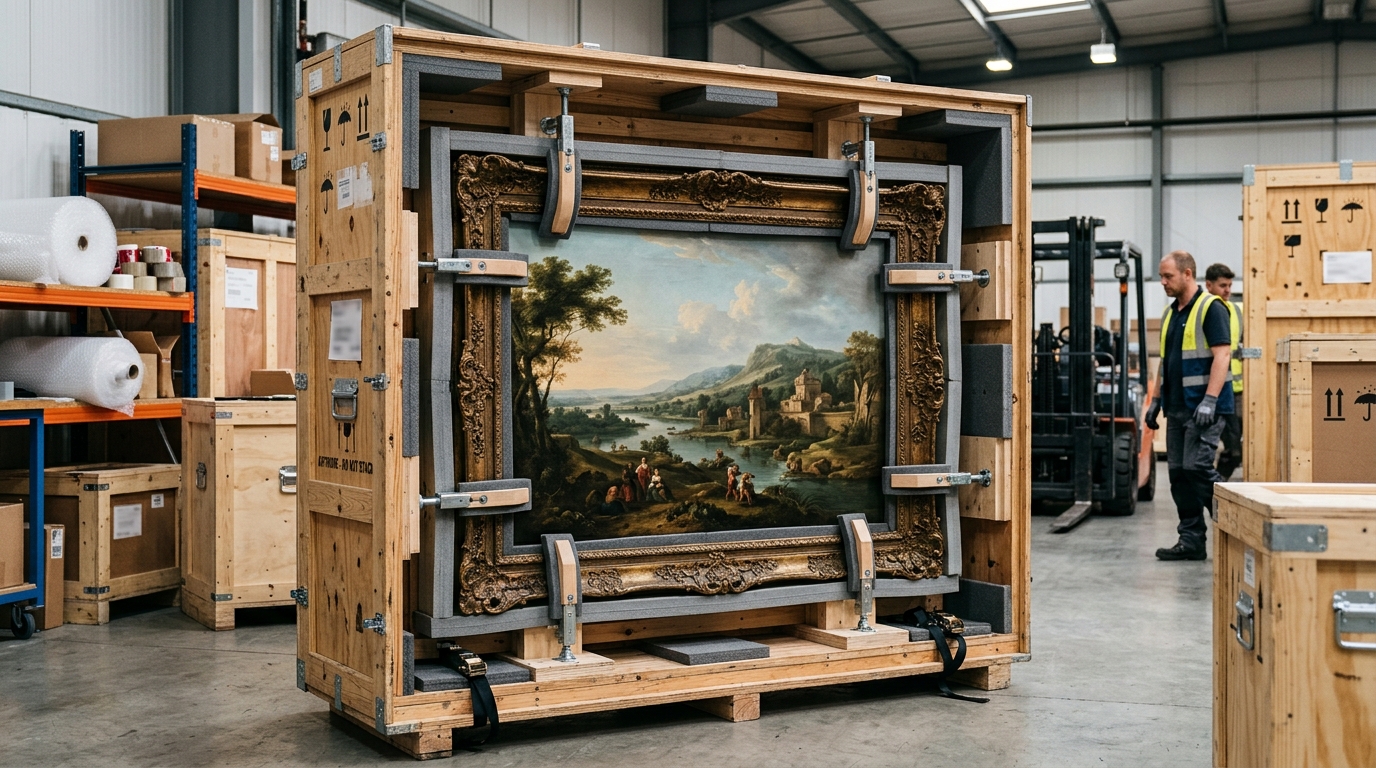
A rigid or reinforced crate is used when the artwork must be protected from external pressure and stronger impacts.
It is especially useful for large frames, paintings behind glass, and valuable works.
Why the Painting Should Not Move Freely Inside the Crate
If the artwork hits the walls of the crate while the vehicle is moving, even strong outer packaging may not prevent damage.
For this reason, proper internal securing and cushioning are essential.
Center for packaging valuable and fragile items in Ukraine

How Old Paintings Behind Glass Are Transported
Glass significantly increases the risk of damage.
Why Broken Glass Can Damage the Artwork Itself
Shards may fall inside the frame and damage the canvas, paper, or paint layer.
For this reason, not only the glass but the artwork itself must be protected.
How Glass and the Frame Are Protected Before Delivery
The frame is secured and protected around the perimeter, while the outer packaging should prevent direct pressure on the glass.
Rigid external protection is preferable for valuable works.
Can the Glass Be Temporarily Removed Before Transportation?
Sometimes this is possible, but dismantling an old artwork without professional assistance is not recommended.
If the work is fragile or the glass forms part of its historical presentation, the decision should be made together with a specialist.
International Painting Delivery: What Should Be Considered Besides Packaging?
International transportation requires more than physical protection of the artwork.
Documents and Preparing the Artwork for Export
Before shipment, the status of the painting should be checked and the required documents clarified.
If the artwork is classified as cultural property, a separate export procedure may apply.
Why the Route and Number of Transfers Matter
Every transfer increases the risk of impact, dropping, or improper placement of the package.
A simpler route is usually preferable for fragile old artworks.
How to Combine Safe Packaging with the Possibility of Customs Inspection
The painting should be securely protected, but the documents and photographs should also make it possible to identify the artwork accurately if required.
How to Send a Painting Abroad from Ukraine
Anyone trying to understand how to send a painting abroad should divide the process into three stages: documentation, packaging, and logistics.
Personal Transportation and Delivery by a Transport Company
A small artwork may sometimes be convenient to transport personally.
Large and fragile works are more often entrusted to a specialized transport company. In both cases, documentation requirements still apply.
How to Send a Painting by Mail Abroad from Ukraine
If you are interested in how to send a painting by mail abroad from Ukraine, the first step is to check the specific carrier’s restrictions on parcel dimensions and cargo type.
Small works can be sent through postal services if suitable packaging and the required documents are available.
Why the Shipping Method Depends on the Age, Size, and Condition of the Artwork
What works for a small contemporary painting may be unsafe for an old artwork in a heavy frame.
Therefore, when deciding how to send a painting by mail abroad or whether to use a specialized art carrier, the condition of the specific artwork should be the main consideration.
Can a Painting Be Sent Abroad Without a Certificate?
There is no single universal rule that applies to every artwork.
Why the Need for Documents Cannot Be Determined by the Age of the Painting Alone
Age is only one of the criteria.
The status of the work depends on the artist, provenance, historical importance, and artistic significance of the specific artwork.
When Requirements for a Specific Artwork Should Be Clarified in Advance
Particular care should be taken with old paintings, works by well-known artists, icons, and paintings with unclear provenance.
If you are trying to understand how to send a painting abroad without a certificate, it is better to determine the status of the specific artwork first.
Why the Method of Transportation Does Not Cancel Documentation Requirements
Shipping by mail, courier, or transport company does not remove documentation requirements if they apply to the specific artwork.
For this reason, the delivery method should be chosen after the status of the painting has been checked.
What Mistakes Are Most Common When Transporting Old Paintings?
Many types of damage occur because of improper preparation.
Wrapping the Surface Too Tightly in Film
Bubble wrap should not be pressed directly against the paint layer.
This is particularly dangerous for paintings with craquelure, textured surfaces, and flaking paint.
Transporting the Painting Without Securing It Inside the Box
Free movement inside the package can cause impacts during braking, turning, and transfers.
The painting should therefore be securely fixed in position.
Removing the Artwork from the Stretcher Without Necessity
Rolling an old canvas may cause cracks and paint loss.
Removing the painting from the stretcher merely to save space should not be done without consulting a specialist.
Failing to Photograph the Condition of the Painting Before Shipment
Before painting delivery begins, the overall appearance, frame, reverse side, and existing defects should be documented.
This helps determine whether any new damage appeared during transportation.
What to Do with the Painting After Delivery
Receiving the parcel is not the end of the process.
Why You Should Not Always Unpack It Immediately
If the painting has been transported between environments with significantly different temperatures and humidity levels, a sudden change in conditions may be undesirable.
This is particularly important for old and sensitive materials.
How to Check the Condition After Transportation
After unpacking, compare the painting with the photographs taken before shipment.
Check the canvas, paint layer, frame, glass, fastenings, and areas where previous damage was already present.
What to Do If New Damage Has Appeared
If cracks, tears, flaking, or other defects appear, do not attempt to repair them yourself. Take photographs, keep the packaging, and contact a restorer. If the shipment involved international painting delivery or you had previously researched how to send a painting abroad from Ukraine, it is also advisable to keep the transport documents and photographs of the packaging.
FAQ
How Can an Old Painting Be Safely Sent Abroad?
If you are trying to understand how to send a painting abroad, first assess the condition of the artwork, check the documentation, and only then choose the packaging and carrier. For old works, protection of the paint layer, secure fixation of the frame, and avoiding pressure on the canvas are especially important.
How to Send a Painting Abroad from Ukraine?
Anyone searching for how to send a painting abroad from Ukraine should divide the process into three stages: checking the status of the artwork, professional packing, and selecting the transportation method. For fragile and old paintings, an ordinary cardboard box may not provide sufficient protection.
Can an Old Painting Be Sent Wrapped in Bubble Wrap?
Bubble wrap can be used, but it should not be the only protective layer and should not come into direct contact with unstable paint. During painting delivery, it is advisable to place a protective barrier between the artwork and the outer packing materials.
When Does a Painting Need a Rigid Crate?
Rigid packaging is particularly useful for old, large, heavy, and valuable artworks, as well as paintings behind glass or in fragile decorative frames. During international painting delivery, such a crate provides additional protection during transfers and transportation.
How to Send a Painting by Mail Abroad?
If you are interested in how to send a painting by mail abroad, first check the selected postal service’s restrictions on dimensions, weight, and type of contents. The painting should be securely fixed inside the packaging, and the required documents should be prepared in advance.
How to Send a Painting by Mail Abroad from Ukraine?
When deciding how to send a painting by mail abroad from Ukraine, it is important not only to choose a carrier but also to verify the status of the artwork. Old or potentially valuable works may require additional documentation.
Can a Painting Be Sent Abroad Without a Certificate?
There is no single rule for every artwork. If you are looking for information on how to send a painting abroad without a certificate, you should first determine whether the specific artwork is classified as cultural property and which documents are required for it.
Should an Old Painting Be Removed from the Stretcher Before Transportation?
Usually, this should not be done unless there is a clear reason. An old canvas may not tolerate rolling well, and the paint layer may begin to crack or flake. A decision to remove the canvas from the stretcher should preferably be made after consultation with a specialist.
How Should an Old Painting Behind Glass Be Transported?
The glass should be protected against direct pressure, and the frame should be securely fixed. If the glass breaks, the fragments can damage the artwork itself, so rigid outer packaging is especially important for such works.
Should a Painting Be Photographed Before Shipment?
Yes. Before painting delivery, it is advisable to photograph the front and reverse sides, frame, glass, and all existing damage. This makes it possible to compare the condition of the artwork before and after transportation.
Why Should Film Not Be Pressed Tightly Against an Old Painting?
The film may press against raised areas of paint or come into contact with an unstable paint layer. This packing method is particularly risky for paintings with craquelure, flaking, and textured surfaces.
What Should Be Checked After Receiving the Painting?
After unpacking, inspect the canvas, paint layer, frame, glass, and fastenings, and compare them with the photographs taken before shipment. If new cracks, flaking, or other damage appeared after international painting delivery, do not try to repair them yourself — it is better to consult a restorer.
Conclusion: Safe Delivery of an Old Painting Begins Long Before Transportation
An old painting should not be packed like ordinary cargo. A fragile canvas, unstable paint layer, old frame, and glass all require an individual approach.
First, the condition of the artwork should be assessed and the documents checked. Then suitable packaging should be selected, and only after that should transportation be arranged. This sequence helps reduce the risk of damage and preserve the artwork during delivery.
Call us: +380632478102.
Reliable packaging and international delivery of valuable items