



Oleksandr Yatsenko - Ukrainian artist
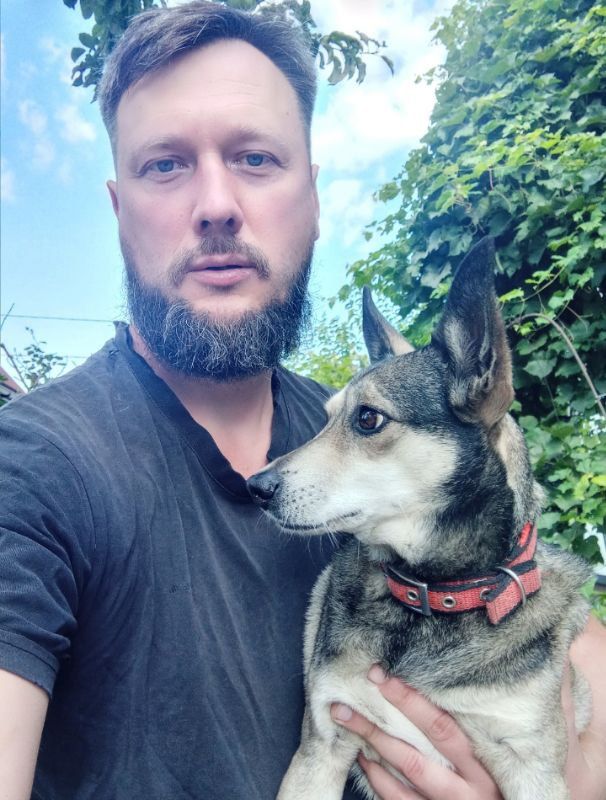
Alexander Yatsenko
Contemporary Ukrainian artist Born in 1980 in Cherkasy. Lives and works in Kyiv. EDUCATION 2007 National Academy of Fine Arts and Architecture 1999 Republican Art Secondary School named after T. G. Shevchenko EXHIBITION ACTIVITIES (SOLO EXHIBITIONS) 2018 "Digital World," Worlax Graphics, Kyiv 2017 "City in a Woman," Pavlovka Gallery, Kyiv 2009 "Philosophy of Beauty," National Academy of Public Administration under the President of Ukraine, Kyiv EXHIBITION ACTIVITIES (GROUP EXHIBITIONS) 1999-2019 Participant in over 45 exhibitions and 12 plein air exhibitions across Ukraine Member of 2016 National Union of Designers 2009 National Union of Artists PUBLICATIONS Publication: Art critic Natalia Romanova's article "Picturesque Galaxies" in the magazine "People's Deputy" (magazine of the parliamentary club "Parliament"), issues 1-2 (73-74) January-February 2011 and others.
AWARDS 2013 Finalist of the Nathan Altman Contemporary Art Competition, Art-Chic Gallery, Vinnytsia 2005 Laureate of the Shatalin Prize, NOAMA, Kyiv
SELECTED PUBLIC COLLECTIONS Historical and Archaeological Foundation "Demeter" (Kerch). National Historical and Cultural Reserve "Dubno Castle". Private collections in France and China.
Alexander Yatsenko Alexander Yatsenko is a Ukrainian artist and painter who explores the relationship between humans, living nature, and the universe through the language of texture, color, form, and symbol. In his work, he combines the possibilities of painting with the principles of mosaic, graphics, pointillism, and ornamental art. The artist works in two, at first glance, opposing styles. The first is impasto, relief-like, constructed from mosaic-like planes, textured brushstrokes, and rich layers of color. The second is very subtle and detailed, where paint transforms into a graphic line, a dot, lace, or jewelry-like granulation. This free transition from material mass to an almost weightless graphic quality is one of the characteristic features of his artistic language.
Alexander Yatsenko's work combines abstract painting, surreal landscapes, animal painting, Art Nouveau, and decorative art. The artist often transforms natural forms—plants, animals, marine organisms, landscapes—into complex ornamental structures, where the real world gradually merges with fantasy. For him, texture is more than just a surface finishing technique: it becomes an independent carrier of information, a kind of "code" for the painting.
One of the central themes of the artist's work is human self-identification: who are we, where did we come from, and where are we heading? Another important theme is the search for a harmonious coexistence between the technological and natural worlds. In his paintings, the city, technology, organic forms, and cosmic structures are not necessarily opposed to one another; they can form a unified system.
The idea of "micro to macro"—the recognition of humanity as a small part of a vast universe—occupies a special place. A single natural form can be a model of the cosmos, and a fragment of living matter a reminder of the infinity of existence.
Another direction in the artist's explorations is related to the theme of paleocontact and the memory of ancient civilizations—the possible interpenetration of human history and unknown cultures that may have influenced the formation of our civilization. Through these images, Yatsenko creates his own mythology, where modernity, nature, archeology, and the cosmos meet on a single canvas.
His painting is an attempt to see connections where, at first glance, there is only chance: from the microscopic structure of living matter to the scale of the universe, from an ancient artifact to modern man.